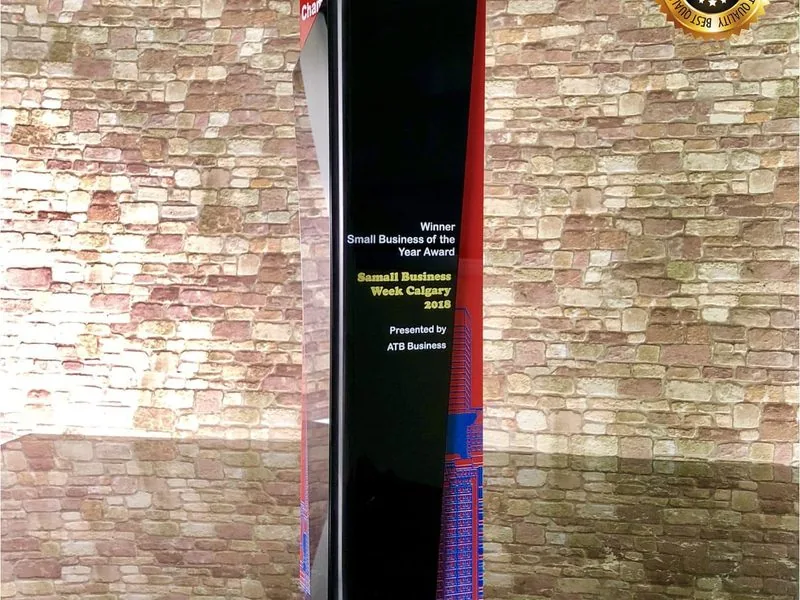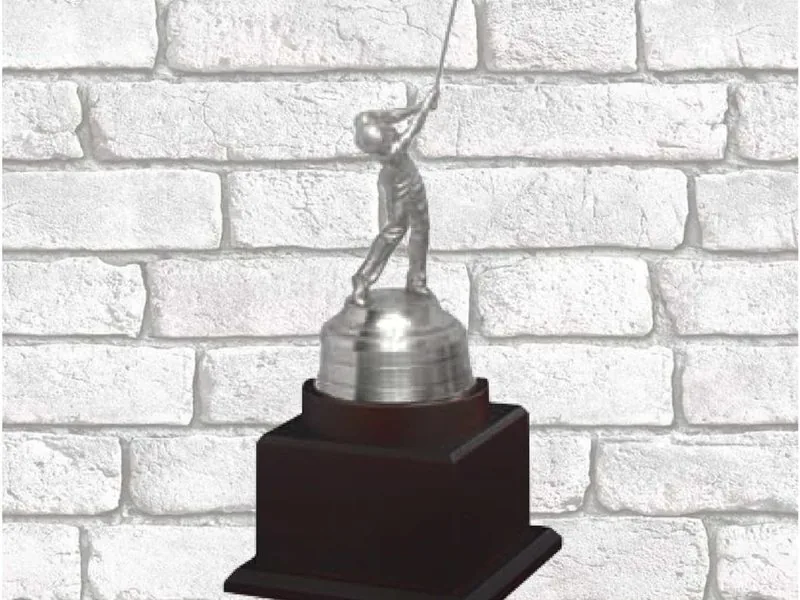
A kuil committee recognition piece is a different brief from a corporate trophy, and most trophy shops don’t get it. When a chairman retires after eighteen years or a head pujari after thirty-eight, the plaque doesn’t go in an office cupboard, it goes to the family home and sits in the mandapam or living room for generations. Grandchildren read the Tamil inscription every Pongal and Thaipusam. A misspelled name, a missing pulli mark, or a wrong long-vowel sign will be noticed, and it won’t be forgiven.
Short answer: Choose conservative materials with subtle traditional motifs and get the Tamil right. Standard wooden plaques with a brass nameplate cover most trustee and committee recognition and sit in catalogue bands; pewter, premium rosewood, optical-crystal hero pieces, and bespoke donor-wall commissions are quoted on spec. For a retiring pujari, bilingual Tamil + English is conventionally expected. Keep motifs subtle (lotus, kalasam, a temple-pillar silhouette), avoid deity images on recognition plaques, and never run Tamil engraving without a native-Tamil-reading trustee signing off a printed proof. Brief 4-5 weeks before the AGM or kumbabishekam.
Four kinds of Malaysian Hindu temple committees
Malaysian Hindu temples broadly fall into a few categories, each with slightly different recognition conventions:
Major Tamil Saiva temples, large institutions like Sri Mahamariamman, Batu Caves Sri Subramaniar Swamy, Kallumalai Murugan in Ipoh, and similar across the country.
Most are affiliated with Malaysia Hindu Sangam, the apex body for Hindu communities in the country. Run by formal trust boards (often registered as societies under the Registrar of Societies).
Trustee committees typically 9-15 members serving 3-year terms with possibility of renewal. Recognition culture is well-established and budgets accommodate higher-tier pieces.
Mid-sized neighbourhood temples, Vinayagar, Mariamman, Murugan shrines in residential areas. Run by elected committees of 5-12 trustees. Annual general meetings, audited accounts, formal long-service tradition.
Estate temples, smaller temples on former plantation lands, often serving Indian-origin communities with multi-generational ties to the location.
Recognition culture is intimate and personal. Plaques are smaller-budget but emotionally significant.
Vaishnava and other tradition temples, ISKCON branches, Vaishnava temples like Sri Krishna in Brickfields, smaller Saraswathi or Hanuman shrines. Conventions vary slightly but core principles overlap.
Most of what follows applies across all categories, with notes on tier-specific budget ranges.
Trustee Long-Service Recognition Tiers
Trustees who serve consistently across multiple terms, often 9, 12, 15, or even 20+ years, are typically recognised at retirement or on major temple anniversaries (consecration milestones, golden jubilees, etc.).
Standard tier structure
Standard wood-and-brass tiers sit in catalogue bands; pewter, premium rosewood, and optical-crystal tiers are quoted on the design:
| Years of service | Suggested format | Budget |
|---|---|---|
| 6-9 years (2-3 terms) | Wooden plaque with brass nameplate | RM 180-280 |
| 9-12 years | Larger wooden plaque or premium brass | RM 280-450 |
| 12-18 years | Pewter mid-tier or rosewood premium | Quote on spec |
| 18+ years (long-serving) | Pewter premium or optical crystal | Quote on spec |
Chairman / President of trust board
The temple chairman (or president of the trust board) typically receives the highest-tier recognition piece, often a pewter cast with a rosewood base, or a substantial optical crystal piece. This is a premium tier quoted on spec.
The chairman’s plaque tends to be displayed in the temple office or mandapam (main hall) alongside historical chairmen.
Treasurer & Secretary
These are the working positions in most trust boards.
- Treasurer manages temple accounts including hundi (donation box) collections, festival receipts, and year-end audited accounts
- Secretary handles minutes, correspondence with state Hindu endowment boards (where applicable), and inter-temple coordination
Recognition here is a mid-tier piece, important enough to feel honoured, not so loud that it overshadows the chairman: a wood-and-brass plaque in the catalogue band, or a pewter piece quoted on spec.
Ordinary trustees / committee members
8-12 ordinary trustees handle specific portfolios, festival coordination, kitchen (annadhanam), youth wing, women’s wing, building maintenance, etc.
Tier RM180-300 is appropriate for these recognition pieces.
Browse pewter range for premium pieces and wooden plaques for the standard format.
Pujari / Sami retirement, the most scrutinised piece you will commission
Temple priests, pujari (Saiva tradition) or sami (general term, often used colloquially), represent a distinct recognition category.
A priest who has served a kuil for 25-40 years is one of the most important figures in the temple’s recent history.
Format conventions
These are premium pieces quoted on the design (pewter has no fixed list price, and the rosewood/crystal here are large premium formats). For retiring head pujari (especially Agamic-trained priests at major temples):
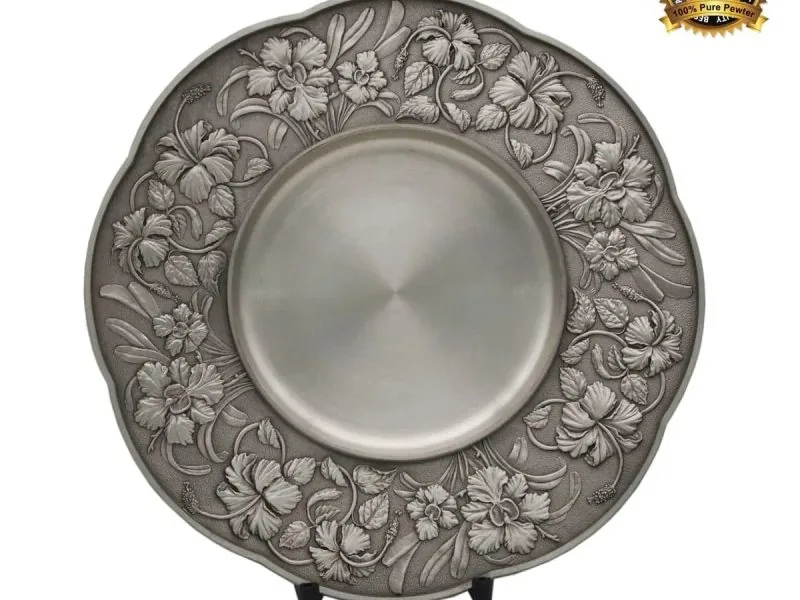
- Pewter premium with rosewood base, the most common choice for senior priest retirement. The weight and quality of pewter signals respect appropriate to the position.
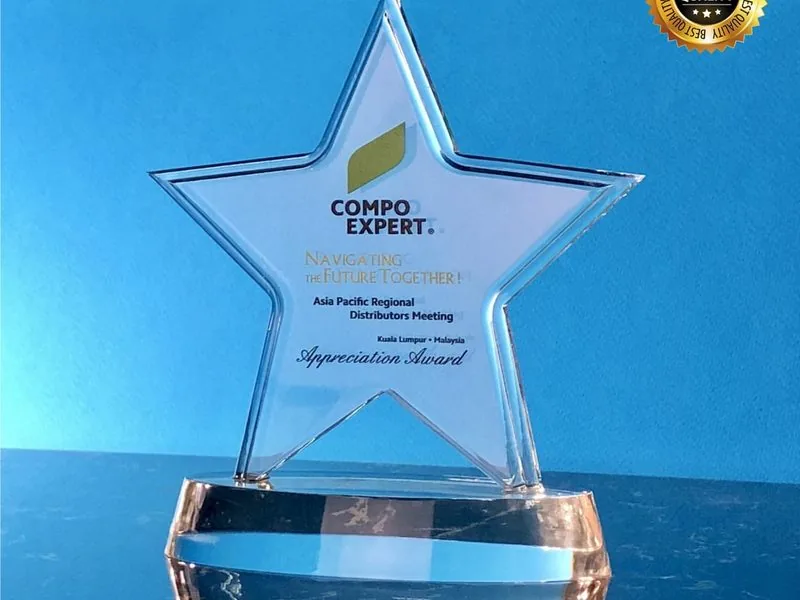
- Optical crystal premium piece, an alternative for more modern temples; less traditional but increasingly accepted.
- Solid rosewood plaque with engraved brass plate, the most traditional format, especially for South Indian-tradition temples.
For mid-career priest recognition (10-20 years), a pewter mid-tier piece (quoted on spec) or a premium wooden plaque with substantial brass (around RM 350-450) both work.
Tamil engraving, a near-must
For pujari retirement pieces, Tamil engraving is conventionally expected. Reasons:
- Liturgical context, most pujaris in Malaysia conduct ceremonies in Tamil and Sanskrit; recognising them in Tamil honours their working language.
- Generation, retiring priests are often 60+; many learned Tamil as their primary literacy language.
- Family heirloom value, the plaque will likely move from temple to priest’s home and be displayed for generations who will read Tamil.
- Authenticity, English-only on a senior priest’s retirement plaque can feel administratively cold.
Sample bilingual layout
[Tamil heading: kalakappu]
WITH GRATITUDE FOR DEDICATED SERVICE

Sri [Name] Sastrigal
Head Priest
Sri [Temple Name]

[Years of service in Tamil + English]
[Year of joining] – [Year of retirement]

Presented by
The Trust Board
[Temple Name]
[Date]

[Tamil benediction line]
Tamil-engraved pieces are routine work for our partner workshops, and the orthography is where the care goes.
We run typeface and proofing through the temple secretary or trust board representative before pieces go to engraving. Tamil orthography needs verification, especially for compound names and Sanskritic vocabulary in Tamil script.
Donor wall recognition, RM 5,000 to RM 500,000+ tiers
Hindu temples regularly run major fundraising campaigns:
- Kumbabishekam (consecration ceremonies every 12 years)
- Gopuram (tower) construction
- Mandapam expansion
- Kitchen modernisation
- Gold-plating projects
Donor recognition is structured by contribution tier.
Typical Malaysian tier structure
Tiers vary substantially by temple size and campaign scale, but a common pattern for mid-to-large urban kuil:
The donation figures are the donor’s contribution; the recognition-piece cost is separate. Acrylic and wood-and-brass tiers sit in catalogue bands; pewter and custom pieces are quoted on the design:
| Donation tier | Recognition format | Recognition-piece cost |
|---|---|---|
| RM 5,000 – RM 9,999 | Name on shared donor board | Per name slot, low cost |
| RM 10,000 – RM 24,999 | Name on premium shared board | Per name slot, low cost |
| RM 25,000 – RM 49,999 | Individual acrylic plaque | RM 180-280 |
| RM 50,000 – RM 99,999 | Individual wooden + brass plaque | RM 280-450 |
| RM 100,000 – RM 249,999 | Pewter mid-tier individual | Quote on spec |
| RM 250,000 – RM 499,999 | Pewter premium with rosewood base | Quote on spec |
| RM 500,000+ | Custom-design pewter or large optical crystal | Quote on spec |
For the largest temples, the top tier may extend further (gold-leaf options, custom-cast bronze pieces). These are bespoke and we’d discuss separately via WhatsApp.
Donor wall plaque formats
For shared donor walls listing 50-200 names:
- Acrylic 12mm with engraved text, a substantial board (24x36 inches) accommodating 30-60 names depending on layout, from around RM 450
- Solid wood with individual brass nameplates, more traditional, accommodating 40-80 names, quoted on the board size
- Pewter cast donor wall, premium temples only, quoted on spec (pewter has no list price)
Donor walls typically hang in the temple lobby, the mandapam, or beside the main entrance.
Design must be conservative. These will display for 25-50 years until the next major renovation.
For acrylic options, browse acrylic plaques. For traditional wooden formats, see wooden plaques.
Festival volunteer recognition, Thaipusam, Deepavali, Sivaratri
Beyond formal trustee and donor recognition, temples often recognise volunteers for specific festival contributions.
Particularly the volunteers who manage the heavy logistics of major festivals.
Thaipusam volunteer recognition
For temples involved in Thaipusam, particularly Sri Mahamariamman to Batu Caves processions, Penang Waterfall Hilltop, or Ipoh Kallumalai, Thaipusam volunteer crews work intensely for 3-4 days.
Recognition is typically:
- Acrylic plaques RM 150-280, for general volunteer crew members
- Wooden plaques RM 280-450, for volunteer captains and lead organisers
- Pewter mid-tier (quote on spec), for multi-year volunteer leaders (10+ years)
Deepavali community service awards
For temples that organise community Deepavali programmes, kolam competitions, cultural performances, distribution drives, recognition typically:
- Acrylic RM150-250 for participation/organising volunteers
- Wooden RM280-380 for committee members of major Deepavali programmes
Sivaratri & Annual Festival volunteers
Mahasivaratri requires overnight volunteer presence, kitchen teams, security volunteers, programme coordinators.
Temple committees often present small recognition tokens (RM100-180 acrylic) to several dozen volunteers as a thank-you gesture.
Useful trust-builder for repeat volunteer recruitment.
Tamil engraving and the lotus / kalasam motif vocabulary
Tamil engraving practical notes
Tamil script needs careful typeface selection.
Modern sans-serif Tamil (like Latha or Bamini-equivalent) reads cleanly on engraved plates but can feel administrative.
Traditional Tamil typefaces (closer to handset metal type) feel warmer but require more skill to engrave clearly at small sizes.
For plaques 9x12 inches and larger, traditional Tamil typeface works well. For smaller pieces (medal plates, name slots on donor walls), modern sans-serif Tamil engraves more reliably.
We always run a digital proof through the temple’s nominated representative before engraving.
Tamil orthography mistakes (missing pulli marks, wrong long/short vowel signs, compound consonant errors) are easy to make if the proofreader doesn’t read Tamil natively.
Subtle motifs that work
For long-display religious recognition pieces, motif convention favours subtlety:
- Lotus (thamarai), universally appropriate. Engraved as a small motif at the top centre or as corner accents. Symbol of purity and divinity in Hindu iconography.
- Kalasam (sacred pot), traditional auspicious symbol. Works as a corner motif or above the main inscription.
- Pillar silhouette, references temple architecture; works as a subtle background motif at very low contrast.
- Om symbol, universal but use sparingly; better as a small element than as a dominant feature.
- Trishul, works in some temple contexts but check with the trust board first; conventions vary by tradition.
Motifs to be careful with
- Specific deity images, better avoided on recognition plaques (different from temple icons themselves). A donor plaque with a large Murugan or Mariamman image can feel presumptuous; pure text with subtle motifs is safer.
- Heavy ornamental borders, date quickly. Conservative simple borders age better.
- Bright multi-colour acrylic, rarely appropriate for major recognition; saved for festival participation pieces only.
Budget brackets at a glance
Tier 1 sits in catalogue bands; Tiers 2-4 (pewter, premium crystal, bespoke) are quoted on the design:
| Tier | Recipients | Format | Per-piece cost |
|---|---|---|---|
| Tier 1, Ordinary trustees, RM 10K-50K donors, festival captains | 5-15 pieces | Acrylic 12mm or wood + brass | RM 150-450 |
| Tier 2, Secretary, treasurer, mid-career pujari, RM 50K-100K donors | 3-6 pieces | Pewter mid-tier or premium wood + brass | Quote on spec |
| Tier 3, Chairman, head pujari retirement, RM 100K-250K donors | 1-3 pieces | Pewter premium + rosewood, or large optical crystal | Quote on spec |
| Tier 4, Patron donors RM 250K+, custom commemorative | 1-2 pieces | Bespoke pewter cast, custom optical crystal | Quote on spec |
A typical annual trustee AGM with 8-12 recipients plus 1-2 major donors, or a kumbabishekam with full donor recognition across many tiers, is a meaningful spend driven mostly by the premium pieces. Send the recipient and tier list and we’ll quote it properly.
All prices SST-inclusive. Courier is charged at the actual rate, no markup, scaling with destination and weight.
Lead Times & Procurement
- Acrylic & standard wood: 7-10 working days from artwork approval
- Premium rosewood: 10-14 working days; minimum order quantity of 10 pieces (you can mix designs across the 10)
- Pewter: 10-14 working days
- Optical crystal premium: 7-10 working days
- Custom-cast pewter or bronze (bespoke): 4-8 weeks
For Tamil engraving proofing, allow an extra 3-5 days for trust-board representative to verify text and typeface before production.
For major events (Kumbabishekam, Maha Sivaratri, golden jubilees), order 5-6 weeks ahead. For routine annual AGM recognition, 3-4 weeks ahead is comfortable.
We deliver across Malaysia, with courier charged at the actual rate by destination and weight.
The proofing detail that prevents a 30-year mistake, the native-reader sign-off
Here is the workflow practice that separates polished temple recognition orders from publicly embarrassing ones. It costs nothing more than 30 minutes of one trustee’s time.
Before any Tamil engraving goes to production, require sign-off from a trustee who reads Tamil natively, working from a printed PDF proof at 100% scale.
Why printed and at scale, not on-screen:
- Pulli marks (the dot above letters indicating consonant-only sounds) frequently get lost in screen rendering at small zoom levels but show up clearly on a printed proof
- Long/short vowel signs (the difference between அ and ஆ, or உ and ஊ) read differently in different display fonts
- Compound consonants in Sanskritic vocabulary used in Tamil script need a reader who recognises whether the conjunct has rendered correctly
- The trustee can show the printed proof to the recipient’s family for advance verification on retirement-piece pieces (an emotional courtesy that pays off enormously)
Our standard practice for any Tamil-engraved piece: we send a 100%-scale PDF, the trustee prints it on A4, marks any corrections in red pen, snaps a phone photo, and WhatsApps it back.
We make changes, re-issue the proof, and only run to engraving on the second sign-off.
This adds 2-3 days to the lead time, and it reliably catches Tamil orthography errors before the laser fires, on a piece that grandchildren will read.
The 30 minutes of trustee time saves a 30-year mistake.
Brief us
Next step, at the next trust board meeting, agree the recipient list, draft each Tamil inscription with your trust secretary (the one who reads Tamil natively), and WhatsApp +60 12-213 6631 4-5 weeks before the AGM or kumbabishekam. We send a Tamil-checked PDF proof to your nominated trustee for sign-off before any engraving runs.
For related context, see recognition plaques for mosques, churches, temples and the appreciation plaques and appreciation plaque wording examples guides.
A trustee plaque is a record of seva. The lotus motif and Tamil engraving on the plate matters less than getting the years of service and the inscription right.