An NGO once told me, very confidently, that their donor wall was indoors. It sat under a covered walkway. Two years on, they walked past it and every panel had gone the colour of aged Tupperware. Standard indoor acrylic dies under direct UV in 6 to 12 months, and they ended up paying for the wall twice, once in indoor material and again in the outdoor-rated material they should have specified from the start. That single misclassification, “covered means indoor”, is the most expensive mistake I see on plaque briefs.
So here is the comparison: what wins indoors, what’s non-negotiable outdoors, and where the boundary between the two really sits. The short version is that indoor recognition (donor walls, lobbies, boardrooms) lives in standard acrylic, wood and polished metal at catalogue prices, while anything that sees real sun or weather needs special-order outdoor materials I quote to spec. For the wider ground, see corporate awards Malaysia and appreciation plaques.
Indoor vs outdoor at a glance
| Plaque type | Materials | Pricing | Lifespan | Best for |
|---|---|---|---|---|
| Indoor-rated | Acrylic, wood, polished brass, crystal | Roughly RM 80-440 | 5-15 years | Donor walls in lobbies, boardroom plaques, corridor recognition |
| Outdoor-rated | UV-resistant acrylic, weather-treated brass, anodised aluminium, cast bronze | Special-order, quoted on spec | 10-50+ years | Park benches, garden memorials, building facades, sports fields |
The defining question: will this plaque sit indoors or outdoors? Sounds obvious. The number of buyers who put indoor-rated acrylic plaques in covered-but-not-enclosed walkways and watch them yellow within a year is high enough that we now ask the location question on every plaque enquiry. We ask twice when the buyer says “covered”.
How they differ in build
Indoor plaque construction:
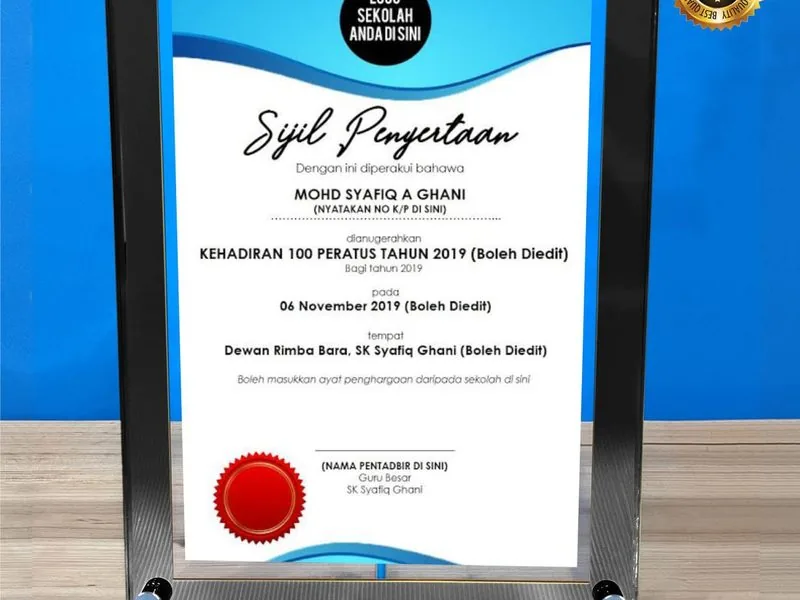
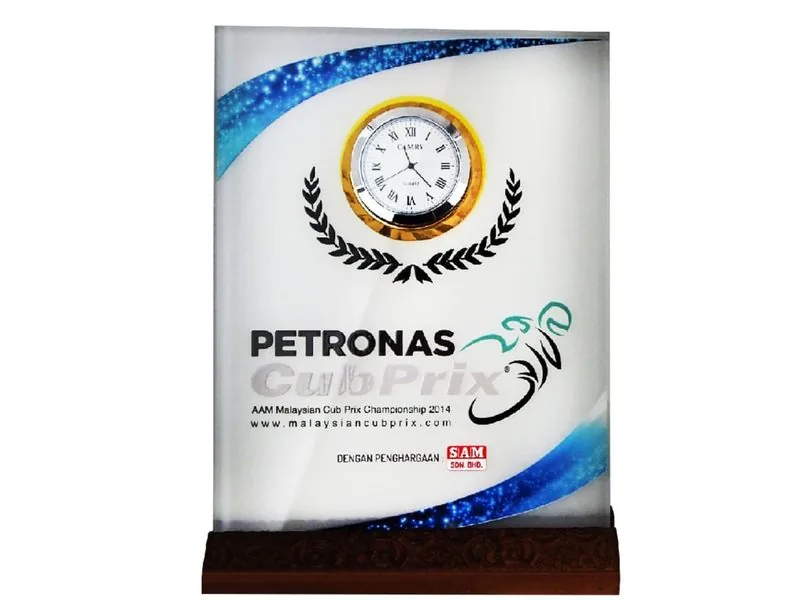
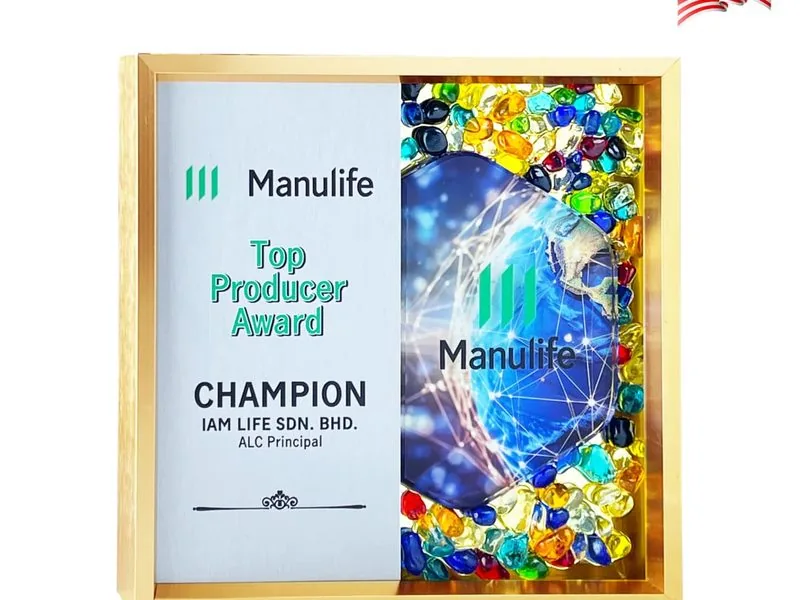
- Acrylic plaques: 5-12mm cast acrylic, polished or textured face, UV-printed or laser-engraved text/logo. Some include backing plates for layered visual depth.
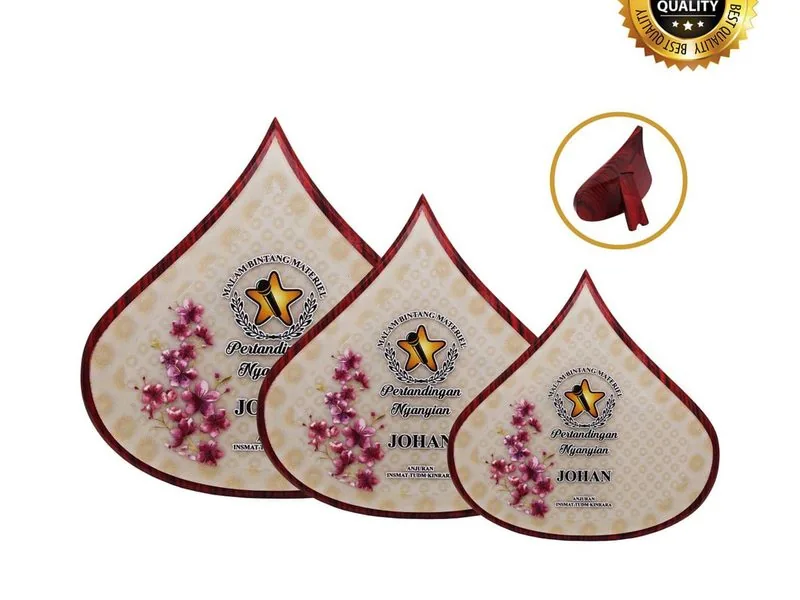
- Wooden plaques: Solid timber (typically meranti, oak, or maple stained finish) with a metal engraved insert. Lacquer or polyurethane sealed.
- Polished metal plaques: Brass, stainless steel, or aluminium plate, mirror-polished or brushed finish, laser-engraved or chemically etched. Mounted on wood backing or directly on the wall.
- Crystal plaques: Crystal glass plate with sub-surface engraved text, mounted on a metal or wooden base. More common as desk pieces than wall mounts.
These materials and finishes are calibrated for indoor environments. 22-26°C, 50-65% humidity, no direct UV. They look stunning under interior lighting and hold up for years.
Outdoor-rated plaque construction:
- UV-resistant acrylic: Cast acrylic with UV stabilisers added in formulation. Surface coatings include anti-yellowing layers. Visually similar to indoor acrylic but doesn’t yellow under prolonged sun exposure.
- Weather-treated brass: Solid brass with a clear protective coating, often a marine-grade lacquer. Prevents oxidation and tarnishing in humid/rainy conditions. Sometimes specified with a patina finish that leans into oxidation as a design choice.
- Anodised aluminium: Aluminium with an electrochemical surface treatment that creates a hard, corrosion-resistant oxide layer. Available in multiple colours. The standard for outdoor wayfinding and facade plaques.
- Bronze cast plaques: Cast bronze with text and imagery moulded into the casting. Premium tier, used for memorial and historical commemorative plaques. Patinas naturally over decades.
The substrates are fundamentally different. Indoor brass is decorative. Outdoor brass is engineered to survive. Indoor acrylic looks identical to outdoor-rated acrylic from 2 metres away, until 12 months of sun exposure makes the difference very obvious. The outdoor materials are special-order through our partner workshops, so I quote them to your spec rather than off a shelf.
When indoor-rated wins (almost every recognition use case)
Donor recognition walls in lobbies. Almost always indoor. Hospital, university, museum, NGO recognition walls live in air-conditioned interior spaces. Indoor acrylic or wood plaques are appropriate, roughly RM 150-400 per donor entry depending on tier.
For hospital donor walls, major Ministry of Health Malaysia (KKM) sites typically use tiered acrylic systems that allow new donor entries to be slotted in without rebuilding the wall.
Corporate boardroom and lobby plaques. Founder portraits, board recognition, milestone commemoratives, these belong indoors and don’t need outdoor-grade materials.
Office wall recognition. Long-service awards mounted in HR corridors, sales achievement plaques in management offices. Standard indoor wood-and-metal plaques work for decades in these conditions.
Religious and community recognition. Plaques inside surau, churches, temples, and community halls, see our church, mosque, and temple recognition plaques guide for context. Indoor plaques are right for these settings unless the building has open-air sections.
Trophy bases and presentation plaques. Plaques given as awards (handed to recipients) live indoors on desks and shelves. Indoor-rated is fine.
Most museum and exhibit labels. Where the exhibit is climate-controlled, indoor materials are correct.
When outdoor-rated wins (and indoor will fail fast)
Park benches and memorial benches. Benches commemorating donors or memorialising loved ones need UV-resistant brass or anodised aluminium. These are special-order pieces, quoted on spec by size and finish.
Trail and heritage plaques along Tourism Malaysia registered routes are typically cast bronze or anodised aluminium for the 50-year lifespan.
Garden memorial markers. Family memorial plots, dedication stones, pet memorial markers in private gardens. Outdoor-rated brass or bronze is the standard. Lifespan: 20+ years.
Building facade plaques. Foundation stones, opening date plaques, architectural commemoratives mounted on building exteriors. Anodised aluminium, weather-treated brass, or cast bronze. Sized for distance reading: 300mm or larger.
Open-air religious plaques. Mosque courtyards, temple gateposts, church entrance plaques exposed to weather. Outdoor-rated materials only.
Sports field commemoratives. School fields, stadium dedications, club facility recognition plaques mounted outdoors. Anodised aluminium or weather-treated brass. Avoid wood, it doesn’t survive Malaysian monsoon seasons.
Trail markers and heritage plaques. Hiking trails, heritage building markers, government-installed historical plaques. Cast bronze is the gold standard for permanence.
Anything in covered-but-not-enclosed spaces. Carpark walls, covered walkways, open verandahs. These environments still see UV and humidity swings. Treat them as outdoor for plaque selection purposes.
Pricing comparison side-by-side
Indoor pricing is SST-inclusive and varies by size and finish. Outdoor-rated materials are special-order through partner workshops, so I quote those to spec, they typically run roughly 2 to 3 times the indoor equivalent.
| Plaque format | Indoor RM | Outdoor |
|---|---|---|
| Acrylic (200×150mm) | RM 80-180 | UV-resistant, quoted on spec |
| Acrylic (300×200mm) | RM 150-300 | UV-resistant, quoted on spec |
| Brass on wood (small) | RM 180-360 | weather-treated, quoted on spec |
| Brass on wood (medium) | RM 200-360 | weather-treated, quoted on spec |
| Aluminium | n/a indoor | anodised, quoted on spec |
| Cast bronze | n/a indoor | quoted on spec |
| Crystal plaque | RM 200-340 | n/a (not weather-rated) |
Mounting hardware (screws, standoffs, anchor plates) is typically included on stock pieces. Custom mounting brackets for facade plaques are quoted by complexity.
A donor wall with 20 entries, as an example:
- Indoor acrylic tiered (around RM 150 average × 20): roughly RM 3,000
- Outdoor weather-treated brass: quoted on spec, typically 2 to 3 times the indoor figure
That 2-3× cost differential is normal across material categories, the outdoor substrate does real work the indoor one doesn’t.
Lifespan and maintenance
Indoor plaque lifespan:
- Acrylic: 10-20 years if cleaned occasionally with microfibre cloth
- Wood with metal insert: 15-25 years if kept away from direct AC vents and humidity sources
- Polished metal: 15-30 years; may need re-polishing every 5-10 years to maintain shine
- Crystal: indefinite if not dropped
Outdoor-rated plaque lifespan:
- UV-resistant acrylic: 10-15 years before noticeable yellowing or surface degradation
- Weather-treated brass: 15-25 years; develops a natural patina that some buyers prefer
- Anodised aluminium: 20-30 years; most durable in coastal and high-UV conditions
- Cast bronze: 50-100 years; patinas over time but doesn’t degrade structurally
Maintenance schedule:
Indoor plaques: dust monthly, deep clean annually. Acrylic wipes with glass cleaner; wood with a barely-damp cloth and lemon oil; metal with a dedicated metal polish.
Outdoor-rated plaques: rinse with fresh water quarterly to remove salt and pollutants. Brass and bronze can be re-coated every 5-10 years if you want to preserve the original finish. Anodised aluminium needs almost no maintenance. UV-resistant acrylic should be cleaned with non-abrasive cleaner only, abrasives compromise the UV layer.
Hidden trade-offs
Indoor acrylic outdoors fails fast. Standard acrylic without UV stabilisers yellows visibly within 6-12 months under direct Malaysian sun. The yellowing is irreversible. We’ve replaced indoor acrylic plaques that buyers mounted in covered walkways and watched degrade, the rebuy cost in outdoor-rated material is usually less than the cost of two replacement cycles in indoor material.
Wood outdoors is almost always wrong. Even sealed wood with marine-grade lacquer struggles in Malaysian humidity and monsoon seasons. The lacquer cracks within 18-24 months. Water seeps in. The wood warps and splits. The only outdoor wood that survives is teak with regular re-oiling, a maintenance commitment most buyers don’t sign up for.
Brass requires the right substrate. Brass on a wood backing for indoor use is a different product from solid brass for outdoor use. The mounting matters. We’ve seen “outdoor brass plaques” that were really indoor plaques re-marketed for outdoor use, they fail because the wood backing rots even when the brass holds up.
Cast bronze is overkill for most uses but worth it for the few that need it. Cast bronze is expensive and slow (4-6 weeks lead time, quoted on spec) but for permanent outdoor heritage plaques, nothing else delivers a 50-year lifespan.
Mounting hardware is the failure point. Outdoor plaques with stainless steel mounting hardware survive. The same plaque with mild steel hardware sees rust streaks within 24 months. Always specify stainless or marine-grade fasteners for outdoor mounts.
Wood lead time. All wooden plaques have a 10× MOQ and ~1 week extra lead time. This is a real constraint. Partner workshops batch wood orders to manage timber utilisation. Plan ahead for wood-based donor walls or memorial plaques.
iTrophy doesn’t manufacture. Brem Park is our office, showroom, and dispatch centre. Acrylic, wood, brass, and bronze plaques are produced by long-time partner workshops in Malaysia who specialise in each material. We curate, design, engrave, and coordinate. We don’t operate the substrates ourselves.
Bonus: the patina question (or, why some donor walls are designed to age)
A counter-intuitive design decision I’ve used on a couple of cultural-heritage donor walls we’ve supplied: deliberately spec brass without protective coating, knowing it will patina over 5-10 years to a soft brown-green. Most donor walls fight oxidation. Some embrace it.
The argument: a wall of brass plaques that has aged visibly looks like it has been there for decades. That signals “this institution has been honoured for generations” in a way that pristine new brass cannot. Older Malaysian institutional buildings have brass plaques from the 1960s like this, and they look better now than the day they were installed.
Patina is a design choice, not a defect, but only if you intend it. Indoor brass that patinas accidentally just looks like neglected brass.
For donor wall design, plaque specification, and material samples, message us on WhatsApp at +60 12-213 6631. Browse stock pieces at acrylic plaques, wooden plaques, and crystal plaques.
Next step. Before you brief any plaque order, walk to the planned location with your phone. Photograph the wall at 9am, noon, and 4pm of the same day. Send all three photos to +60 12-213 6631. Direct sun at any of those three times means outdoor-rated material. We return a recommendation and quote within one working day. For adjacent options, see the marble plaque donor recognition guide.
We've seen donor walls last 20 years indoors and outdoor-rated brass plaques outlast the buildings they were mounted on. We've also seen acrylic plaques yellow into uselessness within one year because someone mounted them on a sunlit wall.