Brass or acrylic isn’t a quality decision. It’s a cultural one.
Hand a 25-year veteran a clear acrylic plaque, and the room quietly clocks that it doesn’t look like 25 years. Hand a young startup winner a brass plate on dark hardwood, and it looks borrowed from a grandfather’s office. Same craftsmanship, same engraving, and both miss.
The material is the language. Here’s how to match it to the recipient.
Short answer: Choose brass on hardwood for conservative and institutional contexts (banks, GLCs, government, long-service, founder retirements) where traditional gravitas is the right register. Choose acrylic with UV print for modern brands, full-colour logos, custom shapes, and bulk programmes. When both registers matter, the hybrid (a brass nameplate on an acrylic backing) bridges them.
What you’re actually comparing
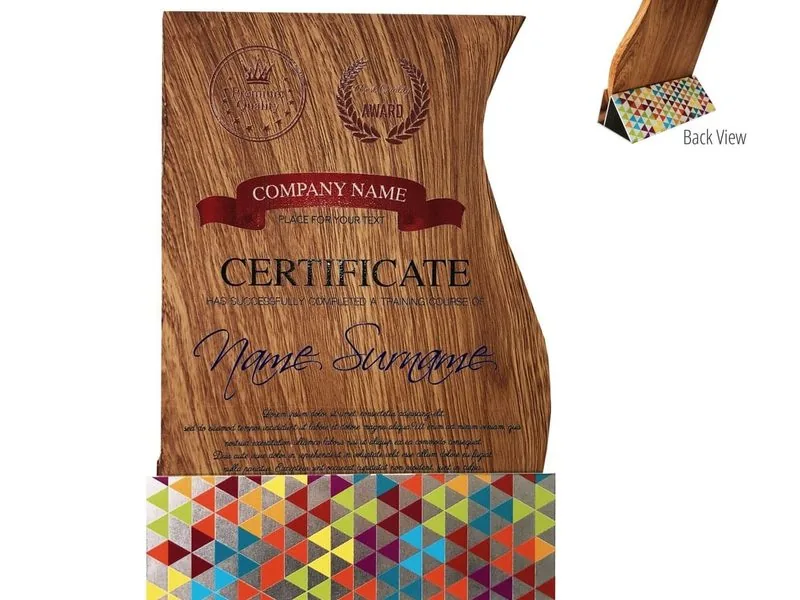
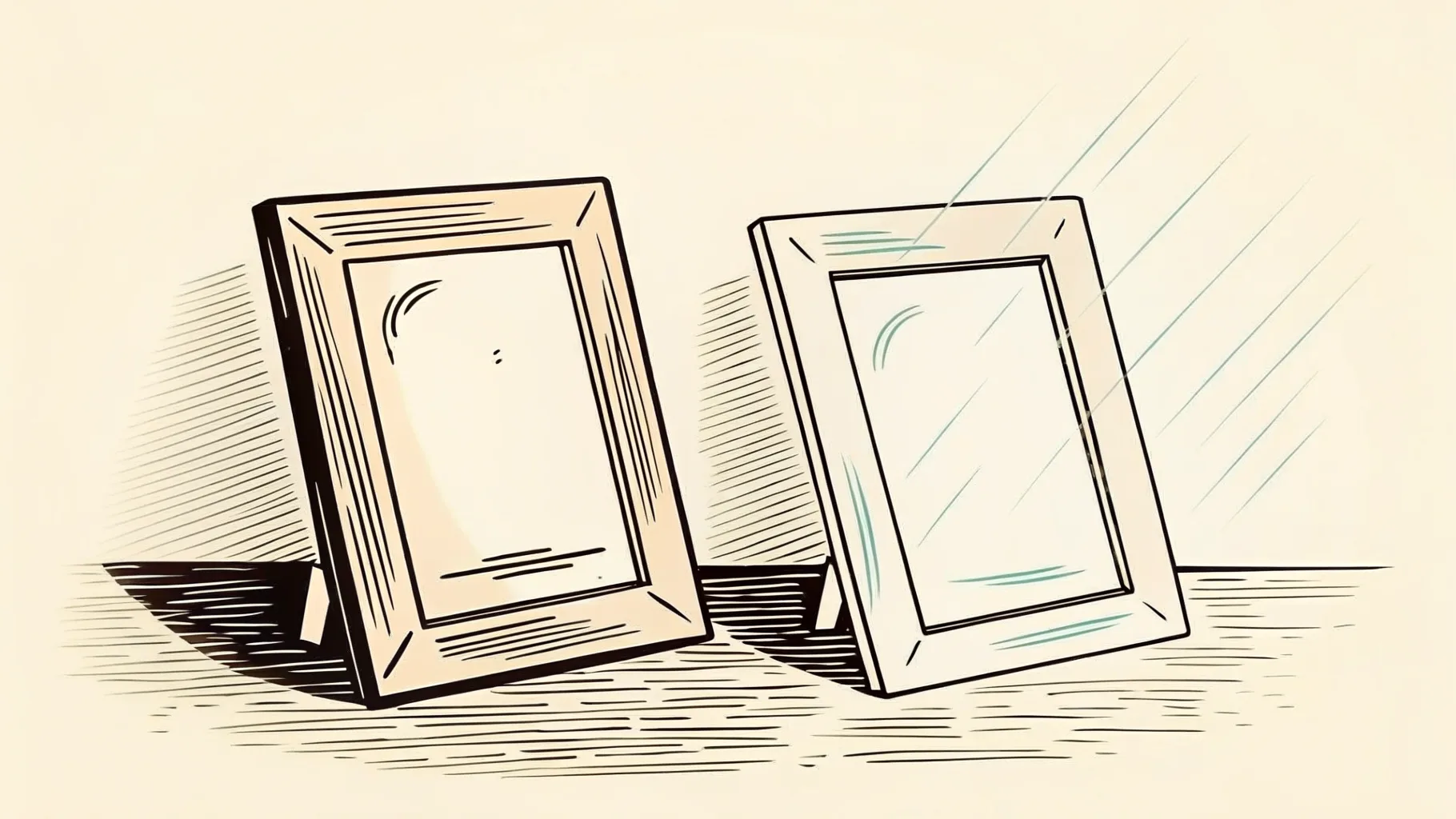
Brass in the Malaysian corporate context usually means a brass nameplate on a hardwood backing (the common format), or occasionally a solid brass plate. The engraving cuts into the brass and reads darker against the polished metal, a high-contrast traditional look in a single tone.
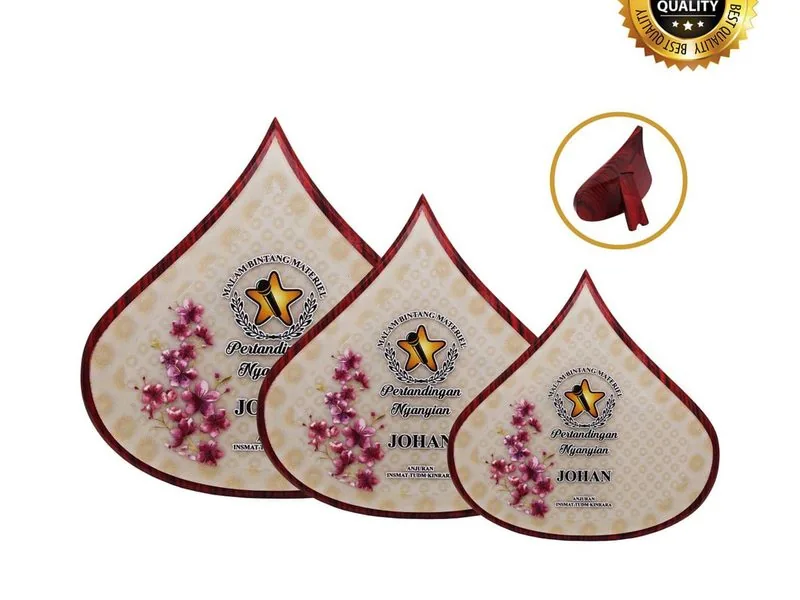
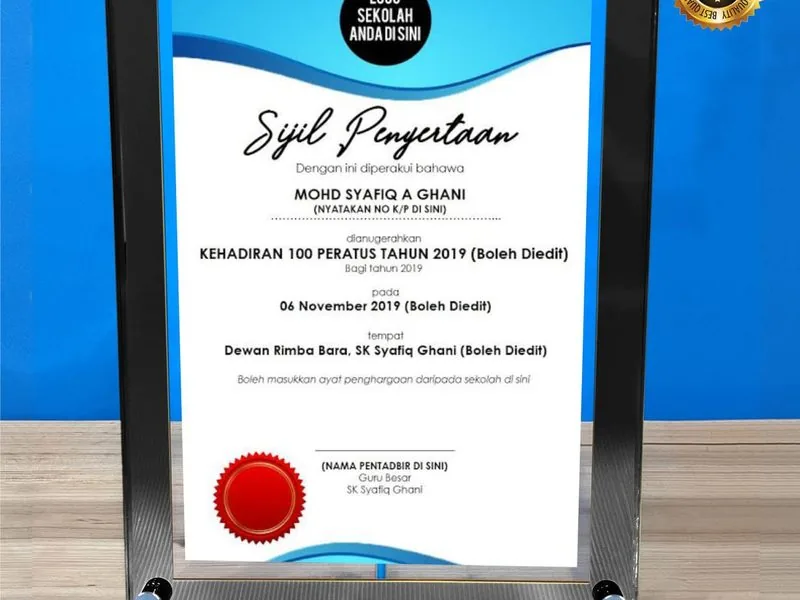
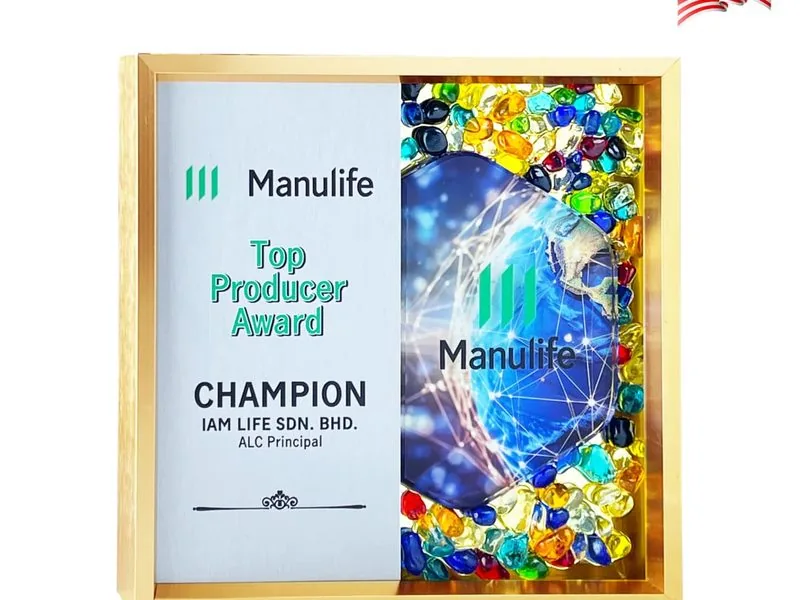
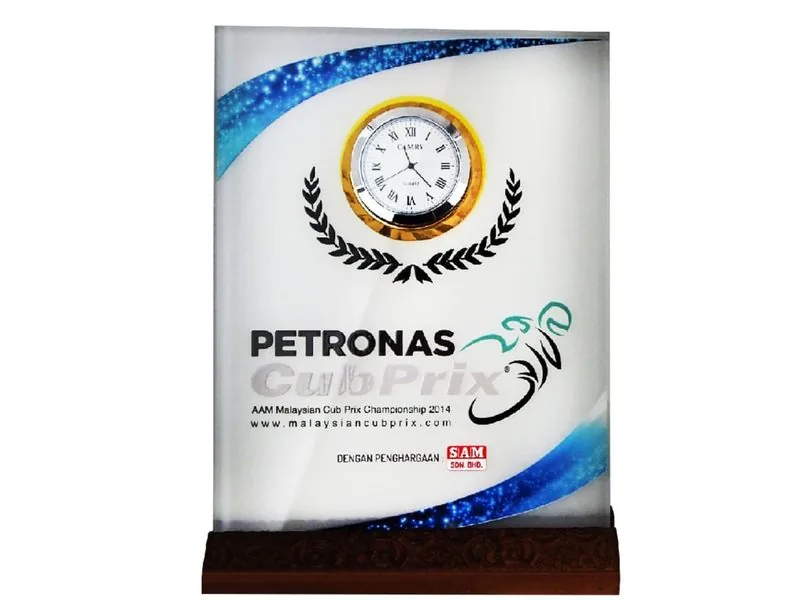
Acrylic is a cast acrylic block, decorated by surface laser engraving (a frosted mark) or full-colour UV print. It carries brand colour and custom shapes that brass can’t.
For the related decisions, see acrylic vs crystal plaques and acrylic vs wood plaque.
The decision matrix
| Dimension | Brass plaque | Acrylic plaque |
|---|---|---|
| Visual signal | Traditional, institutional, formal | Modern, design-forward, brand-flexible |
| Best for | Conservative, heritage contexts | Modern-brand contexts |
| Brand colour | Metal tone only | Full colour via UV print |
| Custom shape | Standard rectangles | CNC-cut to any silhouette |
| Aging | Develops a patina (character) | Pristine for 15–20 years |
| Photographs well | Stage lighting, flash | Daylight, even office lighting |
When brass wins, and acrylic would feel cheap
Reach for brass on hardwood when:
- Conservative, traditional industries — banks, insurance, legal, accounting, medicine, government-linked agencies. A long-service plaque to a 30-year veteran of a major bank reads wrong on acrylic.
- Long-service at 15+ years, where career-milestone gravitas matters and the piece sits on a study wall for decades.
- Founder anniversaries and family-business retirements, where the heritage signal matters and brass ages with the recipient.
- Donor recognition walls for permanent display in foundation or NGO offices.
- Religious community service appreciation, where the conservative format is respected.
Brass durability is part of the case: an engraved brass plate comfortably outlasts decades of indoor display. Our wooden plaques range carries brass-on-hardwood as the standard format.
When acrylic wins, and brass would feel out of era
Reach for acrylic with UV print when:
- Modern, brand-led companies — tech, creative agencies, fintech, e-commerce.
- Brand-coloured pieces. When the identity needs a specific palette or a gradient logo, acrylic plus UV print reproduces it; brass can’t. Send hex codes or Pantone references for a close match.
- Bulk programmes, where the per-piece cost at scale beats brass.
- Esports and gaming, where the modern look is essential.
- Custom shapes, where the award silhouette itself is meaningful and only CNC-cut acrylic delivers it.
Our acrylic plaques range covers stocked shapes plus full CNC-custom.
The hybrid, when you genuinely can’t choose
A brass engraved nameplate on an acrylic backing combines both: a cast acrylic base (frosted or coloured), a brass nameplate for the citation, and UV-printed brand artwork around it. You get the modern feel of acrylic with the formality of brass and a clean engraved citation. It suits mid-to-premium recognition where both registers matter, and B2B partner awards that need brand presence.
Keeping tiers visibly distinct
For an annual programme across many recipients, vary the material by tier so the hierarchy is visible, not just the citation length:
- Top tier (chairman, CEO, founder): a crystal centrepiece.
- Senior tier (15–25 year service, top performers): brass on hardwood, or a pewter piece.
- Mid tier (5–10 year service, service excellence): acrylic with UV print and an engraved citation.
- Broad recognition (quarterly, bulk participants): a smaller acrylic plaque.
A Tier-C recipient never looks at the Tier-A piece and feels slighted. They see a clearly different piece scaled to a clearly different milestone. That’s the point of the hierarchy. For per-tier numbers, the budget calculator sizes it in under a minute.
Citation conventions per format
Brass reads formal, so the wording can too:
WITH PROFOUND APPRECIATION
[Recipient name + honorifics]
[Position] · [Years of service]
[Two or three lines on specific contributions]
[Company name] · [Date]
Acrylic reads modern, so the wording can be tighter and brand-forward:
OUTSTANDING ACHIEVEMENT [YEAR]
[Recipient name]
[Department / role]
[One or two lines specific to the achievement]
[Company brand mark]
For more, see the plaque wording examples.
The common mistakes
Brass for a modern startup reads out of era; acrylic with brand colour fits. Acrylic for a 25-year founder retirement reads ad-hoc; brass or pewter signals the career. Using the same material across every tier loses the hierarchy. And generic filler text (“in recognition of outstanding contribution”) wastes the piece, on either material — name the specific contribution.
How to brief me
WhatsApp me at +60 12-213 6631 with the recipient context (industry, role, conservative vs modern culture), a format direction (brass on hardwood, acrylic with UV print, hybrid, or “open to suggestions”), your logo and brand colours, the citation text, and the quantity, budget, and event date. I’ll come back with a recommendation and quote within the hour, and a digital proof by the next working day. Customisation is free; only the courier is charged.
The single test that resolves most of it: would the recipient hang it in a grandfather’s study, or at an open-plan hot desk? Brass for the former, acrylic for the latter, hybrid when you genuinely don’t know. For the wider picture, see the corporate awards guide.
A brass plaque on a 25-year award reads as a career. The same award in acrylic reads as ad-hoc. The material says more than people think.