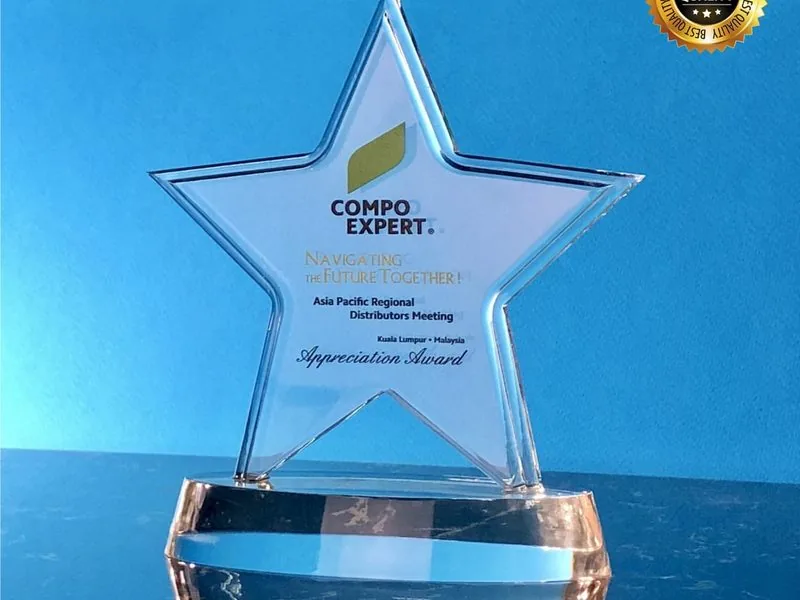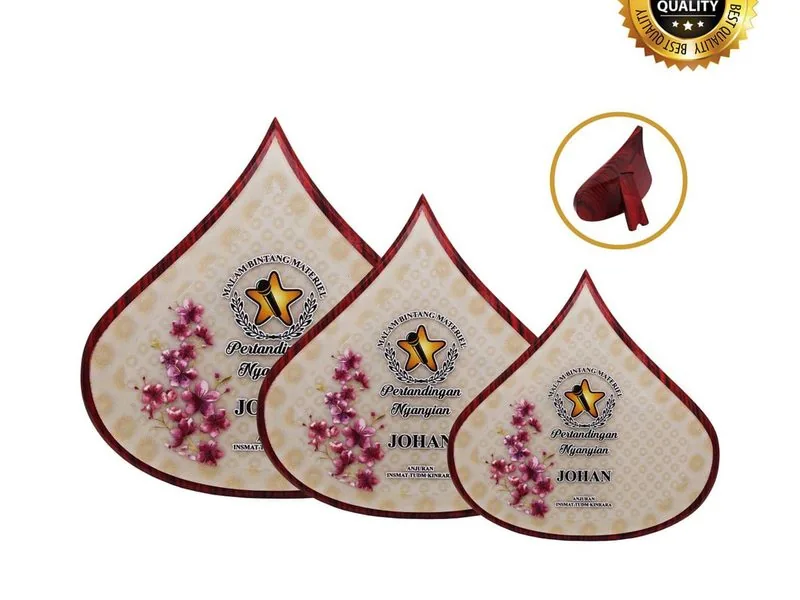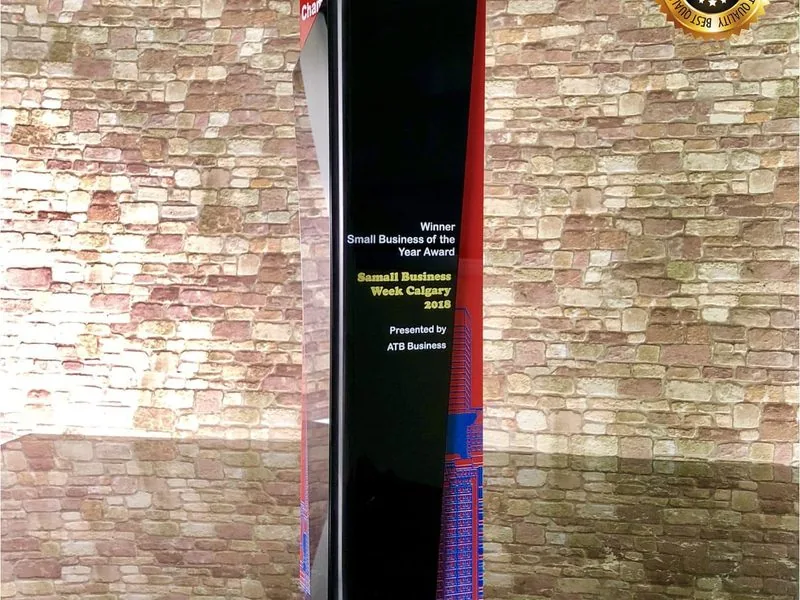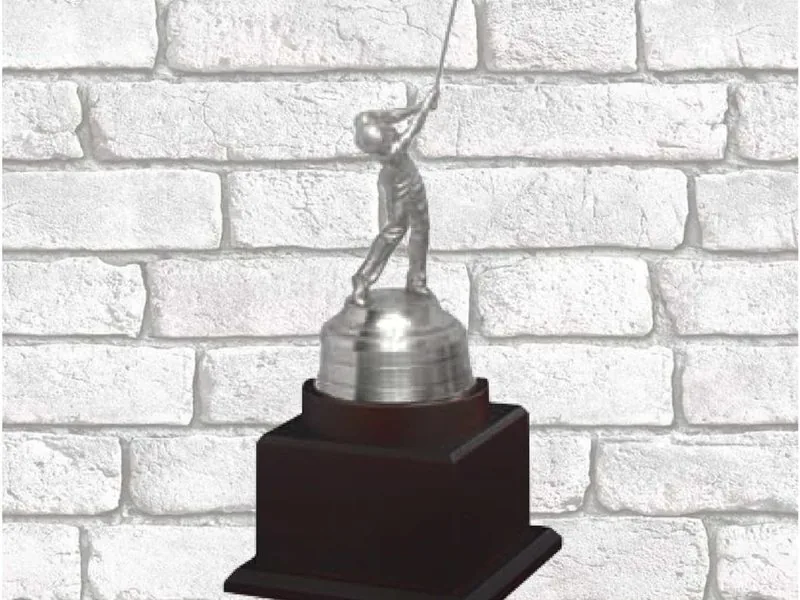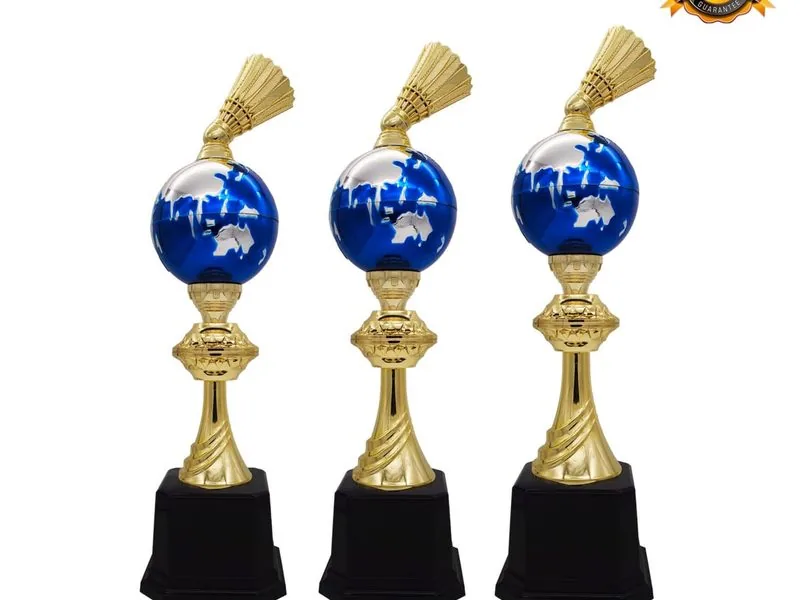
A great trophy with a weak citation is a tailored suit with a badly knotted tie. The piece is perfect; the words let it down.
I’ve watched a hand-cut crystal handed to a 30-year regional head land flat, because the citation read like an inventory tag. And I’ve watched a modest acrylic plaque get framed at home, because three specific lines actually said something.
The wording does the heavy lifting, and writing it well costs nothing. Here’s the formula that lands every citation.
Short answer: A strong corporate citation has five elements: recipient and tier, a specific achievement summary, the timeframe, a gratitude line, and the signature. Aim for 25–50 words. The achievement summary is the load-bearing line: name a real number or a real outcome, not “outstanding contribution.” Read it aloud before you sign off.
Why the wording matters more than the design
A citation is what turns a piece of crystal into an award. The design says “this is something nice we made.” The citation says “this is something we mean.”
I’ve seen expensive hand-cut pieces undermined by a generic “for outstanding service” line that could sit on any award at any company. I’ve seen modest acrylic plaques transformed by three specific, well-written lines the recipient frames at home. The wording carries the moment, and it costs nothing to get right. The formula below isn’t a creative-writing exercise. It’s a checklist.
The 5-element formula
Every strong citation contains, in some order:
| # | Element | Example |
|---|---|---|
| 1 | Recipient and tier | ”Encik Ahmad bin Razali — 25 Years of Service” |
| 2 | Achievement summary | ”For 25 years of leadership in consumer banking” |
| 3 | Timeframe / dates | ”2001 – 2026” |
| 4 | Gratitude line | ”With deep appreciation for your dedication.” |
| 5 | Signature / company | ”Presented by [Company Name], Annual Dinner 2026” |
The order varies. Long-service often leads with the tier, top-performer with the name, retirement with the gratitude line. The formula is the elements, not the sequence. Aim for 25–50 words: below 20 reads like an inventory tag, above 70 crowds the trophy and dilutes the message.
Step 1 — Lock the name and tier
This goes wrong most often. A misspelled name is the single most common error I catch at proof.
Confirm the full legal name as it appears on the IC (JPN issues it): “Mohamed” vs “Muhammad” vs “Mohd” matters. Confirm honorifics in writing with the recipient’s office, because Datuk, Datuk Seri, Dato’, Dato’ Sri, Tan Sri, and Tun all have specific forms and the wrong one is borderline offensive. For Chinese and Indian names, use the IC spelling, not what feels right. Always include “bin / binti” patronymics on long-service and retirement pieces.
Then pick one phrasing for the tier (“25 Years of Service” or “Anugerah Perkhidmatan Cemerlang”) and stay consistent across the whole year’s awards.
Step 2 — Write the achievement summary (the load-bearing line)
Get this right and the rest falls into place. Get it wrong and no design saves the piece. The principle: specificity beats grandeur.
Avoid the generic fillers: “for outstanding contribution and dedication,” “in recognition of exceptional service,” “for commitment, integrity and excellence.” They’re so generic they could apply to anyone, at any company, at any tier. The recipient feels nothing reading them.
Use specifics instead:
- Long-service: “For 25 years of dedicated service to the bank.” “Twenty years with [Company], through the merger, the IPO, and the rebuild.”
- Top-performer: “For exceeding the sales target by 142% in FY2025.” “For closing the largest single account in the company’s history.”
- Retirement: “For 32 years of leadership, four generations of staff trained, and twelve branches opened.”
Name a real number, a specific achievement, a real outcome. If you can’t find one, you don’t know the recipient well enough to write the citation yet. Go ask their manager. They’ll have the number, the project, the story.
Step 3 — Add the timeframe
Dates ground the citation in real history. Without them the award feels timeless in a bad way, as if it could have been written any year.
Use start and end years for long-service (“2001–2026”), the fiscal year or quarter for top-performer (“FY2025”), and the full span for retirement (“1992–2026, 34 years of service”). One small but important detail: write years in full (“2026”, not “26”). The trophy may sit on a desk in 2046, and the recipient’s grandchildren should be able to read the date.
Step 4 — Add the gratitude line
This is the human line, the one that turns a label into a citation and makes the recipient feel seen.
- Long-service: “With deep appreciation for your years of dedicated service.” “Penghargaan ikhlas atas perkhidmatan cemerlang anda.”
- Top-performer: “In recognition of results that set the standard for the team.”
- Retirement: “With our gratitude and warm wishes for the years ahead.”
Don’t skip it. A citation that runs recipient → achievement → date → company with no gratitude line reads like a database export. Even one short sentence is the warmth.
Step 5 — Add the signature
Close with who’s doing the recognising: “Presented by [Company Name],” “On behalf of the Board of Directors, [Company Name],” or “[Company Name], Annual Dinner [Year].” For higher-profile awards, add a signatory (“Presented by Datuk [Name], Group CEO”). For ceremony pieces, add the date. The signature doesn’t need a flourish. Plain and clear works best.
Step 6 — Choose the bilingual layout
Malaysian citations often sit in two or three languages. BM suits GLCs and public-sector bodies; English suits MNCs and tech; BM-and-English is the default for most corporates, usually BM on top and English below. The thing to plan for is space:
| Layout | Engraving room vs single language |
|---|---|
| Single language | Baseline |
| Two languages | Noticeably more |
| Three languages | Significantly more |
A plate that fits a single-language citation cleanly will struggle with three languages. If you’re going multilingual, pick a base shape with a larger plate or use two sides of the trophy. WhatsApp me a draft and I’ll do a quick layout proof showing what fits before you commit to the shape.
A clean bilingual example:
Anugerah Perkhidmatan Cemerlang · 25 Tahun Khidmat Encik Ahmad bin Razali · 2001 – 2026 Dengan penghargaan ikhlas atas dedikasi dan kesetiaan Presented by [Company Name], Long Service Awards, 22 November 2026
Examples by tier
5-year: 5 Years of Service · Aminah binti Hassan · 2021–2026 · With appreciation for your dedication. · [Company]
20-year: 20 Years of Service · Encik Ridhuan bin Othman · 2006–2026 · Two decades of dedication, leadership and example. · With deep appreciation, [Company], Annual Dinner 2026
Sales Champion: Sales Champion FY2025 · Priya Subramaniam · For exceeding the annual target by 138% and closing the largest enterprise account of the year. · Presented by [Company], 15 January 2026
Executive retirement: In Honour of a Remarkable Career · Datuk [Name] · Group Managing Director, 1992–2026 · 34 years of leadership through every chapter of this company’s growth. · With gratitude, the Board and Staff of [Company]
The common mistakes
| Mistake | Why it fails | Fix |
|---|---|---|
| Mismatched register | A warm opening with a stiff close reads inconsistent | Pick one tone and stay in it |
| Missing honorifics | Datuk / Tan Sri / Tun are not optional | Confirm in writing with the recipient’s office |
| Generic filler | Could apply to anyone, anywhere | Replace with one specific number or achievement |
| Wrong year | Trophy dated 2025 for a 2026 ceremony | Read the year on the proof three times |
| Spelling drift | ”Mohd” vs “Mohamed” vs “Muhamad” | Always use the IC spelling |
| Exclamation marks | Reads as marketing, not recognition | A citation never needs one |
| Corporate-filler verbs | The auto-generated buzzwords read as hollow | Strike on sight; replace with specific language |
When to bring in a copywriter
For most citations the formula is enough. You don’t need a copywriter for an annual dinner with fifteen awards. Bring one in when the recipient is a founder or chairman with a layered 30-year career, when the award is a one-off whose citation will be quoted in a press release, or when the audience includes regulators, royalty, or foreign delegations. For those, the citation becomes a quotable artifact, and professional copywriting is money well spent.
The read-aloud test that catches every weak citation
Before you sign off, do this once. Stand up. Hold the proof at chest height, where the recipient will hold the trophy. Read every line aloud at the pace the MC will read it.
If you stumble on a word, change it. If a line feels stiff, rewrite it. If the achievement summary makes you slightly cringe, the recipient will cringe harder. It takes thirty seconds and catches the weak citation before it reaches the crystal. I’ve watched HR teams adopt this single habit and produce noticeably better citations across a whole programme, without anyone’s writing skill changing.
WhatsApp me at +60 12-213 6631 with the recipient list and rough drafts, and I’ll tighten the wording before proofing, free. Browse base shapes at crystal trophies or wooden plaques, and for more see the appreciation plaque wording examples, the corporate awards guide, and the long-service awards guide.
Read the citation out loud. If you'd be embarrassed presenting it on stage, the wording is wrong, not the design.