I once had a large multinational’s HR team brief us in mid-November for a December 18th annual dinner: the CEO’s retirement citation drafted at 11pm in the same email thread, the copy ballooning into a 47-word run-on, the procurement officer only then asking about wood pieces with their 10× MOQ. They got through it. Barely. And it cost them sleep that the calendar would have given back.
If you’re briefing your trophy supplier in November for a December ceremony, your program isn’t planned, it’s surviving.
So here’s the six-step quarterly process I walk HR teams through, specific months, specific deliverables, that turns the annual ceremony from “we got through it” to “everyone left talking about how good it was”: design the program in Q1, gather data and draft the hard citations in Q2, brief and proof in Q3, produce and deliver in Q4, overlay it on the corporate calendar, and run a post-mortem so next year is easier.
Why annual programs need a 12-month calendar
A recognition program with no calendar is a calendar with no recognition. Without a structured timeline, three things happen reliably:
| Failure mode | Where it surfaces | Real cost |
|---|---|---|
| Tier counts surprise HR | October, when 3 extra 25-year staff are discovered | Budget overrun + rushed proofs |
| Supplier lead times crushed | November briefing for December event | No custom mould; stock-only; rushed engraving |
| Citations written at 11pm | 3 days before ceremony | CEO retirement citation reads as a database export |
A calendar fixes all three. The investment is one careful afternoon at the start of the fiscal year and 30 minutes of monthly checkpoints.
The return is a ceremony that runs itself.
Step 1, Q1: Program design and budget
January-March (or April-June if your fiscal year runs April-March).
This is where the program shape gets locked for the whole year. Three deliverables.
Lock the program structure
Decide which categories of recognition you’re running this year:
Long-service tiers. Standard Malaysian tiers are 5-10-15-20-25 years, with optional 30/35/40 for high-tenure orgs (banks, plantations, GLCs).
Decide whether you celebrate 5-year publicly (some orgs only start at 10-year), and whether 20-year and 25-year both get hero treatment. The Long Service Awards Malaysia and Anugerah Perkhidmatan Cemerlang guides cover format conventions in detail.
Top-performer awards. Sales Champion, Employee of the Year, Department of the Year, Customer Service Excellence, Innovation Award, Rookie of the Year, Team of the Year. Mid-size orgs typically run 8-15 such awards. Banks and insurers often run 20-30.
Special-occasion line. Retirements, founders’ day, IPO/M&A milestones, anniversary commemoratives, ad-hoc recognition. Always allocate something. Every year throws up surprises.
External / partner appreciation. Year-end gifts to long-time vendors, board members, partner organisations. Often forgotten in budget, then squeezed in at the last minute.
Set per-tier RM bands
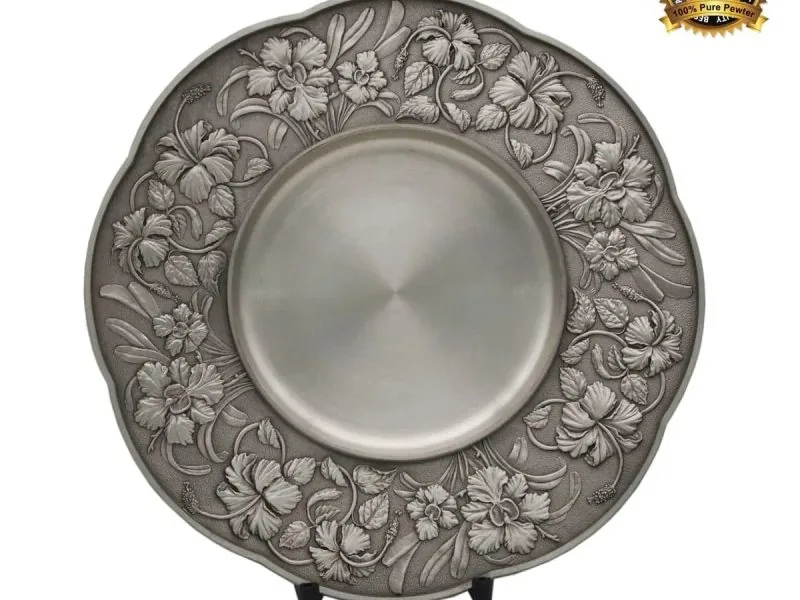
Mid-market Malaysian benchmarks to budget against (SST-inclusive, no separate engraving fee, all customisation free at iTrophy). These are market planning benchmarks, not iTrophy quotes, our catalogue does most of its work between RM50 and RM450 a piece, and the premium, pewter and bespoke hero tiers (20-year-plus, executive, CEO) are quoted on spec:
| Long-service tier | Per-piece RM band |
|---|---|
| 5-year | RM 30-100 |
| 10-year | RM 100-400 |
| 15-year | RM 400-800 |
| 20-year | Premium, quoted on spec |
| 25-year | Bespoke hero, quoted on spec |
| Top-performer (category) | RM 400-1,500 |
| Employee of the Year (headline) | Hero piece, quoted on spec |
Adjust for your org’s prestige posture. Use the trophy budget calculator to model totals quickly. For deeper guidance see How to Budget a Corporate Recognition Program.
Get finance sign-off
Present the per-tier table (not just the total) to finance. Get the budget approved against tier counts and unit bands.
This protects you when tier counts shift mid-year. You use buffer or flex line, you don’t re-open the budget.
By the end of Q1 you should have: a one-page program summary, a per-tier budget table, and finance sign-off in writing.
Step 2, Q2: Data collection and tier mapping
April-June.
This is the data quarter. Three deliverables.
Pull tenure data for the ceremony year
Run a clean HRIS report for every staff member crossing a long-service milestone in the upcoming ceremony year. Format:
Staff ID | Full name | Department | Start date | Tenure tier this yearCross-check with department heads. Every year, 1-3 staff members get discovered whose tenure milestones were missed in past years.
Decide now whether to recognise them this year (most orgs do, with a “we should have done this earlier” framing) or not.
Gather top-performer data
For Sales Champion and revenue-driven awards, work with the sales/commercial team to identify candidates by mid-Q2. Final ranking can wait until Q3, but the candidate pool should be locked.
For Employee of the Year and discretionary awards, run the nomination process in Q2. Most orgs ask department heads or peer panels to nominate. Selection is decided in early Q3.
Begin citation drafting for major recipients
For CEO retirements, founders’ day commemoratives, IPO milestones, and other one-off major pieces, start writing citations now.
These are the citations that need iteration, copywriter input, and senior leadership review. They cannot be written in November.
For routine long-service citations, the formulaic 5-element approach works fine and can be templated for engraving in Q3. See our How to Write a Corporate Citation post.
By the end of Q2 you should have: confirmed recipient list with names and tiers, top-performer candidate pool, draft citations for major recipients.
Step 3, Q3: Supplier brief and design proof
July-September.
This is the production quarter, though “production” doesn’t start in earnest until Q4. Q3 is briefing, design, and proof. Three deliverables.
Brief the supplier (early August at the latest for a December ceremony)
WhatsApp +60 12-213 6631 (or your supplier of choice) in late August or early September for a December ceremony. Earlier if you’re commissioning custom-mould pieces.
The brief should contain:
- Total quantities by tier
- Material preferences per tier (crystal for 20-25-yr, acrylic for 5-yr, etc.)
- Citation drafts for major recipients
- Ceremony date and venue
- Approximate budget envelope
The supplier comes back with a quote, route recommendations per tier, and an indicative timeline.
Convert quote to PO or LO without losing the timeline
For Malaysian corporate buyers, Q3 is also where procurement paperwork needs to happen. Keep these four dates in one tracker:
| Gate | Owner | Latest date for December ceremony |
|---|---|---|
| Supplier quote received | HR / admin | Late August |
| Finance budget check | Finance | First week September |
| PO or LO issued | Procurement | Mid-September |
| Final artwork proof approved | HR plus category owner | End September |
The quote should show SST-inclusive unit prices, courier separately, delivery postcode, payment terms, and whether any tooling or mould setup applies. If your organisation uses a letter of award (LO), attach the final quote and proof version so the supplier is not producing from an outdated name list.
The important distinction: a PO/LO authorises the spend, but the proof approval authorises the engraving. Do not let those become the same step. Finance can approve the budget before every citation is perfect; production should not start until names, honorifics, years, and logos are signed off.
Approve the combined proof
By mid-September, the supplier should send a combined PDF proof showing every piece in the order with engraving applied.
Read every line twice. Have a colleague read every line again. The proof is your last chance to catch typos, wrong years, misspelled names, and citation errors at no cost.
For a 50-piece program, expect 3-5 rounds of proof revisions. That’s normal. Not a sign that anything is broken.
Lock packaging and presentation
Decide on presentation boxes, velvet pouches, or display sleeves. For higher-tier pieces (20-25 year long-service, executive retirements), a foam-cut presentation box is standard.
For 5-year and routine top-performer pieces, a simpler protective packaging is fine.
Confirm any branded sleeves or stickers. These need lead time and are often forgotten until the production stage.
By the end of Q3 you should have: signed-off proofs, locked packaging, production timeline confirmed.
Step 4, Q4: Production and ceremony delivery
October-December.
This is the visible quarter, where the program either lands smoothly or gets exposed. Three deliverables.
Production runs
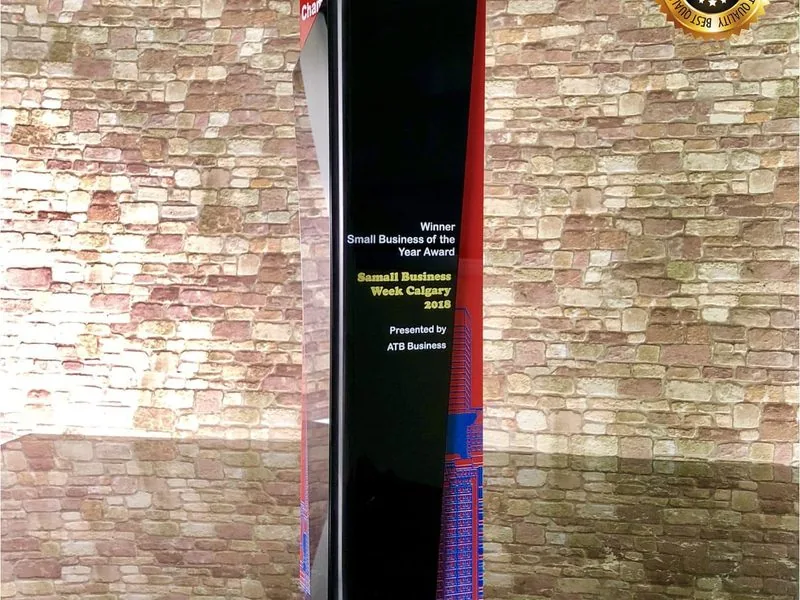
Stock crystal and acrylic pieces: 3-4 weeks production from approved proof.
Custom-mould pieces: 6-8 weeks when mould sampling, committee review, and final proofing are included. Repeat moulds can be faster, but do not plan the first year around a best-case clock.
Pewter pieces: 7-14 working days. Engraved metal pieces: 2-3 weeks.
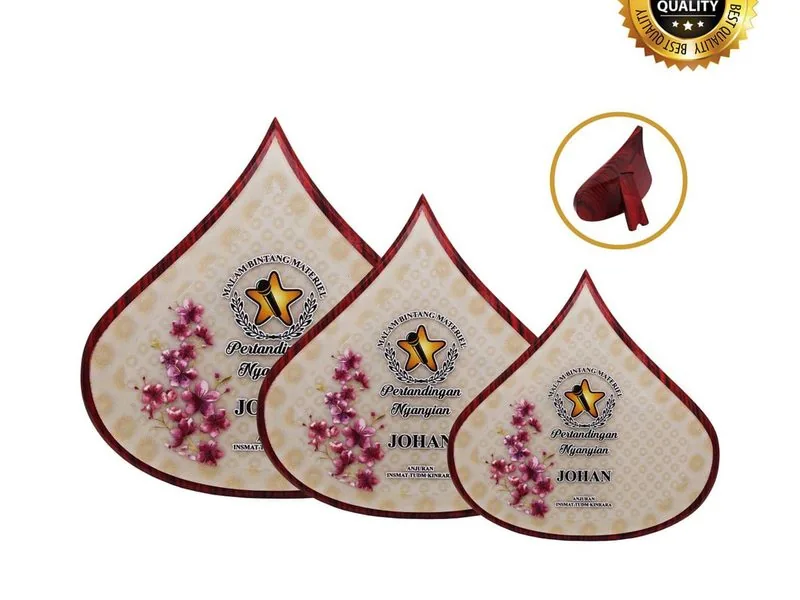
Wood (with 10× MOQ and ~1 week extra lead time): 4-5 weeks.
Build all of this backwards from your ceremony date. For a 15 December annual dinner:
- Custom mould pieces: brief by 1 September latest
- Crystal hero pieces: brief by 15 September latest
- Stock acrylic and pewter: brief by 1 October latest
- Citations and engraving plates: lock by 15 October
For outstation delivery, set the arrival target by region, not by hope:
| Delivery route | Target arrival before ceremony |
|---|---|
| Klang Valley hotel or HQ | 5 working days |
| Peninsular Malaysia outside Klang Valley | 7 working days |
| Sabah / Sarawak / Labuan | 10 working days |
| Split delivery to recipients’ homes | 10-14 working days, because address errors multiply |
Dispatch and venue logistics
Pieces dispatch 1-2 weeks before ceremony for Klang Valley, 2 weeks before for East Malaysia. Build buffer for courier delays.
When pieces arrive, do a full inspection within 24 hours. Photograph any damage and contact the supplier immediately.
Replacements are free for damage in transit, but the lead time on a replacement is real (5-10 days for stock, longer for custom).
Venue logistics for ceremony day:
- Trophy table layout (alphabetical? by tier? by department?)
- Backstage handler to present pieces to the MC in correct order
- Photographer briefed on the recipient sequence
- Spare pieces (the buffer from Step 1’s budget) kept aside in a labelled box
MC briefing and photo arrangements
The MC briefing matters more than HR teams realise.
A well-briefed MC pronounces names correctly (especially honorifics, Datuk vs Dato’ vs Tan Sri), pauses for photo opportunities, and paces the ceremony so it doesn’t drag.
Send the MC a single-sheet briefing 48-72 hours before the ceremony with:
- Recipient names with phonetic spelling for tricky ones
- Citations to be read aloud
- Tier order (long-service first, then top-performer, then specials, or whatever your org’s tradition)
- Photo notes (group shots? individual stage photos?)
Photographer briefing similarly: shot list with recipient names, group shots, “money shot” of the trophy + recipient + senior executive.
Send a sample of last year’s program photos so the photographer has visual reference.
By the end of Q4 you have: a successful ceremony, photos for the company newsletter, and a tired but proud HR team.
Step 5, Full-year calendar overlay (and where Malaysian dates clash)
Map the quarterly steps onto the actual corporate calendar. Avoid clashes with:
- Year-end financial close. Finance teams are unavailable in March (for April-March fiscal years) or December (for calendar-year fiscal). Don’t schedule budget reviews then.
- Sales conferences and major industry events. Sales heads are unavailable for top-performer nominations during their own conferences.
- Hari Raya Aidilfitri / Chinese New Year / Deepavali / Christmas. Build in quiet weeks. Staff availability drops 40-50% the week before. Check the JAKIM Islamic calendar for moveable dates.
- Annual leave peaks. June and December school-holiday leave peaks reduce headcount for proof reviews and ceremony prep.
- MAS / Petronas / Bank Negara fiscal events. If your organisation falls under Bank Negara Malaysia (BNM) reporting cycles, the late-March and late-September windows are typically locked for compliance work.
A simplified annual recognition calendar for a December ceremony:
Jan: Program design kick-off, budget framework
Feb: Per-tier budget locked, finance sign-off
Mar: Q1 close-out
Apr: Tenure data pull, recipient list draft v1
May: Top-performer nomination process opens
Jun: Recipient list locked, major citation drafting
Jul: Supplier shortlist, initial briefing conversations
Aug: Supplier brief sent, quote received, materials selected
Sep: Combined proof rounds, sign-off by end September
Oct: Production runs, packaging confirmed
Nov: Pieces dispatched, ceremony venue logistics
Dec: Ceremony delivery, MC briefing, photographer briefing
For a different ceremony date (Hari Raya recognition in May, Founders’ Day in October), shift the calendar back accordingly.
The principle is the same: brief 12-14 weeks before the ceremony for the smoothest experience.
Step 6, Year-on-year iteration
The single biggest jump in program quality is between year one and year two. Year two is built on the lessons of year one.
Within two weeks of the ceremony, run a 30-minute post-mortem. Three questions:
-
What worked? Which parts of the process landed cleanly? Which tier choices got positive feedback? Which moments at the ceremony got the biggest reaction?
-
What surprised us? Where did tier counts diverge from forecast? Where did the budget come in over or under? Which citations got the most reaction?
-
What do we change next year? Specific actions. “Brief supplier in early August next year, not mid-September.” “Move executive retirement piece to a separate budget line.” “Add Mandarin/Tamil layout option for next year’s long-service tier.”
Capture the post-mortem in a one-page document. Save it to your shared drive with the program calendar.
Year two starts here. Year two runs noticeably smoother than year one with no extra effort, just because you wrote down what you learned.
After year three, the program runs largely on autopilot. The HR team makes strategic improvements rather than fighting fires. That’s the goal. Trust the calendar to do the heavy lifting once it’s set up.
Bonus: the one-page program brief that pays back forever
The single most useful artefact a recognition program can produce is the one-page brief. A single A4 with:
- Tier definitions
- Per-tier RM bands
- Supplier contact
- Lead-time milestones
- Citation templates per tier
- The post-mortem checklist
Save it as Recognition Program Brief vN.pdf in the HR shared drive. Update it once a year after the post-mortem.
When the HR coordinator who runs the program leaves the company (and they will, eventually), this single page is the entire handover document. Without it, year-five-after-handover is rebuilt from memory and inevitably degrades.
With it, the new coordinator runs cycle one without having to reconstruct anything.
We’ve supplied recognition programs at the same Malaysian banks and insurers year after year. The ones that survived three rounds of HR turnover all had a brief like this. The ones that didn’t, restarted from zero.
For the surrounding ground, see how to budget a recognition program and the corporate long-service ladder for 15/20/25 years, and browse tier-appropriate options in crystal trophies, wooden plaques and acrylic trophies.
Next step. Block 90 minutes on a Friday afternoon in Q1. Open a blank doc. Lock the tier table, the planning RM bands, the ceremony date, and the supplier brief deadline. Then WhatsApp +60 12-213 6631 with the recipient headcount and we return a per-tier quote and indicative timeline within one working day.
If you're briefing your trophy supplier in November for a December ceremony, your program isn't planned, it's surviving.