There’s one procurement decision that quietly destroys recognition programs from the inside: rotating suppliers each year to shave a little off the unit price. I’ve seen the result on a director’s shelf, three “20 Years of Service” crystals from three different years, three different heights, three different fonts, three different logo placements. To procurement, the saving looked smart. To the recipient, it reads as “nobody was paying attention.”
The fix is operational discipline, not a bigger budget. So here’s the six-step setup that turns a recurring program from per-cycle chaos into a fill-in-the-blanks exercise, and makes every cycle after the first run far leaner than the first: lock the tiers, pick one supplier, build artwork templates per tier, set up a procurement workflow once, schedule orders 6-8 weeks ahead, and keep a year-on-year archive.
Browse tier-appropriate pieces in crystal trophies as you read, and see the wider ground in corporate awards Malaysia.
Step 1, Define program tiers and frequency before you talk to a supplier
Before you order a single trophy, define the program structure on paper. This is HR work, not procurement work, but it has to happen first or every later step gets harder.
The questions to settle:
- What are the tiers? Are you running Bronze / Silver / Gold? Long-service tiers at 5 / 10 / 15 / 20 / 25 years? Top Performer / Top Team / Top Department? Innovation / Service / Leadership? Three to five tiers is the working sweet spot. Fewer feels thin, more feels diluted.
- What’s the frequency? Quarterly, semi-annual, annual? Quarterly programs build momentum but require sustained operational discipline. Annual programs are easier to run but rely on a single big moment.
- What are the criteria for each tier? Document this. “Top performer” is not enough. What does it actually measure? Sales numbers, peer nominations, manager nomination, customer feedback scores? The criteria should be auditable.
- Who decides recipients? A panel? The CEO? A nomination process? Whatever the answer, write it down so year three doesn’t relitigate year one.
- What’s the budget per recipient per tier? As planning benchmarks to budget against (not iTrophy quotes): roughly RM 80 to RM 150 for entry-tier appreciation pieces, RM 150 to RM 300 for mid-tier annual awards, RM 300 to RM 450 for top-tier recognition, and premium or bespoke ceremonial founder/anniversary pieces quoted on spec. Lock the per-tier budget and stick to it across cycles.
A program with vague tiers becomes a political headache by year two. Someone gets bumped from Gold to Silver because nobody can remember the original criteria, and the recognition program loses its weight.
Write the rules in year one.
Step 2, Pick one supplier and stay with them
This is where many programs quietly fail. The procurement team rotates suppliers annually for “competitive pricing” or because someone in finance pushes for it.
The result, three years in, is a recognition shelf in the executive lounge with three subtly different fonts, three subtly different crystal cuts, three subtly different logo placements.
To anyone paying attention, including the recipients who keep their awards on a desk, the inconsistency reads as institutional carelessness.
Pick one supplier, stay with them, build the relationship.
| What changes when you stick with one supplier | Year-on-year impact |
|---|---|
| Visual consistency | Same materials, conventions, logo treatment across cycles |
| Operational efficiency | Per-cycle admin drops sharply from year two |
| Pricing stability | Better lead times, fewer cost surprises, absorbed minor customs |
| Accountability | Single point of contact who knows your history |
| Archive continuity | Supplier holds your artwork templates, recipient lists, signed proofs |
iTrophy works with corporate clients on multi-year recognition programs as a default. Not as a special arrangement.
WhatsApp +60 12-213 6631 to discuss program setup. We have HR teams from banks, insurers, plantations and service sector companies who have run recognition through us cycle after cycle.
For a deeper view on supplier selection criteria, see our trophy supplier checklist.
Step 3, Build artwork templates for every tier
This is the step that pays back the most. Spend a day in cycle one getting the artwork template right, and every subsequent cycle becomes a fill-in-the-blanks exercise.
For each tier, lock the following:
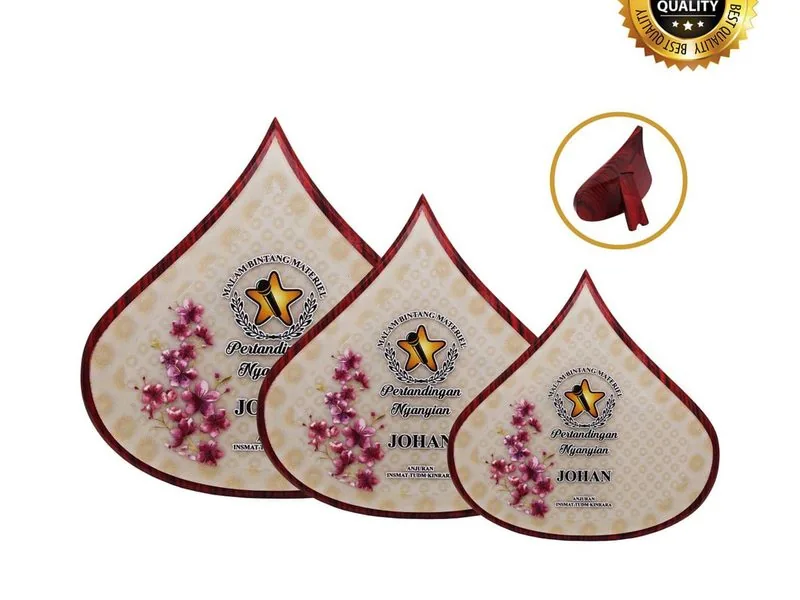
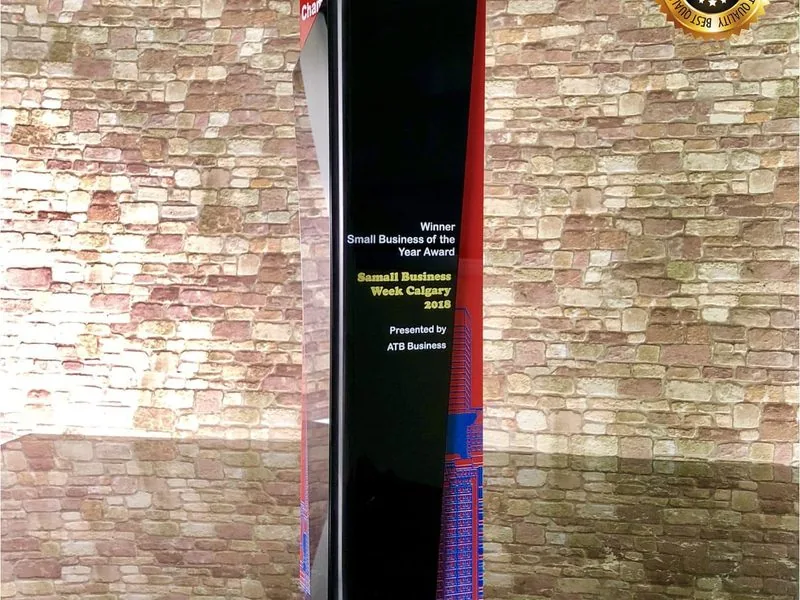
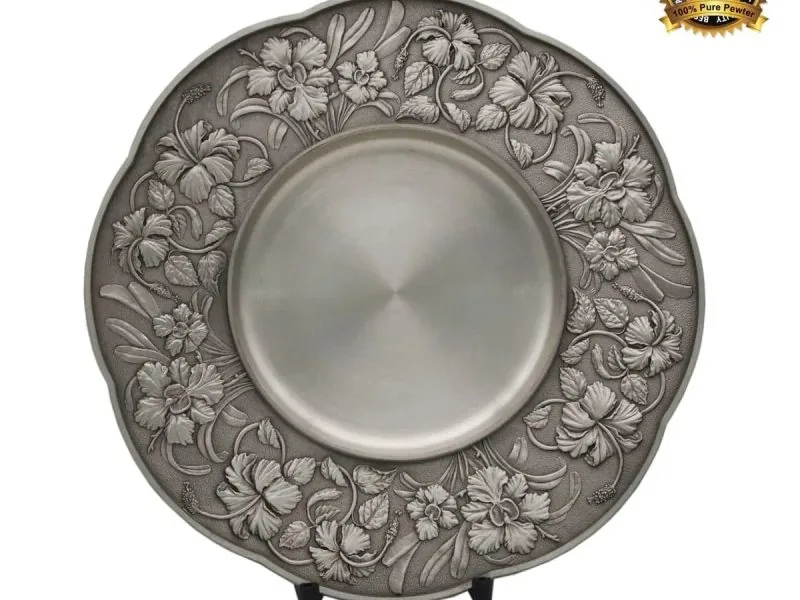
- Trophy material and shape. Crystal teardrop, crystal facet block, acrylic blue-edge plaque, wooden plaque with brass plate, pewter shield. Each tier should have a fixed material. Bronze always acrylic, Silver always crystal, Gold always pewter, for example.
- Standard dimensions. “Crystal 180 mm tall” is locked. Don’t alternate sizes year-on-year.
- Engraving font and size. “Recipient name in Trajan Pro 20 pt, citation in Cormorant 11 pt.” Locked.
- Logo treatment. “Company logo etched at top, 25 mm wide, sub-surface laser.” Locked. Logo treatment is the most common drift point. Different design teams place the logo slightly differently each year.
- Citation format. A locked phrasing template with variable fields: “Awarded to [NAME] in recognition of [TIER NAME] [YEAR].” Don’t rewrite the citation prose every cycle.
- Date format. “31st December 2026” or “2026” or “FY2026”. Pick one and stick to it.
- Base or stand. Crystal trophies usually come with a base. Specify base material and engraving (or no engraving) consistently.
Save all of this as a template document. PDF preview, AI/EPS source if you have a designer, or just a clear written brief in a shared folder.
Tag it “Recognition Program Template v1.” When something needs to change in year three, save it as v2 and document why.
iTrophy archives every artwork template we produce for repeat clients. When you order again, we pull the file, swap recipient names, send the proof. No re-design, no re-discussion of fonts, no inconsistency.
Step 4, Establish a procurement workflow
The procurement side of recurring orders should be invisible after cycle one. To get there, do the work upfront.
The workflow checklist:
- Vendor onboarding. Get the supplier registered in your accounting and procurement system once. ITROPHY BROTHERS PLT, registration 202504003677 (LLP0045203-LGN). Tax invoice format on request.
- PO format. Agree what your PO looks like, line item structure, descriptions, codes. The supplier matches their invoice format to your PO format.
- Payment terms. Agree net-30, net-60, or 50% deposit / 50% on delivery upfront. Document it. Don’t renegotiate every cycle.
- Invoice schedule. Agree whether each cycle gets one invoice or multiple. For monthly recognition programs, monthly invoicing is normal. For quarterly, quarterly. For annual, single invoice on delivery.
- Delivery default. Agree the standard delivery method, Lalamove same-day for Klang Valley, J&T or Pos Laju 1-3 days nationwide, cargo for East Malaysia. Locked unless overridden.
- Contact protocol. Who at your end is the day-to-day contact, who is the approver. Who at the supplier end is your account contact. Single point of contact each side keeps things clean.
For corporate clients with formal vendor onboarding processes (banks, government-linked, multinationals), we typically complete vendor registration in the first cycle and never revisit it.
After that, every order is a WhatsApp message and a PO.
Step 5, Schedule orders 6-8 weeks ahead, every cycle
The single biggest source of last-minute pressure on recurring programs is treating each cycle as a fresh decision. It isn’t. The cycle is on a calendar. Lead time is known. Schedule it.
Working lead times:
| Material | Production from sign-off | Total to delivery (Klang Valley) | MOQ |
|---|---|---|---|
| Crystal trophies | 5-7 working days | 2 weeks + 1 week proof buffer | None |
| Acrylic trophies / plaques | 4-6 working days | 2-3 weeks | None |
| Wooden plaques | 7-10 working days | 4 weeks | 10× |
| Pewter awards | 7-14 working days | 4 weeks | None |
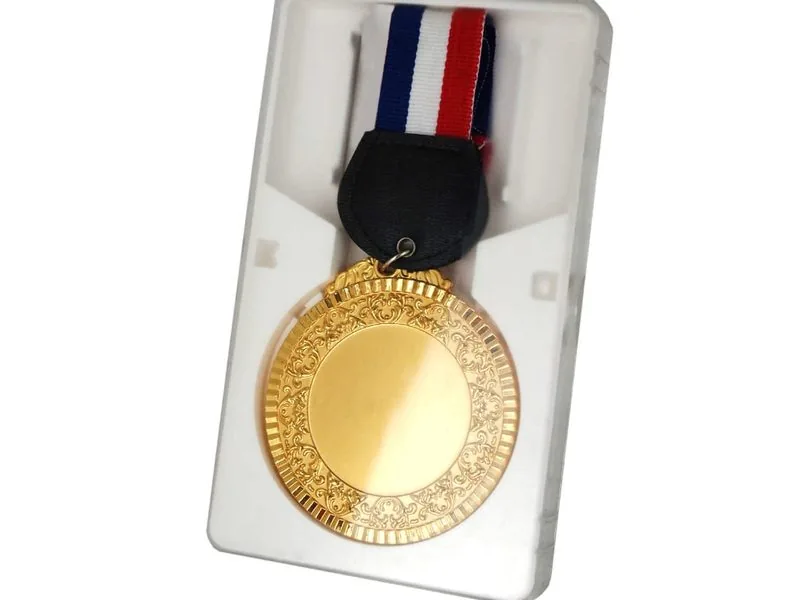
| Metal medals (chem etch) | 7-12 working days | 4-5 weeks | None |
For most corporate programs, schedule your order date 6-8 weeks before the ceremony. That gives:
- 1 week to finalise recipient list
- 1 week to brief supplier and produce first proof
- 1-2 weeks for proof revisions and sign-off
- 2 weeks production
- 1 week buffer for any QC issues or replacements
A program that orders 10 days before the dinner is a program forced to compromise. On materials available, on rush turnaround, on delivery method. None of these compromises serve the recipient.
For East Malaysia delivery specifically, see our East Malaysia trophy delivery guide for additional time buffers.
Build the order date into the company calendar. For an annual dinner in December, order on 1 October.
For a quarterly programme with ceremonies in March, June, September, December, order on the first of each preceding month. Make it a recurring calendar event, not a thing someone has to remember.
Step 6, Build a year-on-year archive
The archive matters more than people realise. Five years into a recognition program, you’ll need it.
What to archive each cycle:
- Signed artwork proofs. PDF of every proof signed off, with the WhatsApp/email approval thread.
- Recipient list. Spreadsheet of who received what tier in what year. Useful for spotting eligibility for higher tiers (the person who got Bronze in 2024 may be due Silver in 2026).
- Photos of delivered pieces. A handful of phone photos of each tier’s trophies as delivered. Useful when explaining the program to new joiners or when a senior leader asks “what did the 2024 piece look like?”
- Citation text used. Plain-text record of the citation phrasing for each recipient. Useful for HR records, performance review documentation, and legal compliance.
- Invoices and POs. For finance.
- Any deviations from the standard template. “In 2025 we used a slightly larger crystal for the founder award”. Note this so year three doesn’t accidentally drift back to the wrong size.
Storage: a shared folder on Google Drive, OneDrive or your internal document system. Folder structure: /Recognition Program / [Year] / [Cycle]. Inside each cycle: artwork, recipient list, photos, invoices.
Why this matters:
- Staff turnover. Recognition programs typically outlast the HR person who set them up. The archive is the handover document.
- Program expansion. Adding a new tier in year four works much better when you can show the executive sponsor what the existing tiers look like, with photos.
- Anniversary moments. When the company hits a 25th anniversary or major milestone, the archive supports a retrospective. Customers love this. We’ve worked with corporate clients to produce anniversary commemorative pieces drawing directly on artwork from previous cycles.
A 30-minute archive update at the end of each cycle is the difference between a program that compounds and a program that has to be rebuilt from scratch in year five.
Bonus: the 5-cycle promise (and why year five is the year recognition feels real)
The compounding effect of a well-run recognition program is invisible in years one and two. By year five, it shows.
Recipients in year five notice that the trophy on their colleague’s desk from 2021 looks identical to the one they’re receiving in 2026, same crystal, same engraving style, same logo position.
That visual continuity reads, without anyone saying it aloud, as “this company has been doing this for years and intends to keep doing it.” It signals permanence. Which signals seriousness. Which makes the recognition land deeper than any individual citation could.
One bank we’ve supplied for years has now had three different HR coordinators run their long-service program. The trophies look the same across every one of those years.
Recipients don’t know about the HR turnover. They just see a program that’s been held steady. That’s the actual product of a recurring program. Institutional memory, made visible on a shelf.
Next step. Block 2 hours on a Friday afternoon to write the program brief: tier definitions, per-tier RM bands, citation templates, supplier contact, lead-time milestones, archive checklist. Save as Recognition Program Brief v1.pdf in your HR shared drive. WhatsApp +60 12-213 6631 with the brief and we return artwork templates per tier within one working day. For broader recognition program context, see the annual program calendar guide, the long service awards Malaysia guide, the Anugerah Perkhidmatan Cemerlang hub, and the trophy budget calculator.
Recognition that arrives on schedule, year after year, in the same format, is recognition that compounds. Inconsistency is the enemy.