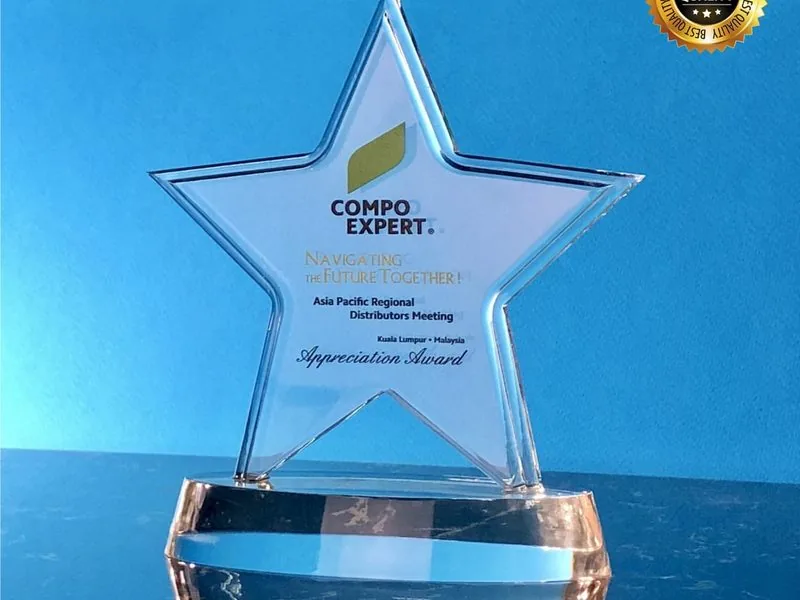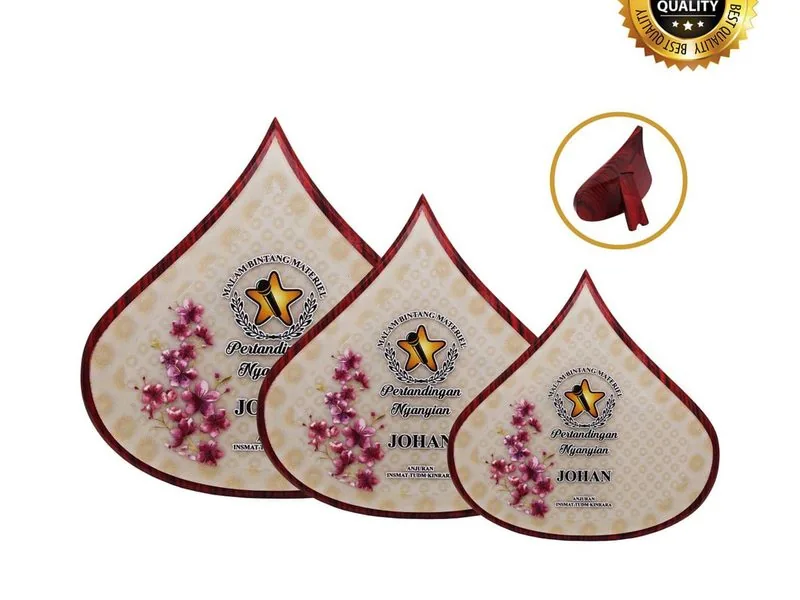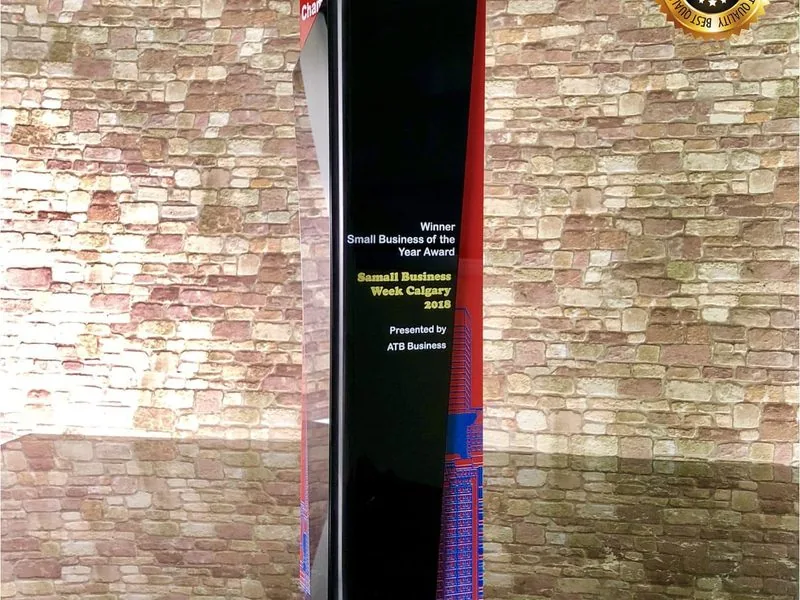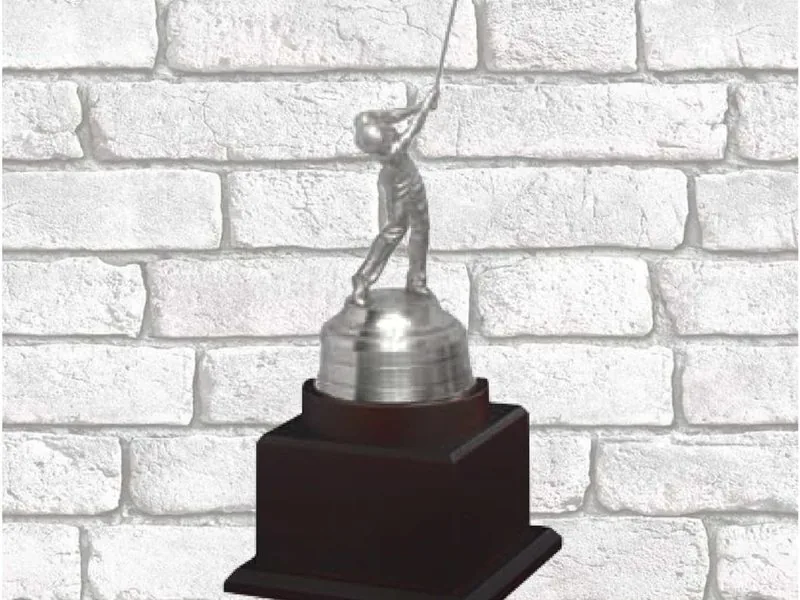
Bilingual or one language? It’s not really a layout question. It’s a question about who the engraving is talking to.
Most buyers picture the recipient standing at the podium and stop there. But that piece sits on a shelf for years.
It gets photographed and sent home. Older parents read it. Colleagues read it. A retirement crystal that’s English-only can be perfectly engraved and still miss the person it matters most to.
So the call comes down to one thing: in what language does the recipient, and the people around them, actually operate? Get that right and the language picks itself.
Short answer: Bilingual BM and English is the safe default for most Malaysian corporate, GLC, and mixed-audience awards. Go monolingual only when the context is unambiguously single-language: BM for state government and civil service, English for English-default multinationals, Mandarin or Tamil for clan, vernacular-school, and temple recognition. When in doubt, bilingual. It’s the lower-risk choice. Either way the engraving is free, so the decision is about register, not budget.
Quick verdict, five contexts, five right answers
| Context | Right answer | Why |
|---|---|---|
| Most Malaysian corporate, GLC, mixed-tenant, public-facing | Bilingual BM/English | Safe default; 80% of briefs we see; signals respect for both national language and working-language reality |
| State-government, federal-civil-service, JPA Perkhidmatan Cemerlang, royal/palace, BM-medium schools | Monolingual BM | Bilingual reads as over-engineered against state register |
| MNC, regional/global awards, fintech/tech English-default | Monolingual English | Adding BM for “inclusion” reads performative if the workforce operates English-only |
| Chinese clan-association, SMJK, Buddhist/Taoist temple, Mandarin-household family business | Monolingual Mandarin | Cultural fit; recipient and family operate in Mandarin |
| SJK(T), Indian community-association, Hindu temple, Tamil-household family business | Monolingual Tamil | Same logic; cultural-fit register |
The tiebreaker question for any uncertain case: in what language does the recipient receive their formal correspondence at work? Engrave in that language, with a bilingual layout if the audience at the ceremony will include speakers of both.
The five-question decision tree we walk every HR buyer through
A Malaysian recognition piece’s engraved text serves three audiences simultaneously:
- The recipient
- The audience at the ceremony
- The recipient’s family/colleagues who will see the piece for years afterwards
Choosing the language register is about getting all three audiences right.
The decision tree:
1. Who is the recipient and in what language do they receive formal correspondence?
This is the strongest single signal:
- Senior civil servant at a state government → engrave BM
- Senior banker at a multinational → engrave English
- Senior in-house lawyer at a GLC → engrave bilingual
2. What language will the ceremony be conducted in?
The ceremony language is the second strong signal:
- Hari Pekerja Cemerlang at a state government office runs in BM → trophy reads BM
- Regional sales conference at an MNC runs in English → trophy reads English
- Mixed-corporate annual dinner with a Datuk presenting and English-speaking awardees → trophy reads bilingual
3. Who else will read this piece over the years?
The recipient’s family may include older relatives who read BM more comfortably than English. Or grandparents who read Mandarin or Tamil more comfortably than either.
For pieces that are heirloom-track (founder retirement, 25-year service, decade-marking awards), bilingual layouts honour the broader audience.
4. What is the brand and cultural register of the giving organisation?
- Heritage Malaysian family business (third generation) → Mandarin or BM-and-English depending on family language
- Modern KL fintech with regional team → English
- State-government department → BM
The giving organisation’s identity matters as much as the recipient’s.
5. What does the recipient or recipient’s department head subtly signal as their preference?
Senior local executives sometimes have a quiet preference for one language over another.
If you have access to the executive assistant, ask. The cost of the question is zero. The upside of getting it right is substantial.
Our role
iTrophy is not a workshop. Our role on bilingual decisions:
- The consolidated HR-conversation we have on the phone
- The proof we send before any engraving cut
- The layout craft we apply to making the bilingual hierarchy read cleanly
We don’t operate the lasers ourselves. Production runs through partner workshops we’ve worked with for years. We manage the brief, the proof, and the layout decisions.
When bilingual wins
Bilingual engraving is the right call when one or more of these is true:
- Mixed-tenant Malaysian corporate. Banks, insurance, GLCs, large local conglomerates, family-business holding groups. The workforce reads both languages; the recognition layout should reflect that.
- Public-facing recognition. Customer-of-the-year awards, partnership and MOU plaques between Malaysian and international counterparties, supplier appreciation across mixed counterparties.
- Mid-tier and senior long-service awards at most Malaysian corporates. Tenure 10, 15, 20-year recognition at a typical KL corporate is bilingual by convention.
- The recipient’s tenure crosses a generational boundary. Older recipients who joined when BM was the more dominant working language; bilingual honours the journey.
- The brand identity uses both languages. Government-linked entities, heritage Malaysian banks, large takaful operators. The brand operates bilingually; the recognition should match.
- The ceremony will be conducted bilingually. Many Malaysian corporate annual dinners alternate languages between speeches; bilingual recognition pieces match the room.
- The recipient’s family includes both-language readers. Founder retirement, decade-marking pieces, heritage-track recognition where the piece will be displayed in a home setting.
- You’re not sure. Bilingual is the safe default. Monolingual is the higher-risk choice; only take it when the context is clearly single-language.
The defining question for bilingual: does the recipient or the recipient’s broader audience operate in both languages? If yes, bilingual.
When monolingual wins
Monolingual engraving is the right call when the recipient context is unambiguously single-language. The four common cases:
Monolingual BM:
- State-government and federal-civil-service recognition (Perkhidmatan Cemerlang, Anugerah Perkhidmatan Awam, ministry-level awards)
- Royal or palace-related ceremonies (Tunku, Tan Sri, Datuk-level awards in palace contexts)
- Public-school-system recognition where the school operates fully in BM
- BM-medium university and college awards
- Pejabat Daerah, Majlis Bandaraya, and Majlis Perbandaran ceremonies
Monolingual English:
- Multinational corporate recognition (regional and global awards, MNC internal awards, English-default workplaces)
- Modern fintech, tech, e-commerce, and SaaS company recognition
- International school recognition (English-medium IGCSE, IB, A-Level institutions)
- Regional Asia-Pacific awards crossing multiple language markets
- English-medium professional association awards
Monolingual Mandarin:
- Chinese clan-association awards (Hokkien, Hakka, Cantonese, Teochew clan organisations)
- Chinese-language-school recognition (SMJK, independent Chinese schools, Chinese-medium colleges)
- Buddhist and Taoist temple committee recognition
- Family-business founder recognition where the family’s primary working language is Mandarin
- Chinese cultural-association awards
Monolingual Tamil:
- Tamil-school recognition (SJK(T), Tamil-medium institutions)
- Indian community-association awards (clan organisations, regional associations)
- Hindu temple committee and Murugan-festival committee recognition
- Tamil cultural-association awards
- Family-business founder recognition where the family’s primary language is Tamil
The defining question for monolingual: does the recipient and the ceremony operate in a single, unambiguous language without a meaningful audience for a second? If yes, monolingual is the cleaner, more correct register.
Pricing: the language never changes the price
The most useful thing I can tell a procurement team comparing vendors: at iTrophy, bilingual and monolingual engraving cost exactly the same.
I don’t charge per language, per line, or per logo. Every bit of engraving and printing is free. You pay for the piece and the courier rate, nothing else. A bilingual proof takes me a little longer to lay out and check, but that’s my time, not your line item.
So when you compare quotes, check one thing. Does the supplier add a separate fee for a second language or a non-Latin script? Some do, especially for Mandarin, Tamil, or Jawi.
On a bulk order that surcharge adds up fast, and it usually means the vendor doesn’t want to absorb the proofing time. Ask each supplier the question directly. Ours is always all-in, every language.
For a large bilingual order, WhatsApp me on +60 12-213 6631 and I’ll come back with bracket pricing. Browse the crystal trophies range if you want a feel for the formats first.
Layout and hierarchy on bilingual pieces, the craft most vendors skip
A bilingual engraving is not “fit the BM line above the English line and call it done”. The craft is in the hierarchy.
Done well, bilingual reads as effortless and intentional. Done badly, it reads as cluttered and procurement-rushed.
The choices we walk through with HR buyers on every bilingual proof:
Hierarchy: which language gets visual primacy?
- State-government and civil-service, BM gets primacy. Larger font, higher position, or both.
- Multinational and corporate-default-English (where bilingual is added for inclusion), English gets primacy.
- Genuinely-mixed corporate, languages are visually equal. Same font size, same weight, BM positioned above English by convention.
Line-break logic
A bilingual citation like “In Recognition of 25 Years of Dedicated Service / Sebagai Penghargaan atas 25 Tahun Khidmat Yang Dedikasi” needs careful line-breaking.
The break points should respect both languages’ grammatical structure.
Bad line-breaks read as machine-translated. Good line-breaks read as carefully crafted.
Font pairing
For bilingual engraving with Mandarin or Tamil alongside English or BM, font pairing matters.
- Traditional pieces, complementary serif fonts (Trajan with a clean serif Mandarin face, Garamond with a Tamil typeface from the same century-of-design)
- Modern pieces, complementary sans-serif fonts (a corporate sans with a matching CJK or Tamil sans)
The pairing should look intentional. Not mismatched.
Font-size differential
The two languages can be:
- Same size (visual equality)
- One slightly larger (10-20% delta) to establish primacy
We rarely recommend a larger differential than 25%. Beyond that, the smaller language reads as a footnote rather than a parallel statement.
Date and number formatting
- BM, “DD/MM/YYYY” or “DD
YYYY” - English, “DD
YYYY” or just “Year XXXX” - Mandarin, “YYYY年MM月DD日” or simplified Latin format depending on context
Engrave the date in the same format as the ceremony’s formal program.
Diacritics and special characters
- BM, standard Latin characters with no diacritics
- Mandarin, Simplified or Traditional characters. Confirm which the audience reads.
- Tamil, Tamil script. We render in Latha or comparable Unicode-supported fonts.
Always proof the special-character rendering on the actual substrate before mass production.
Plate sizing for bilingual
A brass plate that comfortably holds a monolingual citation may be tight for a bilingual one.
For wood-plaque orders, we sometimes recommend stepping up one plate size when going bilingual. A5 to A4, for example.
The cost difference is minimal. The layout headroom is substantial.
The hidden trade-offs
Things nobody mentions until you see the proof:
The recipient’s name format matters more than the citation language. A Datuk’s full title, a Cina-Muslim recipient’s hyphenated name, a Tamil recipient’s father’s name initial, all need careful spelling and formatting.
We always proof the recipient name twice. Once on the design draft. Once on the substrate-mock proof.
Translation quality varies dramatically. Machine-translated BM citations read as awkward to a fluent reader.
We work with our HR-buyer clients on translation review when the piece is high-stakes. If your team isn’t comfortable signing off on the BM line, ask for a translation-review pass before approving the proof.
Mandarin and Tamil engraving needs Unicode-supported fonts. Older brass-plate suppliers sometimes use legacy fonts that don’t render Chinese or Tamil characters correctly.
Ask your supplier to send a screenshot of the rendered characters before approving production.
Bilingual on small surfaces is genuinely hard. A small acrylic medal back, a 50mm pewter plate, a key-tag dedication piece, bilingual on these surfaces becomes typographic surgery.
Sometimes the answer: keep the front monolingual (recipient name in primary language). Put the secondary language on the reverse or on a separate accompanying card.
Multinational HR sometimes specifies “include BM for inclusion”. Well-intentioned but can read as performative if the BM line is bolt-on rather than integrated.
If you’re adding BM for inclusion to a mostly-English brand, treat it as a real design decision:
- Equal font weight
- Integrated hierarchy
- Considered translation
The recipient will register the difference.
Dialect Mandarin or regional Tamil variations exist. A Hokkien clan association may prefer specific characters or phrasing different from the standard Mandarin form.
A Tamil association from Sri Lankan-heritage families may prefer different characters than from South-Indian-heritage families.
If you’re producing for a clan or heritage association, ask the committee whether they have a preferred variant.
BM in different formal registers:
- Bahasa Baku (formal, used in government)
- Bahasa Melayu modern (corporate-formal, used in MNC and GLC contexts)
- Conversational BM
State-government recognition uses Bahasa Baku register. Corporate Bahasa Melayu is fine for most other contexts.
The difference matters mainly in honorific phrasing.
Bilingual proofs take 1-2 extra days. We proof every line in every language. Line-break-checked, font-pair-checked, font-size-checked. Before any cut.
For tight event deadlines, build this into your timeline.
The piece that survives best across decades is bilingual. Long-service and retirement pieces sit on shelves for decades.
The recipient’s grandchildren may read better in BM than English, or vice versa.
Bilingual is the safe heirloom-track choice. The piece that the recipient’s grandson dusts off in 2055 should still tell him who his grandfather was. In language that reaches him.
Still unsure? Send me the brief
If the call is genuinely close, especially for a senior recipient where the language signals respect, don’t agonise over it. Message me on WhatsApp at +60 12-213 6631 with the recipient’s title, the giving organisation, and the ceremony context. I’ll come back with two layout options and an honest recommendation.
For a tax-invoiced quote on any language combination, send the recipient details, the occasion, the event date, and any translation references you have. I reply within the hour during business hours, with a digital proof by end of the next working day, the BM line reviewed against Dewan Bahasa dan Pustaka’s reference for accuracy.
Tax invoices are issued under ITROPHY BROTHERS PLT (registration 202504003677, LLP0045203-LGN). All engraving, in any language, is free. Only the courier rate is charged.
For the script-by-script detail behind these decisions, see the bilingual and multi-script engraving guide and the Mandarin and Tamil engraving guide. For broader programs, see Corporate Awards Malaysia and Anugerah Perkhidmatan Cemerlang.
Engraving in two languages says we see all of you. Engraving in one says we know exactly who you are. Both are correct, sometimes.