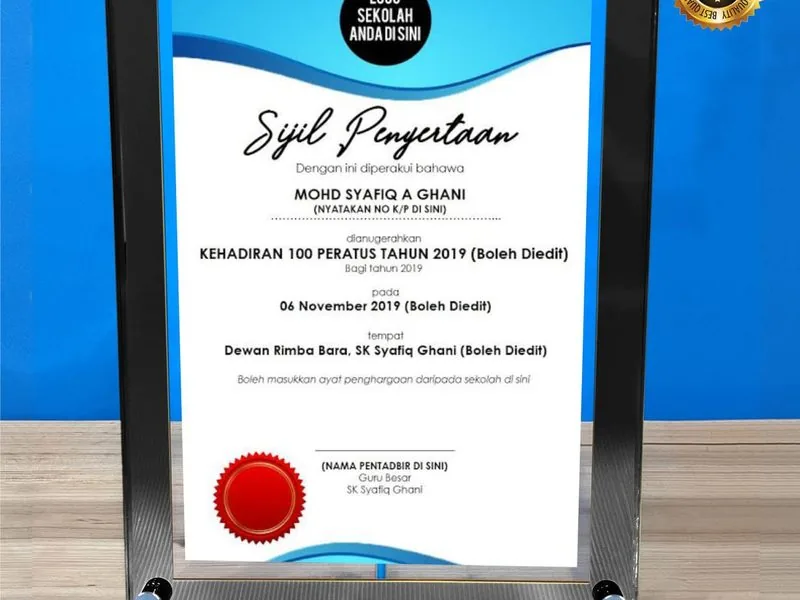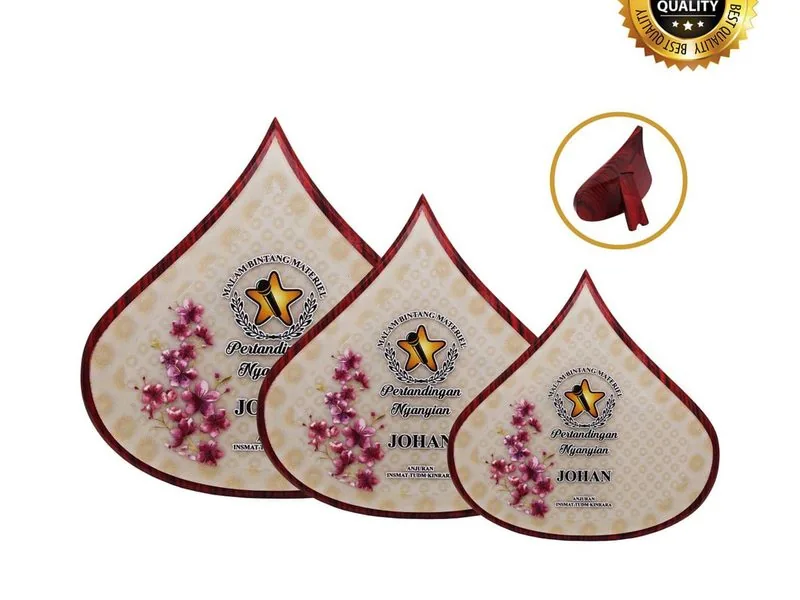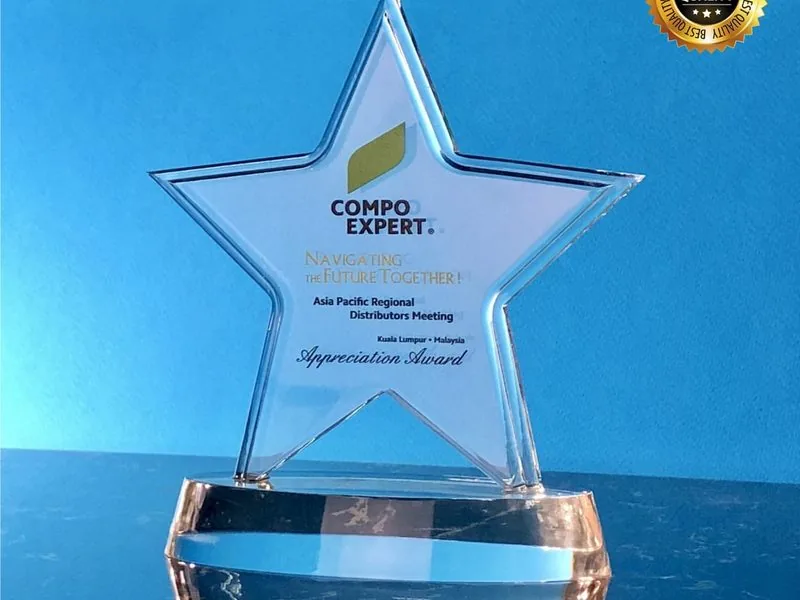
In Malaysia, single-language engraving on an award often misses. A corporate dinner in KL has Malay, Chinese, and Indian recipients in the same room. A GLC defaults to BM. A Datuk’s retirement piece reads better with Jawi above the citation. Bilingual engraving signals respect for all of them at once.
The mistake people make is treating “bilingual” as word-for-word translation, which turns an elegant plaque into a busy one. The best pieces give each script a role: a headline in one language, the citation in another, names in their native script.
So here are the script combinations that cover most Malaysian briefs, how diacritics and Jawi behave, and the layout rule that keeps a multi-script piece clean.
Short answer: Bilingual engraving works best when each script has a job, not when the same text is repeated twice. BM and English is the corporate and school standard; BM with Mandarin or Tamil suits vernacular events; Jawi with BM suits Islamic and Malay-heritage pieces. Send the text as plain text or a vector file, never a screenshot, tell us which script is the headline, and keep one script per headline so nothing crowds.
Three reasons single-language engraving misfires in Malaysia
Most countries default to single-language engraving on awards. Malaysia is different. Three reasons:
- Government and institutional norms. GLCs, gov-linked agencies, JPA, and sekolah kebangsaan default to BM as primary language. English is supplementary. Get the order wrong and the plaque feels off.
- Audience plurality. A corporate annual dinner in KL has Malay, Chinese, and Indian recipients in the same room. Bilingual engraving signals respect for all three audiences without picking favourites.
- Cultural recognition. Mosque, church, temple, and gurdwara plaques speak to specific community recipients. Single-language engraving can feel exclusive; bilingual or multi-script feels inclusive.
The mistake to avoid: assuming “bilingual” means literal word-for-word translation.
The best Malaysian engraving uses different scripts for different roles on the plaque, headline in one language, citation in another, names in their native script.
The four script combinations that cover most Malaysian briefs
In our experience, most bilingual engraving falls into one of these patterns. (For deeper guidance on Mandarin and Tamil engraving specifically, see our Mandarin & Tamil engraving guide.)
Pattern 1: BM + English (corporate / school standard)
Most common combination. Used by GLCs, listed corporates, schools, government agencies.
ANUGERAH PERKHIDMATAN CEMERLANG
LONG SERVICE AWARD
Pn. Sarah Tan binti Abdullah
Operations Director · 2006 – 2026
For twenty years of standards we never had to write down.
ITROPHY BROTHERS PLT · Hari Anugerah 2026
Typical layout: BM headline (bigger, top), English supplementary or citation (slightly smaller, below). Or vice versa for English-leaning companies, English headline, BM citation.
Pattern 2: BM + Mandarin (SJK Cina events)
Used for SJK Cina school plaques, Chinese clan association awards, Chinese chamber of commerce recognition.
卓越服务奖 · ANUGERAH PERKHIDMATAN CEMERLANG
李美玲女士 · Pn. Lim Mei Lin
SJK(C) Damansara · 2026
Visual approach: Mandarin headline (top, largest), BM romanised name (middle), date/institution at bottom. Mandarin characters are denser visually so they hold the eye well as a headline.
Pattern 3: BM + Tamil (SJK Tamil events)
Used for SJK Tamil school awards, Hindu temple plaques, Indian community organisation recognition.
சிறந்த சேவை விருது · ANUGERAH PERKHIDMATAN CEMERLANG
திரு. சுரேஷ் கிருஷ்ணன் · En. Suresh Krishnan
SJK(T) Brickfields · 2026
Visual approach: Tamil characters at top (decorative and culturally significant), BM transliteration below.
Pattern 4: Jawi + BM (Islamic / Malay heritage)
Used for mosque plaques, surau donor recognition, Malay-Muslim cultural events, KETENGAH and bumiputera-sector awards.
[Jawi script for "Anugerah Penghargaan"]
ANUGERAH PENGHARGAAN
Tuan Haji Khairul Anwar bin Yusof
Atas khidmat ikhlas kepada jemaah Masjid Al-Hidayah
2010 – 2026
Jawi is decorative and culturally weighted, best as a headline element, with Latin BM as the readable text. Most younger Malaysian readers can recognise Jawi shapes but may not read fluently.
Diakritik and special characters: do they reproduce cleanly?
This is the question we get asked most: do BM diacritics (à, é) and other special characters reproduce cleanly via laser engraving?
Short answer: yes. Modern laser engraving handles Unicode characters cleanly across all material families:
| Material | Diakritik handling | Note |
|---|---|---|
| Crystal (inner laser) | All diacritics render | Sub-surface 3D dot pattern |
| Acrylic (surface engraving) | All diacritics render | Frosted etch on face |
| Wood (laser engraving) | All diacritics render | Slight depth variation by grain |
| Metal (CNC engraving) | All diacritics render | May need slightly larger font for legibility |
| Pewter (rotary etching) | All diacritics render | Traditional metal-etching aesthetic |
Examples that work fine:
- “Kuching dahulu” (umlauts, accents)
- “Ng Sze Yin” (Chinese-romanised names)
- “İskandar” (Turkish-style diacritic for stylistic effect)
- “Nuñez” (tilde)
- “Müller” (umlaut)
Common Malaysian-specific characters that all reproduce well:
- ’ (apostrophe in glottal stop, e.g. “Sa’adon”)
-
- (hyphenated names, e.g. “Mohd-Faris”)
- ” ” (smart quotes for citations)
- · (middle dot for separators)
Font selection for bilingual engraving
Different scripts work best with different font families. What we typically use:
Latin script (BM, English): modern serif (Trajan, Optima for premium feel), clean sans-serif (Helvetica, Lato for modern feel), or script for signatures (Allura for elegant). For engraving at trophy size, sans-serif reads cleanest.
Jawi: custom Jawi calligraphy fonts. We have a small set of Jawi fonts that we’ve curated for clarity at engraving size. Tell us if you want a specific Jawi style (formal khat naskhi vs decorative khat thuluth) and we’ll match.
Mandarin (Simplified or Traditional Chinese): Noto Sans CJK SC/TC for clean modern, Source Han Serif for premium. Both reproduce well at engraving size.
Tamil: Noto Sans Tamil or Akshar Unicode. Tamil characters have specific stroke conventions; we’ll select a font that matches the cultural register (formal religious vs everyday corporate).
Arabic (for Islamic plaques): Naskh script or Diwani depending on formality. Khat tradisional (calligraphic) for the most prestigious religious institutions.
If you have a specific font preference, send a sample image (PNG or PDF) and we’ll match or recommend an alternative.
How to brief us with bilingual text
The cleanest brief format on WhatsApp:
Plaque format: Acrylic plaque, 8x10 inches, gold UV print
Quantity: 1 piece

Headline (top, large), BM:
ANUGERAH PERKHIDMATAN CEMERLANG

Subheading (top, medium), English:
LONG SERVICE AWARD · 25 YEARS

Recipient name (middle, large, mixed script):
Pn. Sarah Tan binti Abdullah · Pn Sarah Tan

Citation (middle, small), English:
Twenty-five years of building this company from the ground up.
Forever grateful.

Footer (bottom, small), BM:
ITROPHY BROTHERS PLT · Hari Anugerah 2026

Logo: SVG attached

Special notes:
- Romanised name preferred over Mandarin name on this piece
- BM and English get equal weight; not BM-priority
That gives our designers everything they need to mock up a digital proof, usually back to you on WhatsApp within a few hours.
The six pitfalls we see most often (and how to dodge them)
These show up often enough to be worth flagging. All are easily avoided.
Pitfall 1: Sending text as image instead of plain text
If you screenshot a Word document and send the image, we have to manually re-type the text. Errors creep in. Always send text as plain text or vector PDF. Word doc, Google Doc, or copy-paste into WhatsApp message, all work fine.
Pitfall 2: Inconsistent transliteration
Recipient name spelled “Mohd Faris” in one line and “Muhammad Faris” in another. Pick one and stick with it across the entire plaque (and ideally across all plaques in a multi-recipient order). Send us the master HR spelling list if there’s any doubt.
Pitfall 3: Mixed-script crowding
Trying to fit BM headline + English headline + Mandarin headline + Jawi headline on one small plaque. Result: nothing reads cleanly. Pick one script for the headline; supplement with one or at most two others below.
Pitfall 4: Wrong honorific casing
“DATUK SRI Lim Mei Lin” looks odd in all-caps. Honorific titles render best in title-case (“Datuk Sri Lim Mei Lin”) even when surrounding text is uppercase. Same for “Tan Sri”, “Tun”, “Tuan Haji”, “Yang Berhormat”.
Pitfall 5: Not specifying which script gets priority
If you brief “BM and English” without specifying which is the headline, we’ll default to BM. If your company is English-default (most MNCs in KL), specify “English headline, BM supplementary.”
Pitfall 6: Approving the proof without reading aloud
Read the proof aloud before approving. Misspellings, wrong honorifics, awkward line breaks become obvious when spoken. The proof is your last chance, re-engraving is a fresh production run + fresh cost. (Our list of common engraving mistakes Malaysian buyers make covers the rest.)
Sensitivity considerations
Some script combinations require cultural awareness:
- Quranic Arabic on commercial pieces: generally avoided unless the piece is religiously themed. Don’t add Arabic flourishes to corporate awards “for decoration”, it can read as appropriative.
- Buddhist/Hindu sacred symbols on corporate pieces: same principle. Appropriate only when the piece has explicit religious or cultural framing.
- Honorifics: verify “Datuk”, “Tan Sri”, “Tun” are current and accurate. Some honorifics are conferred and revoked. Check before assuming.
- Royal honorifics (“Yang di-Pertuan”, “Sultan”, “Tuanku”): strict protocol around use. Don’t add unless the recipient is genuinely entitled and has approved the wording.
When in doubt, ask the recipient or their office before finalising the engraving brief.
For Jawi spelling and authoritative bahasa references, Dewan Bahasa dan Pustaka (DBP) is the official source. For school engraving conventions, JAKIM maintains the relevant references for Quranic Arabic protocols.
The bonus move: read the proof aloud in BM, then in English
The single biggest typo-catcher we’ve shipped, instruct the proof reviewer to read the BM line aloud first, then the English line aloud.
Silent reading of BM citations misses subtle misspellings (one letter wrong in “perkhidmatan” reads fine on screen, sounds wrong instantly). Silent reading of English citations misses tense issues. Reading aloud catches both in 30 seconds.
We’ve watched this single habit reduce typo re-engraves to near-zero on bilingual programmes for the corporate clients who do it.
Typical bilingual layouts that work well
Quick reference, these layouts read cleanly on most plaque sizes:
Two-line bilingual title:
[BM HEADLINE]
[English Headline / Subtitle]
[Recipient Name]
[Citation]
[Footer]
Side-by-side bilingual citation:
[Bilingual headline, both scripts]
[Recipient Name in primary script]
[BM citation]    |    [English citation]
[Footer]
Three-script institutional plaque:
[Top: Mandarin/Tamil/Jawi headline]
[Middle: BM main text]
[Bottom: English supplementary]
Penutup
Bilingual and multi-script engraving in Malaysia isn’t complicated when the brief is clear. The mistake is treating it as “just translate everything to two languages.”
The cleanest pieces use different scripts for different roles, headline in one, citation in another, names in their native script.
Copy the brief template above, replace the placeholders with your recipient and citation, mark which script gets the headline, and WhatsApp it to +60 12-213 6631 with your format. I’ll come back with a layout proof the same working day. Walk-ins welcome at Brem Park, Kuchai Lama. For wording, see the plaque wording examples, and browse the acrylic plaques range or the corporate awards guide.
The engraving doesn't have to be perfectly translated to be powerful, sometimes BM in the headline and English in the citation says everything.