There’s one specific kind of trophy mistake that can sour a long hospital relationship in a single evening: the honorific sequence on a specialist’s long-service piece. “Dato’ Prof. Dr.” versus “Prof. Dato’ Dr.” is not interchangeable, and the consultant on row two will notice it mid-ceremony, in front of 400 colleagues.
If you’re HR at a private hospital planning an annual dinner with 80 long-service pieces and a dozen specialists carrying full honorifics, getting the sequence wrong means the Director of Nursing apologising mid-event, a reorder at full cost, and the original sitting in a stationery cupboard. The trophy itself is rarely the problem; the citation is.
Short answer: Healthcare recognition demands two things, conservative aesthetics and surgical accuracy on titles. Use optical-grade crystal, dark wood, and brushed pewter, never bright or novelty materials, because clinical-grade audiences read those as cheap. Build the nursing long-service ladder out to 30-35 years, and treat the honorific brief as the load-bearing element: highest honorific first, then professional title (Prof., Dr.), then name, then post-nominals, verified by more than one pair of eyes before engraving. Lower crystal and acrylic tiers sit in catalogue bands; pewter, metal medals, premium crystal, and custom-mould ceremonial pieces are quoted on spec.
The healthcare sector recognition mix
Malaysian healthcare runs several concurrent recognition programmes:
- Hospital staff long-service, clinical and non-clinical, presented at the annual hospital dinner.
- Specialist-of-the-year and consultant recognition, peer-voted or KPI-driven, smaller cohorts.
- Allied health recognition, physiotherapy, radiology, lab, pharmacy, dietetics. Often grouped into a single ceremony.
- Clinical-research milestones, completion of a multi-year trial, publication milestones, ethics-board chairmanship.
- Pharma R&D anniversaries, corporate milestones, regulatory approvals, manufacturing-line anniversaries.
- Nursing graduate ceremonies, for hospitals running their own nursing schools or partnered nursing programmes. High volume.
The constraint that ties them together: the audience expects formality.
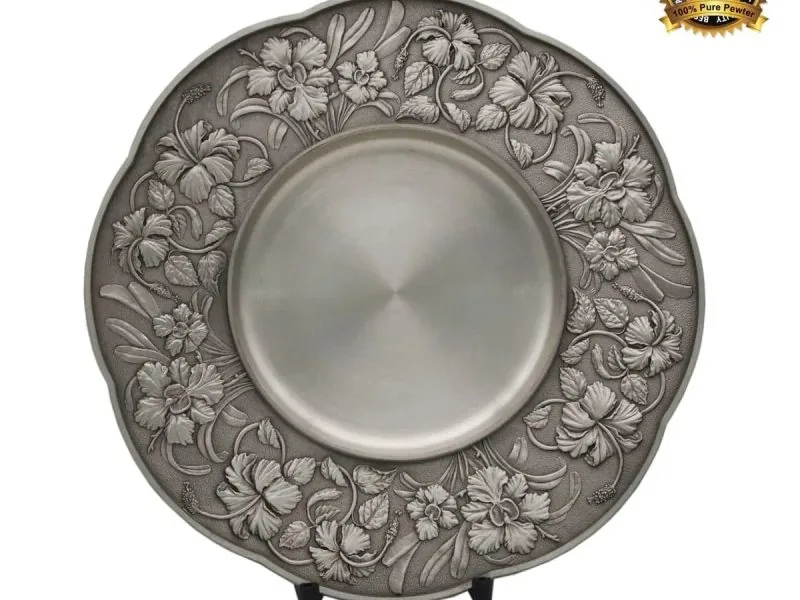
Healthcare leadership is conservative by training, and the recognition register has to reflect that. Optical-grade crystal, dark wood, brushed pewter. Avoid bright modern materials.
Hospital nursing tier programs, 5 / 10 / 15 / 20 / 25 / 30 years
Nursing long-service in Malaysian hospitals is the heart of the recognition programme.
Hospitals retain nurses for long careers, and 25- and 30-year matrons are common across the major private hospital groups. The ladder needs to extend properly.
Lower tiers sit in catalogue bands; the senior tiers (pewter, larger optical crystal, custom-mould) are quoted on spec:
| Tier | Format | Height | Price (SST-incl.) | Lead time | Presented at |
|---|---|---|---|---|---|
| 5 years | Compact crystal (pewter desk piece on spec) | 120-150mm | RM 150-250 | 7-10 days | Quarterly nursing town hall |
| 10 years | Crystal block + metallic insert | 150-180mm | RM 220-360 | 7-14 days | Annual hospital dinner |
| 15 years | Optical glass + hospital crest etch | 200mm | RM 380-450 | 10-14 days | Annual hospital dinner |
| 20 years | Optical crystal + pewter base | 240mm+ | Quote on spec | 14-21 days | Presented by CEO / DoN |
| 25 years | Custom-shaped optical glass + internal 3D crest | 280mm+ | Quote on spec | 21-28 days | Featured ceremony moment |
| 30 / 35 years | Custom-mould bespoke + plaque | 300mm+ | Quote on spec | 4-6 weeks | Standalone presentation |
Many of these tiers piggyback on the registration milestones tracked by the Malaysian Nursing Board. 5 and 10 years tend to align with practising-certificate renewals, which makes the ceremony date easier to plan around.
For matron-level long-service (15 years and above), some hospitals add a personalised pewter brooch or lapel piece in addition to the trophy.
The brooch is worn on the uniform; the trophy goes home. Pewter brooches have no fixed list price, so we quote them on the design, and we can run the brooch order alongside the main trophy order at no extra logistics cost.
For nursing recognition that ladders alongside skill levels (registered nurse, staff nurse, sister, matron), keep the tier ladder consistent regardless of role.
A 20-year matron and a 20-year staff nurse get the same physical piece. The ladder rewards tenure, not rank. That’s the principle most Malaysian hospitals follow and we recommend keeping to it.
Specialist-of-the-year and allied-health recognition
Specialist consultants and senior allied-health leads expect a different register.
The pieces are smaller in volume (often 5 to 25 pieces per ceremony) but higher in budget per piece.
What works:
- Specialist-of-the-year (per department: cardiology, paediatrics, oncology, etc.): a premium optical-grade crystal block, 220mm+, with the specialist’s full title and department. Quoted on spec. The citation handling is critical, full title plus all post-nominals.
- Consultant-of-the-year (cross-department): a larger hero piece, 260mm+, with the hospital crest. Quoted on spec.
- Allied health professional of the year (per discipline): crystal piece 180mm to 220mm (RM 280 to RM 450), or pewter quoted on spec.
- Department-of-the-year team plaque: an A4-size acrylic or wood plaque with the team list and citation, RM 380 to RM 480. See acrylic plaques and wooden plaques.
A practical tip on specialist citations: ask the recipient (or their secretary) for the exact form of their title before you finalise the spreadsheet. I’ve seen “Prof. Dato’ Dr.” rendered as “Dato’ Prof. Dr.” because the order list pulled the honorifics in the wrong sequence, and the recipient noticed at the ceremony. This kind of detail gets remembered, so it’s worth the extra check.
Clinical research and pharma R&D milestone awards
Clinical-research milestones and pharma R&D anniversaries are the highest-budget, lowest-volume pieces in healthcare recognition.
Often one to four pieces per occasion.
Clinical-research milestones (trial completion, publication, ethics-board chairmanship):
- Trial completion piece (one per principal investigator and lead clinical-research coordinator): optical crystal, 240mm+. A premium piece, quoted on spec.
- Publication milestone (named first or last author on a high-impact paper): a smaller piece, 180mm, RM 280 to RM 450.
- Ethics-board chairmanship handover plaque: a wooden plaque with an engraved brass plate, RM 380 to RM 450.
Pharma R&D anniversaries (manufacturing-line milestone, regulatory approval, R&D-centre anniversary):
- Manufacturing milestone piece (one hero crystal for the plant manager, smaller pieces for the team leads): the hero piece is quoted on spec; team-lead pieces sit in catalogue bands.
- Regulatory-approval ceremonial piece: custom-mould bespoke, 4 to 6 weeks lead, quoted on spec.
- R&D-centre anniversary: an optical crystal hero piece with an internal 3D etch of the molecule, the plant facade, or a stylised lab motif. A premium piece, quoted on spec.
Penang’s biotech corridor runs a particular pattern. Multinational pharma R&D groups with regional HQs in Singapore but manufacturing or clinical-research operations in Penang.
The Penang ceremony is often a smaller event with senior executives flying in.
We deliver to Penang with a 3- to 5-working-day lead from the Klang Valley. For Penang ceremonies, allow 7 working days from final sign-off to give the venue concierge time to receive and store the pieces safely.
For Klang Valley pharma R&D in Cyberjaya and Selangor, we hand-deliver.
Honorific accuracy, the single most reviewed detail in healthcare engraving
Honorific accuracy is the single most reviewed detail on healthcare orders. A list of the honorifics we encounter regularly and how we recommend handling them:
- Dr., Full title is “Dr.” with full stop. Avoid “Doctor” spelled out unless the recipient explicitly requests it.
- Prof., “Prof.” or “Professor”. Order conventionally is “Prof. Dr.” (Professor first, Dr. second), unless the recipient prefers reverse.
- Dato’, apostrophe matters. “Dato’” not “Dato”. The honorific precedes the name. “Dato’ Dr.” is the conventional sequence for a Dato’ who is also a doctor.
- Datuk, federal honorific, no apostrophe. “Datuk Dr.” is the conventional order.
- Datuk Seri, higher federal grade. “Datuk Seri Dr.” is conventional.
- Dato’ Sri, Sarawak / Penang state grade. Same convention as Dato’ Seri.
- Tan Sri, federal grade. “Tan Sri Dr.” or “Tan Sri Prof. Dr.”.
- Tun, highest federal grade, very rare on long-service lists. “Tun Dr.” is the conventional order.
The default order on a citation: highest honorific first, then professional title (Prof., Dr.), then name, then post-nominals (FRCS, FRCP, MMed, etc.).
Example: “Tan Sri Prof. Dr. Lim Cheng Boon, FRCS (Edin), FAMM”.
Send us the citation in the exact form you want it engraved. We proofread for tone marks and spelling but we do not change titles or sequence.
If your HRIS export has the honorific in a separate column, send the column structure too. We’ll concatenate per recipient.
Nursing-graduate ceremonies, 200+ medal volume orders
Hospitals running their own nursing schools (or partnered with private nursing programmes) hold annual graduation ceremonies.
These are high-volume orders. 100 to 400+ medals per ceremony, plus a smaller cohort of crystal pieces for top graduates.
Standard pattern:
- Graduation medals (every graduate): metal medals with the school crest, ribbon in school colours. Metal medals have no fixed list price, so we quote by quantity. Lead time 3 to 4 weeks for orders above 200 pieces.
- Top graduate medals (gold-grade for top decile): a heavier metal medal with a gold finish, quoted by quantity.
- Top-of-class crystal (one to five pieces): an optical crystal block, 180mm to 220mm, with the graduate’s full name and class. RM 280 to RM 450.
- Special prize crystals (clinical excellence, leadership, community service): smaller crystals, 150mm. RM 220 to RM 380.
For 200+ medal orders, brief us 6 weeks ahead of the graduation date. The medal die-strike and ribbon production is the constraint, not the delivery.
WhatsApp +60 12-213 6631 to lock the slot.
For nursing-school programmes that run 2 or 3 graduation cohorts per year, design the medal as a series. Same die, year on year, with only the year band changing.
We hold the die pattern.
Conservative crystal, what the audience actually expects
Healthcare leadership across Malaysia is conservative. The default register is optical-grade crystal, dark wood, brushed pewter. Avoid:
- Bright modern materials (coloured acrylic, novelty shapes)
- Plastic trophies (read as cheap; not appropriate for clinical-grade audiences)
- Flashy metallic finishes (chrome, gold-plated novelty)
- Cartoon-style illustrations or motifs
What works:
- Optical-grade clear crystal, K9 or higher, with a heavy base.
- Deep sandblast engraving, single-colour fill for the hospital crest, clear engrave for the citation.
- Conservative serif typeface for the citation; clean sans-serif for the recipient name.
- Pewter or dark wood bases for hero pieces.
For crystal trophies and pewter in this register, the standard catalogue covers most healthcare briefs. For ceremonial and lifetime achievement pieces, custom-mould bespoke is worth the 4- to 6-week lead.
The acrylic trophies range works for participation and shortlist tiers (RM 120 to RM 280) but should not be used as the primary tier for any award above 5-year long-service.
The workflow that drops citation-error rate to roughly zero, the three-eyes rule
Here is the operational practice almost no Malaysian hospital HR team uses unprompted. It costs nothing other than 30 minutes per ceremony cycle.
The three-eyes rule for honorific verification.
Before any healthcare citation goes to engraving, three independent pairs of eyes confirm the honorific sequence:
- The recipient’s secretary or PA, phones or emails to confirm the exact honorific sequence as the recipient prefers it on official correspondence
- Your HR director or department head, cross-checks against the HRMIS official record
- Our in-house proofreader, checks for tone marks, apostrophes (Dato’ vs Datuk), spelling, and post-nominal sequence
We provide a one-page verification sheet per recipient at the proof stage, with the honorific spelled out three ways (as on HRMIS, as on PA-confirmed business card, as we will engrave).
The HR sign-off goes against this sheet, not against a generic spreadsheet.
Total time added: 20-40 minutes per ceremony cycle. The teams that use a workflow like this effectively eliminate citation errors; the teams that skip it are the ones that hit the mid-ceremony apology described at the top of this article.
The variant of this rule for cross-cultural recipients (Indian doctors with both English and Tamil-tradition titles; Chinese physicians with Anglicised vs Pinyin name preferences): add a fourth pair of eyes from someone who shares the recipient’s cultural background.
The 30 minutes saves the relationship.
Brief us
Next step, pull your HRIS export filtered by 2026 long-service eligibility, ask each Department Head to verify the exact honorific sequence for every recipient (Dato’ / Datuk / Tan Sri sequence with Prof. and Dr.).
Send the verified list to +60 12-213 6631 at least 4 weeks before the ceremony.
We’ll send representative proofs per tier with the honorifics laid out exactly as engraved.
For broader context, see the long service awards Malaysia and corporate awards Malaysia guides, plus aged care allied health recognition awards for the adjacent sector.
A specialist will accept a conservative trophy with a flawless citation. The reverse is unforgivable.