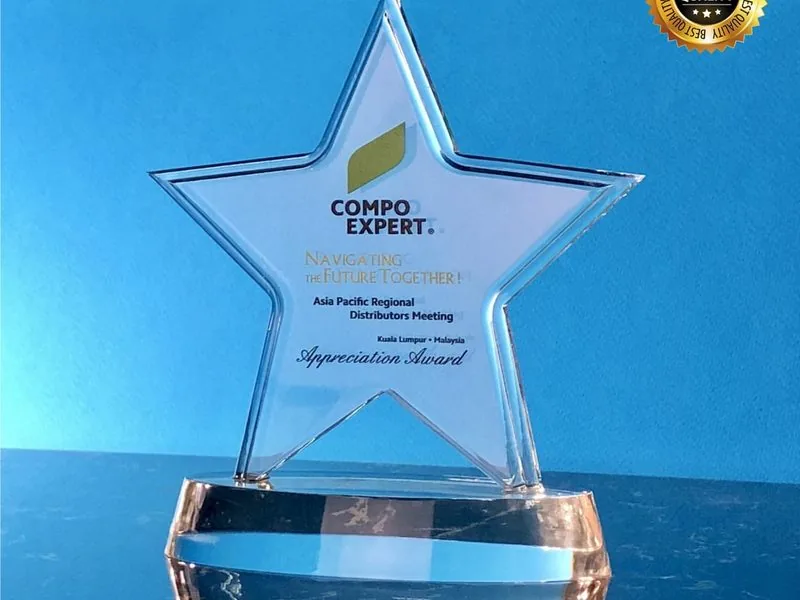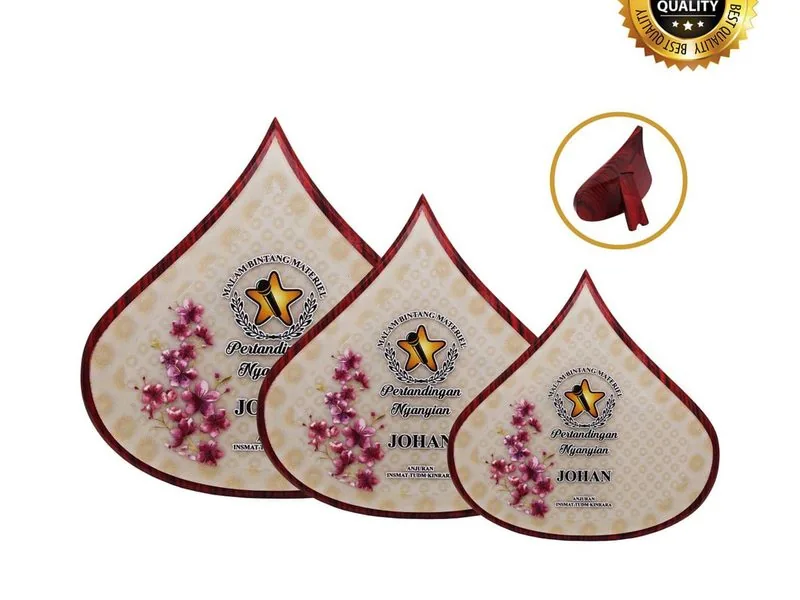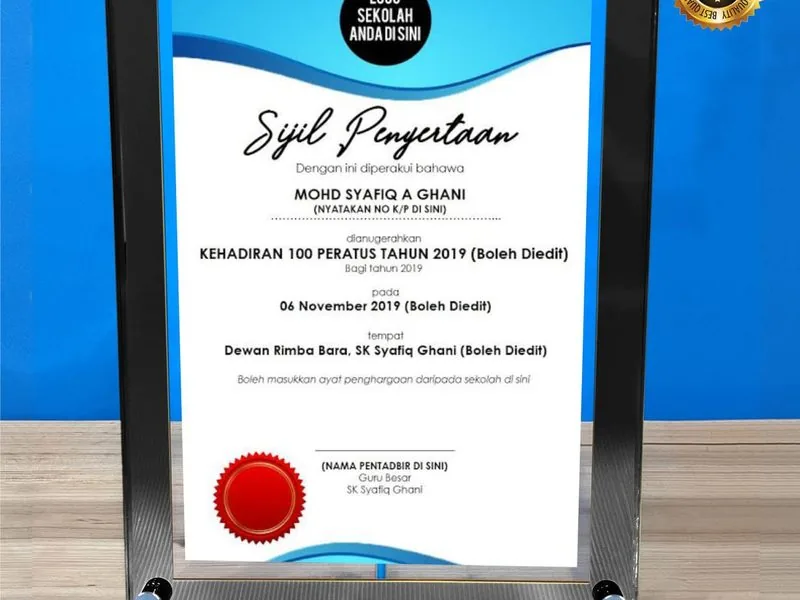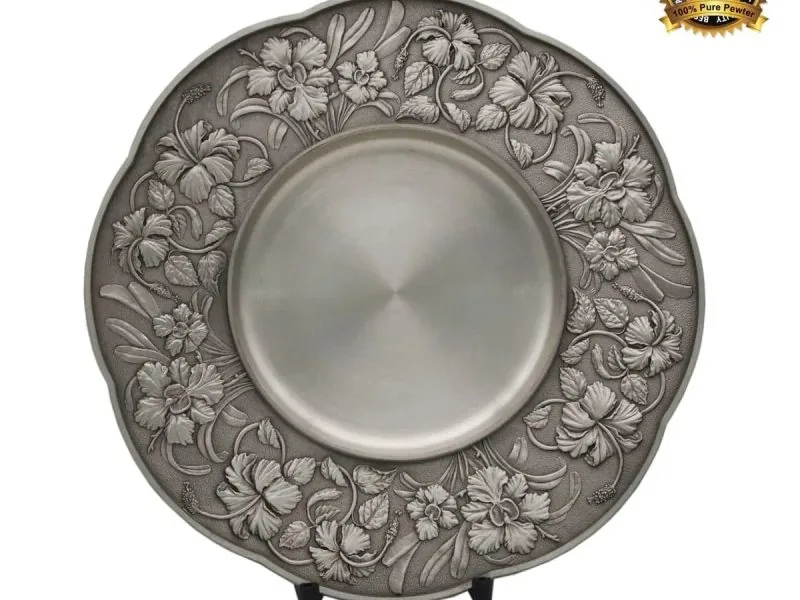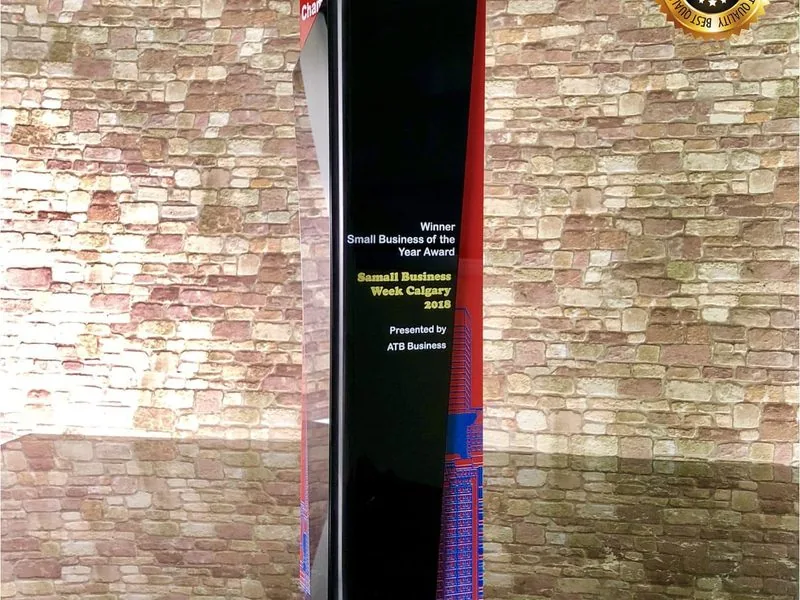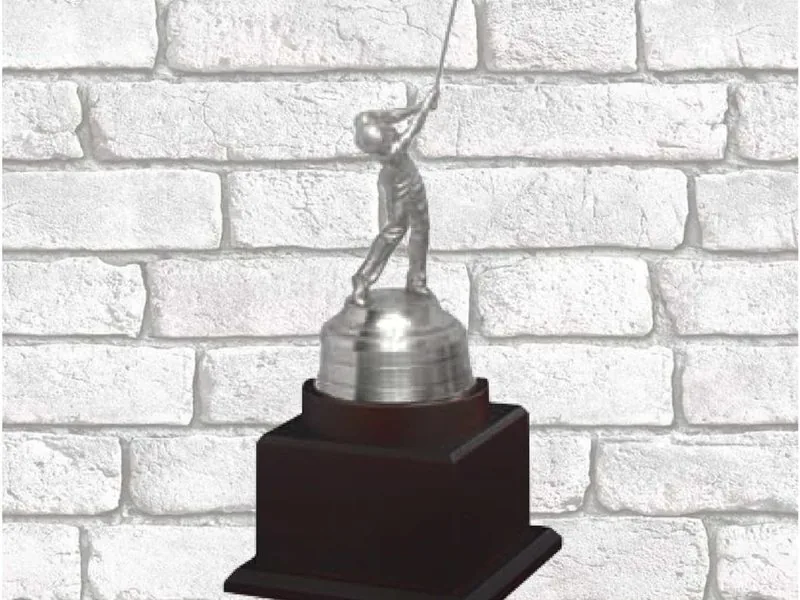
A nursing aide walks up to receive an RM80 acrylic shield for 32 years of service, smiles politely, and sits back down. The room claps and the director moves to the next name. Nobody says anything, but every senior clinician just clocked the tier, and the aide watching from table six quietly recalibrates what loyalty here is worth.
That’s the trap with care-sector recognition. The standard 5/10/15 corporate ladder was never built for tenures that routinely run 25, 30, 35 years. Plug aged care into a generic HR framework and the senior pieces land light, without anyone being able to say exactly why.
Short answer: Care-sector tenure runs deep, so the ladder needs more rungs and more weight at the top. Use acrylic and pewter-on-wood for the entry and mid tiers, crystal or premium pewter at 25 years, and a bespoke crystal or hardwood shadowbox for multi-decade retirements (priced case-by-case). Keep the register conservative and dignified, use a warm word like “penyayang” in the citation, verify tenure dates against HR records, and brief 6–8 weeks ahead.
The Malaysian aged-care sector at a glance
The Malaysian aged care and allied health landscape has grown meaningfully over the past two decades. Driven by demographic shift and the growth of private healthcare.
The institutional clusters relevant for recognition orders:
- Private nursing homes and care homes, both for-profit operators and charity-operated homes (often religious-affiliated). Staff sizes range from 15-100 across direct care and support functions.
- Hospital aged-care wards and geriatric units, within private hospital chains and government tertiary hospitals. Long-service recognition follows the broader hospital framework.
- Allied health practices, physiotherapy, occupational therapy, speech therapy, and similar. Range from solo-practitioner clinics to multi-clinic groups.
- Hospice and palliative care services, the major hospice and palliative-care providers. Heavy reliance on volunteer cohorts alongside paid clinical staff.
- Rehabilitation centres, post-stroke, post-injury, and chronic-care rehabilitation. Mixed clinical and care-staff teams.
The recognition occasions vary by institution but cluster around a few standard moments:
- Annual staff appreciation dinners, typically held at year-end (November-December), presenting long-service tier pieces and tutor-of-the-year-equivalent recognition for senior clinicians.
- Founding anniversary events, care homes and hospices often mark institutional anniversaries (10, 20, 25, 30 years of operation) with pieces for long-tenure staff and key institutional supporters.
- Volunteer recognition dinners, particularly for hospice services, where volunteer cohorts are foundational to operations. Annual dinners with pieces for long-serving volunteers.
- Retirement send-offs, for senior clinicians, head nurses, and care-home directors retiring after long tenure. Personal pieces with substantial inscription.
Procurement style varies by institution size.
Larger private operators (multi-home chains) have formal procurement processes. Smaller charity-operated homes often handle recognition through the institution director or HR lead with significant latitude.
Care-home staff long-service tiers
Care-home staff long-service recognition follows the standard Malaysian corporate-awards tier structure. With specific attention to the deep tenure profiles common in the sector.
It is genuinely common for care assistants, nursing aides, and senior support staff to reach 20-30 year milestones with the same institution.
| Tier | Bajet per piece | Recommended format |
|---|---|---|
| 5-year service | RM 150-250 | Acrylic plaque with brass-effect nameplate or small pewter shield on wood |
| 10-year service | RM 200-320 | Pewter shield on hardwood, or wooden plaque with brass nameplate |
| 15-year service | RM 250-380 | Same format, slightly larger |
| 20-year service | RM 350-550 | Pewter trophy on wooden plinth, or premium wood plaque with brass features |
| 25-year service | RM 450-750 | Crystal piece or premium pewter trophy |
| 30+ year service | RM 600-1,000 | Premium crystal trophy or custom hardwood shadowbox with career-summary inscription |
For care-home orders, the volume distribution skews toward longer tenures more than in many other sectors.
A typical 60-staff care home running annual long-service recognition might present 8-12 pieces in a year. Of those, 3-5 at 15-year-and-above tier.
This affects the bajet planning. The institution can’t assume average tier cost. The senior-tier weighting pulls average per-piece up.
Standard inscription template
Engraving register for care-home long-service sits in the formal-warm range:
[LOGO INSTITUSI] ANUGERAH PERKHIDMATAN PANJANG [TIER, contoh: 25 TAHUN] Disampaikan kepada [NAMA PENUH] [JAWATAN] Sebagai Pengiktirafan Atas Perkhidmatan Yang Dedikasi Dan Penyayang [TARIKH]
Note the use of “penyayang” (caring/loving). This is the kind of register that fits care-sector tradition without becoming sentimental.
For institutions running in English-default register, “compassionate” or “dedicated” sit at equivalent registers.
Browse pewter, wooden plaques, and crystal trophies for stock options that personalise well across the long-service tier range.
Allied health professional recognition, clinical-modern register
Allied health practitioners often have their own recognition tier separate from broader care-home staff. This includes:
- Physiotherapists
- Occupational therapists
- Speech therapists
- Dietitians
- Clinical psychologists working in care contexts
The pieces tend slightly more contemporary and clinical in register.
Common allied-health pieces:
- Allied Health Practitioner of the Year, institution-level recognition for top clinical performance. RM300-500. Crystal piece with metallic UV-printed institution branding.
- Long-service allied health, following the broader long-service tier program but with a slightly more contemporary visual register. RM250-700 across tiers.
- Department head recognition, for senior allied-health team leads (head physiotherapist, head occupational therapist). Often presented at year-end staff dinner. RM350-600.
- Continuing education milestone, for practitioners completing major continuing-education milestones (PhD completion, board certification, fellowship). RM200-400.
For larger multi-disciplinary care institutions running allied-health teams of 15-30 practitioners, annual order volume for allied-health-tier recognition typically lands at 5-12 pieces.
The procurement decision-maker is usually the head of allied health or the institution’s clinical director.
The design register for allied-health pieces leans slightly more contemporary than care-home staff pieces. This reflects the clinical-professional culture, where the visual language sits between corporate awards and traditional healthcare recognition.
Crystal pieces with metallic UV-printed institutional branding work well here. Pewter is appropriate for senior tier but reads more traditional than the typical allied-health audience expects.
Hospice volunteer awards, recognising the people who never asked
Hospice and palliative care services rely substantially on volunteer cohorts. Volunteer recognition is a meaningful annual event for most hospice services in Malaysia.
The major hospice services all run annual volunteer appreciation dinners with pieces for long-serving volunteers.
Standard hospice volunteer pieces:
- Long-service volunteer (5/10/15/20+ years), RM150-450 across tiers. Volunteers with 10+ years of weekly or bi-weekly hospice service are not unusual; the tier pieces should reflect the substantial commitment.
- Volunteer of the Year, institution-level recognition. RM250-450. Crystal piece with the hospice’s branding and inscription thanking the volunteer.
- Specialised role recognition (volunteer coordinators, volunteer trainers, volunteer caregivers), RM200-380. Often pewter shield or crystal piece with role-specific inscription.
- Cohort participation pieces (for all volunteers attending the annual dinner), RM50-120 per piece. Smaller acrylic plaques or token pieces.
The design register for hospice volunteer pieces is warm and personal. The inscription thanks the volunteer for their contribution to patients, families, or the hospice mission. Not focused on the volunteer’s metrics or hours.
A standard inscription:
[LOGO HOSPIS] ANUGERAH SUKARELAWAN BERDEDIKASI [X TAHUN PERKHIDMATAN] Disampaikan kepada [NAMA PENUH] Sebagai Tanda Terima Kasih Atas Sumbangan Yang Bermakna Kepada Pesakit Dan Keluarga [TARIKH]
For bajet planning, hospice volunteer recognition is typically funded through institutional fundraising or specific volunteer-program budgets.
Total per annual dinner: RM 2,500-6,000 for a mid-size hospice service with 30-60 volunteers across recognition tiers.
Hospice volunteer recognition sits at the appreciation-piece end of the range.
Multi-decade tenure recognition, getting the inscription right
The deep tenure profiles in aged care and allied health warrant specific design treatment for the most senior tiers.
A care assistant who has worked with the same institution for 30 years deserves a piece that reflects the commitment. Same for a head nurse who has led an aged-care ward for 35 years.
The honest test for a multi-decade piece: would the recipient’s family put it in the funeral display in 30 years? Pieces that pass that test are wood, crystal, or pewter on hardwood. Pieces that fail it are anything plastic, anything with a stock generic citation, and anything that misspelt the recipient’s full name.
For multi-decade tenure recognition, the pieces step up to:
- Premium crystal trophy with detailed career inscription, RM700-1000. Optical-grade crystal, 220-280mm tall, with metallic UV-printed institution branding and a detailed inscription including dates of service, key roles held, and a personal acknowledgement statement.
- Custom hardwood shadowbox, RM800-1200. Solid hardwood (teak or merbau), with the institution’s logo, the recipient’s name and role, dates of service, and sometimes integrated framed photographs. Typically used for very senior retirements.
- Pewter trophy on extended hardwood base, RM700-950. Traditional formal piece, with substantial pewter weight and a detailed inscription plate on the wooden plinth.
Getting the dates right
A practical note on multi-decade pieces: the inscription typically includes specific career milestones:
- Joined the institution in [year]
- Appointed [role] in [year]
- Promoted to [role] in [year]
- Retired in [year]
Get these dates directly from the institution’s HR records. Don’t approximate.
Multi-decade career inscriptions go through 2-3 proofing rounds because the family will scrutinise them. Inaccurate dates undermine the piece.
We’ve seen retirement plaques re-engraved a week before the ceremony because the EPF starting year contradicted what HR sent over. Verify against KWSP records before you lock the engraving file.
When multiple retirements land at once
For institutions retiring multiple long-tenure staff in the same cycle (a year-end where 2-3 staff are reaching 30-year milestones simultaneously), the pieces are typically presented at the same annual dinner with substantial individual recognition for each.
Total per cycle for these multi-decade tiers: RM 2,500-5,000 across 3-5 pieces.
Conservative design register
Aged care and allied health design register stays conservative across most of the sector. Limited contemporary flourishes.
The visual language reflects the institutional culture: caring, dignified, traditional. Pieces that lean too modern can feel inappropriate.
What works:
- Crystal in classic shapes, rectangular plaque, vertical column, traditional trophy. Optical-grade, clear or lightly tinted (never bright colours). UV-printed institution branding in conservative metallic gold or silver.
- Pewter in traditional shapes, shield, vase, plate. Brushed or polished finish, never coloured. Mounted on dark hardwood backing.
- Wooden plaques, dark hardwood (teak, rosewood, merbau) with brass nameplate. Avoid pale wood or painted wood.
- Acrylic at volunteer cohort tier and entry-tier long-service, clear acrylic with UV-printed institution branding. Appropriate for cohort-volume pieces.
What’s less common:
- Bright colours or playful design elements, read as inappropriate for the institutional culture.
- Modern minimalist shapes, the audience expects tradition rather than novelty.
- Heavy custom moulds, bajet typically doesn’t support these except for very senior multi-decade retirement pieces.
Bajet ranges to keep in mind (all SST-inclusive):
| Recognition tier | Per-piece bajet |
|---|---|
| Volunteer cohort participation | RM 50-150 |
| Entry-tier long-service (5-10 years) | RM 150-320 |
| Mid-tier long-service (15-20 years) | RM 250-550 |
| Senior-tier long-service (25+ years) | RM 450-1,000 |
| Allied health professional recognition | RM 250-600 |
| Hospice volunteer of the year | RM 250-450 |
| Multi-decade retirement pieces | RM 700-1,200 |
| Total per annual event (mid-size institution) | RM 4,000-12,000 |
For larger institutions or hospice services with substantial volunteer cohorts, total per cycle can reach RM 15,000-25,000 across all tiers.
At these volumes, the unit price improves versus single-piece rates.
Procurement timing and ordering
The working timeline for aged-care and allied-health orders:
- 6-8 weeks before event, institution finalises tier breakdown, confirms tenure dates from HR records, allocates bajet
- 5 weeks before event, supplier engagement, artwork sign-off, sample pieces approved at tier reference
- 3-4 weeks before event, production starts after final inscription lists locked
- 1-2 weeks before event, pieces delivered to institution, internal QC
- Event day, pieces presented at annual dinner or volunteer recognition
Where this goes wrong: tenure date verification.
Institutions sometimes operate from approximate “joining year” data that doesn’t survive scrutiny when the piece is presented to the recipient. Pull the official date from HR records before locking the inscription.
iTrophy is an office, showroom, and dispatch centre at Brem Park, Jalan Kuchai Lama, Kuala Lumpur. Production runs through long-time partner workshops who specialise in pewter casting, hardwood plaque construction, and crystal engraving for institutional clients.
For aged-care and allied-health work, we typically work with workshops familiar with conservative-tier design conventions and detailed multi-decade inscription work.
Starting a conversation
WhatsApp +60 12-213 6631 with the rough breakdown:
- Institution type (care home, allied health practice, hospice, etc.)
- Tier breakdown (number of pieces per long-service tier)
- Target event date
- Any specific senior-tier retirement pieces with multi-decade inscriptions
We come back within the hour during business hours with a costed proposal across material options. Digital proof in your inbox by end of next working day.
All customisation (engraving, custom artwork, institutional branding application) is included. Only courier is charged.
Run the numbers through the trophy budget calculator first if you want to tighten the brief before WhatsApping.
For broader context:
- Long-service awards Malaysia, full landscape of long-tenure recognition across Malaysian institutions
- Corporate awards Malaysia, broader institutional context
- Appreciation plaques, volunteer and contributor recognition tier specifically
To see physical sample weights and brass plate finishes before committing, our Brem Park showroom keeps both crystal and pewter aged-care formats on display.
A nursing aide who has cared for residents for 25 years is the kind of long-tenure stalwart most institutions can only dream of. The recognition piece should sit at that level.