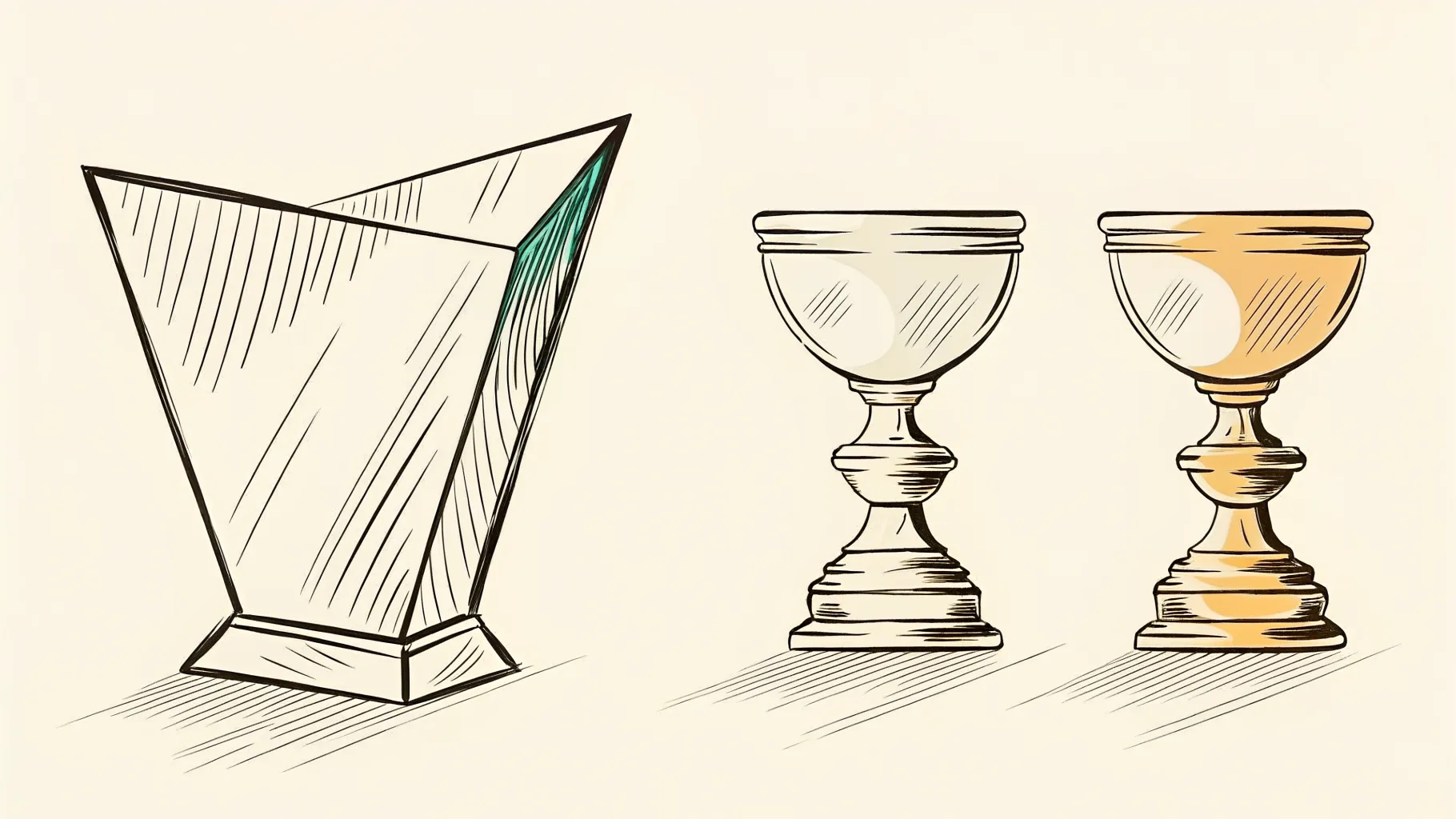
Custom mould versus stock isn’t an aesthetic question. That’s the framing that costs procurement teams either budget they shouldn’t have spent, or a brand piece they should have built.
It’s a multi-year economics question. A custom mould carries real tooling cost before the first trophy is even poured. Spend that on a one-off annual dinner and you’ve burned the budget. Spend it on a five-year programme and you’ve bought a brand artefact nobody in your industry can copy.
So the real question is simple: will you present this exact trophy again next year, and the year after? Here’s how to think it through.
Short answer: Choose a custom mould only for a multi-year programme where the same trophy is re-presented each year, the trophy is the programme’s identity, and you have a few weeks of lead time. Choose stock shapes for one-off, low-quantity, or tight-deadline briefs. For most year-one programmes, the hybrid route (a stock body with a custom brand element) gives a bespoke look at stock economics and lead time.
The thirty-second verdict
Reach for a custom mould when you’re committing to a multi-year programme, the trophy is the visual centrepiece, and a brand-mark-shaped piece is a strategic priority. The tooling is an investment that pays back across later years, so it suits founder-name awards, heritage championship cups, and perpetual rotating trophies presented the same way every year.
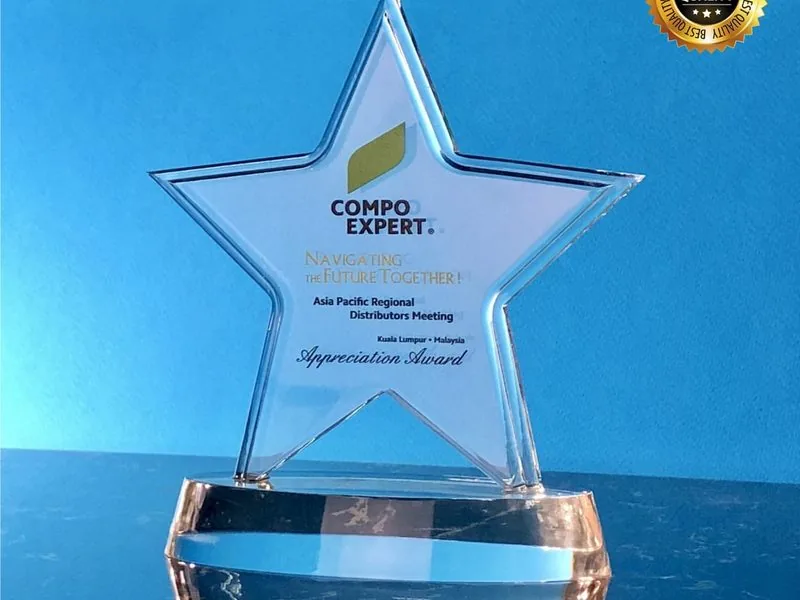
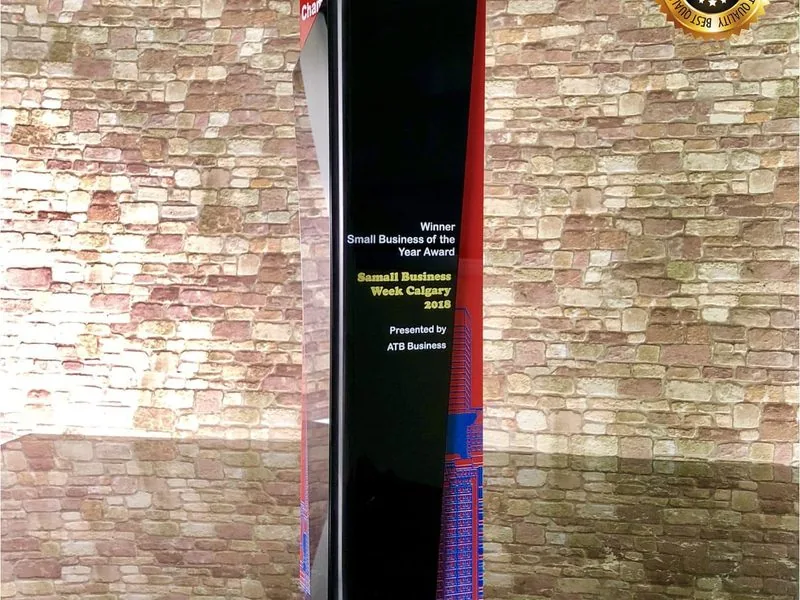
Reach for stock shapes when the brief is one-off, the quantity is modest, the deadline is tight, or it’s year one with no commitment to repeat. The catalogue covers towers, columns, sculpted figures, geometric blocks, and modern abstracts, and decoration on every piece is free and fast.
Reach for the hybrid (a stock body with a custom-printed or custom-cut brand element) when you want bespoke identity at one-off economics. For most mid-budget programmes in years one and two, this beats both extremes.
| Factor | Custom mould | Stock shape | Hybrid |
|---|---|---|---|
| Upfront tooling | Yes | None | None |
| Lead time | 2–6 weeks | Fast | Fast |
| Best for | Multi-year programmes | One-off, low volume | Bespoke look, fast |
| Uniqueness | Brand-mark-shaped | Decoration only | Custom element |
| Pays back | Year 2+ reuse | Immediately | Immediately |
How each route is produced
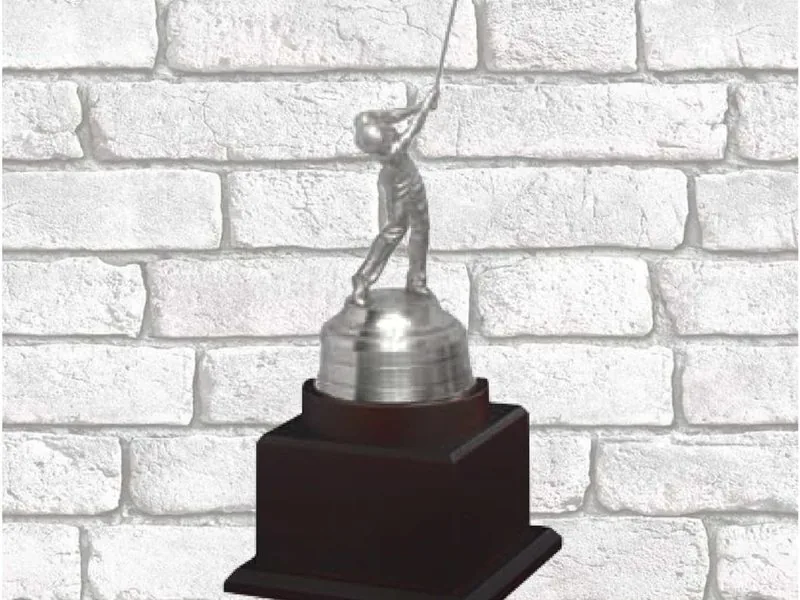
A custom mould starts from a brief, usually your brand mark in 3D or a sculpted figure, turned into a CAD model, engineered for casting (parting lines, draft angles), then cut as steel tooling. Each piece is cast in resin, zinc alloy, or, at the premium end, bronze or silver-plate. The casting itself is quick; the upfront tooling is the lead time, which runs 2–6 weeks.
Stock shapes start from our partner workshops’ existing inventory: hundreds of crystal and acrylic shapes, dozens of metal cups and resin figures. Each is decorated to your brief (engraving, UV print, brand colour) in days. No tooling, no waiting for steel.
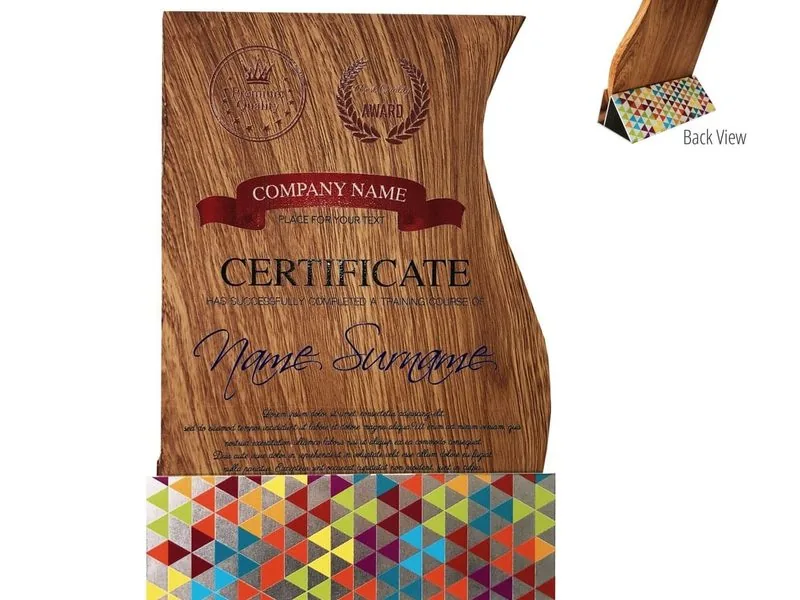
The hybrid pairs a stock body (a crystal column, an acrylic block, a metal cup) with a custom element that carries your identity: a CNC-cut crest, a UV-printed full-colour face, an engraved bespoke plate. It reads bespoke even though the body is from inventory.
One honest note: iTrophy doesn’t pour resin or cut steel moulds ourselves. Design and project management run from Brem Park; tooling and casting run through partner workshops. So when you ask “is a custom mould worth it for our 30-piece one-off?”, I’ll usually say no, even though it’s the higher-margin sale for us.
When a custom mould earns its cost
- Multi-year commitment. The same trophy is presented for three-plus years, so the tooling amortises and you end up with a unique brand artefact.
- The trophy IS the programme identity. A founder-name award, a heritage cup that’s the same shape every year, a perpetual rotating trophy. It has to be unmistakable.
- A brand-mark-shaped piece is the point. A trophy that’s your logo in 3D, or your industry icon. Stock shapes can’t do this.
- A bronze or silver-plated finish is required. These are rarely available in stock; a mould is the practical route.
The defining question: will the same design be presented again next year and beyond? If yes, the mould is an investment, not a cost.
When stock shape is the obvious call
- One-off events with no plan to repeat. No mould to amortise.
- Modest quantities where tooling can’t economise.
- Tight lead times, since stock decorates and ships fast while a mould alone takes weeks.
- Recognition remembered for the citation, not the silhouette — most long-service and retirement pieces.
- Year one of an uncertain programme. Don’t tool up for something that may not repeat. Use stock now; revisit a mould later if it sticks.
- Mixed-design programmes where different categories need different looks without multiplying tooling.
For reference, stock crystal trophies start from about RM33 and acrylic trophies from about RM25, both SST-inclusive with free decoration. The defining question: is this one-off, low-volume, or short-lead-time? If yes, stock almost always wins.
What it costs
I won’t put fixed tooling or per-piece custom-mould numbers on this page, because they depend entirely on size, material, and complexity, and a made-up figure would only mislead you. Custom mould is quoted case by case, and the economics only work when you re-present the same trophy across years.
Stock and hybrid pieces are quoted from the catalog, SST-inclusive, with engraving free. The honest way to decide is to let me cost all three routes against your real programme. Send the scope and per-year quantity, or run the budget calculator for a working estimate first.
The trade-offs nobody mentions before the steel is cut
Lead time. Tooling plus a production run means several weeks from approval to delivered pieces. If your event is in a few weeks, a mould isn’t on the table; stock or hybrid is.
Mould design has constraints. Sharp interior corners, sub-millimetre detail, and deep undercuts all come up in mould engineering. The engineer will adapt your artwork, so always review the engineering drawing and a 3D-print or wax proof before approving steel.
Storage and reuse. A mould you’ve paid for needs to be stored for future re-runs. We store custom moulds at our partner workshop indefinitely for clients with active programmes. From year two, re-runs are as fast as a stock order, which is the long-game payoff.
Sameness cuts both ways. For a perpetual cup, an identical shape every year is the whole point. For an annual top-performer award, it can read stale by year four unless you design in a year-specific element.
Hybrids often photograph better. A generic cast piece can look “trophyish.” A premium stock crystal body with a bespoke printed element frequently reads more contemporary and cleaner in photos.
The best instruction for a custom mould
Design the mould around an interchangeable brass plate, not a fixed engraving zone.
The plate is re-engraved each year with the new recipient, year, and citation. The mould stays the same. By year five you have a living artefact: the same body since day one, the recipient list etched plate by plate up the side. It costs nothing extra at tooling, and it’s impossible to retrofit later.
Where to start
Answer one question on paper before you message me: “Will I present this exact same trophy in 2027 and 2028?” If the honest answer is “probably not,” you’re looking at hybrid. If it’s “yes, every year for the next five,” you’re looking at a custom mould.
Send your answer and the year-one quantity to +60 12-213 6631 and I’ll come back with a single recommendation, not three. For more, see custom trophy Malaysia and how to design a custom trophy.
The question isn't which looks more bespoke. It's whether you'll present this exact trophy again in 2027 and 2028.