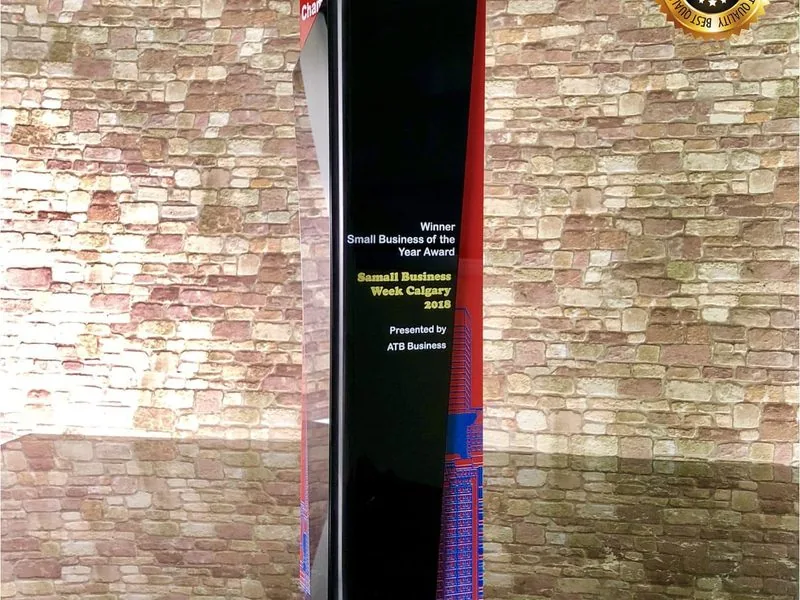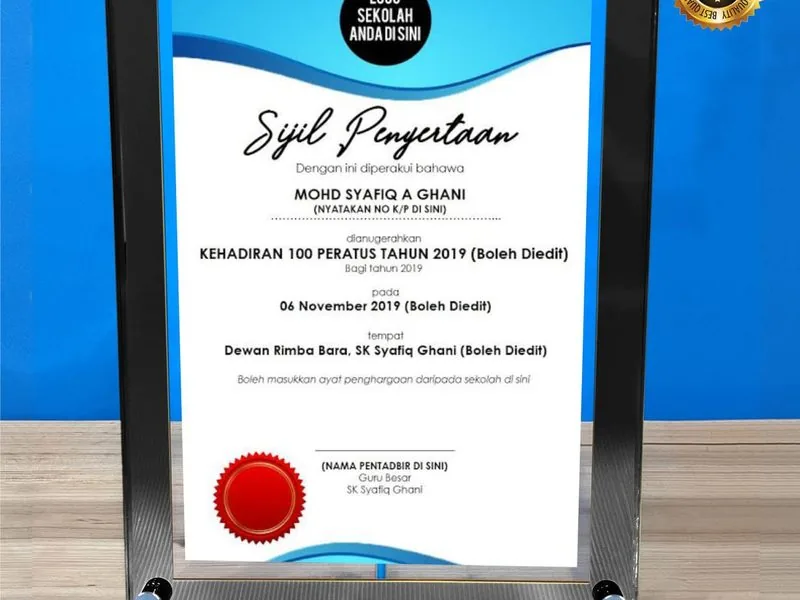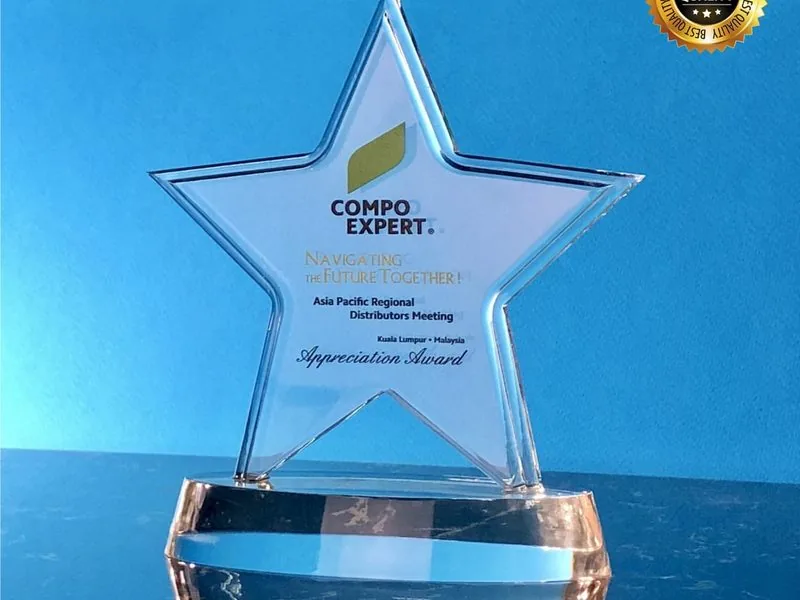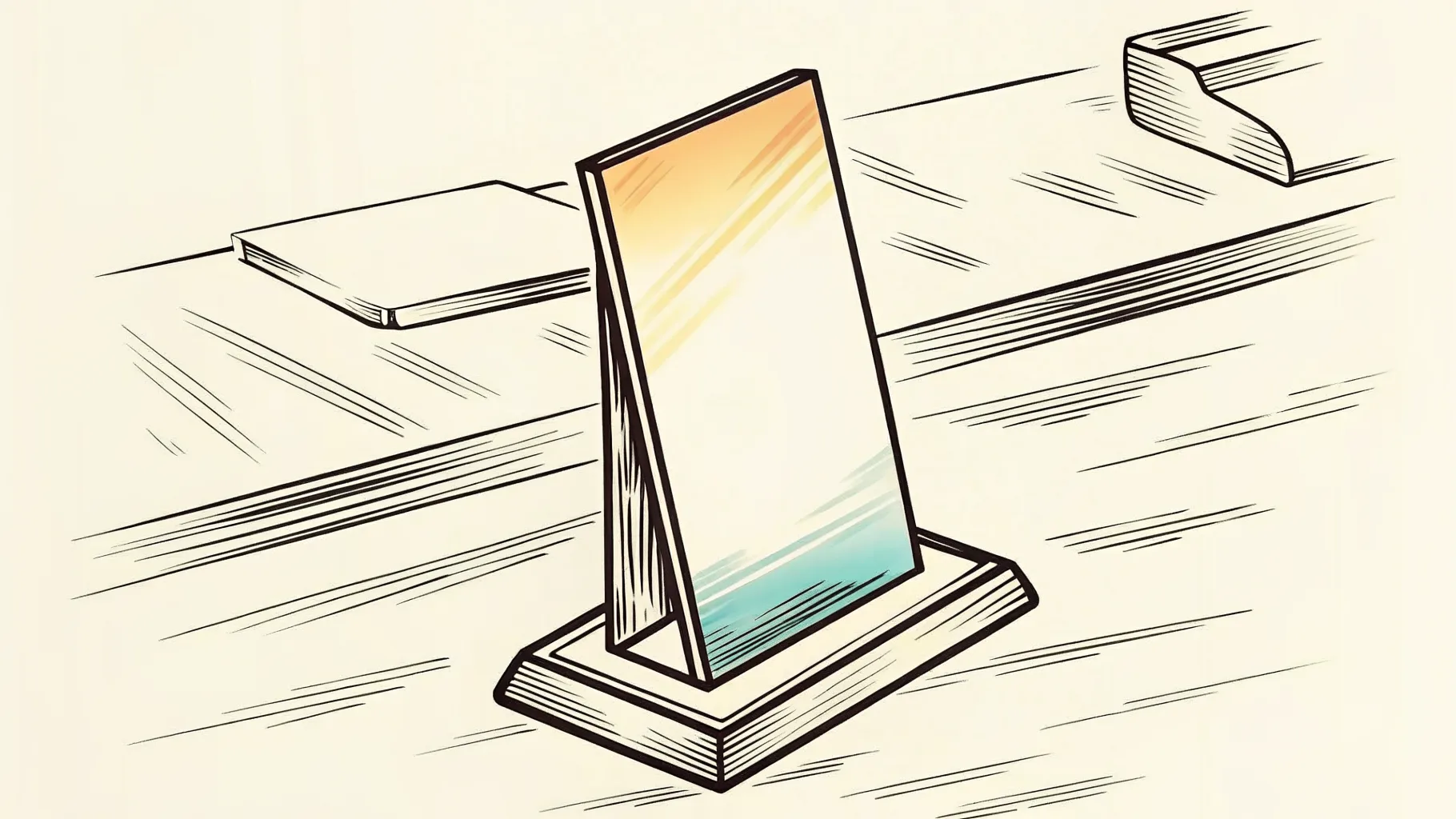
Hold a UV-printed acrylic trophy under a ballroom downlight and the brand red almost vibrates off the surface. Hold the laser-engraved version of the same piece under the same light, and you get a soft, frosty whisper of the logo. Present, but never loud.
Same trophy, same room, two different emotional signals. That’s the whole UV-print-versus-laser argument. And here’s the part most guides get wrong: it isn’t a cost call. At iTrophy both are free customisations. It’s purely a question of which signal the recipient, and the camera, is meant to read.
Short answer: Use UV print when brand colour, photos, or a modern look matter, and when the piece will be photographed for PR. Use laser engraving for conservative recognition, citation-focused pieces, and anywhere restraint is the point. On premium pieces, combine them: a UV-printed logo with a laser-engraved citation. Both are free, so choose by the look, not the price.
What each technique does to the acrylic
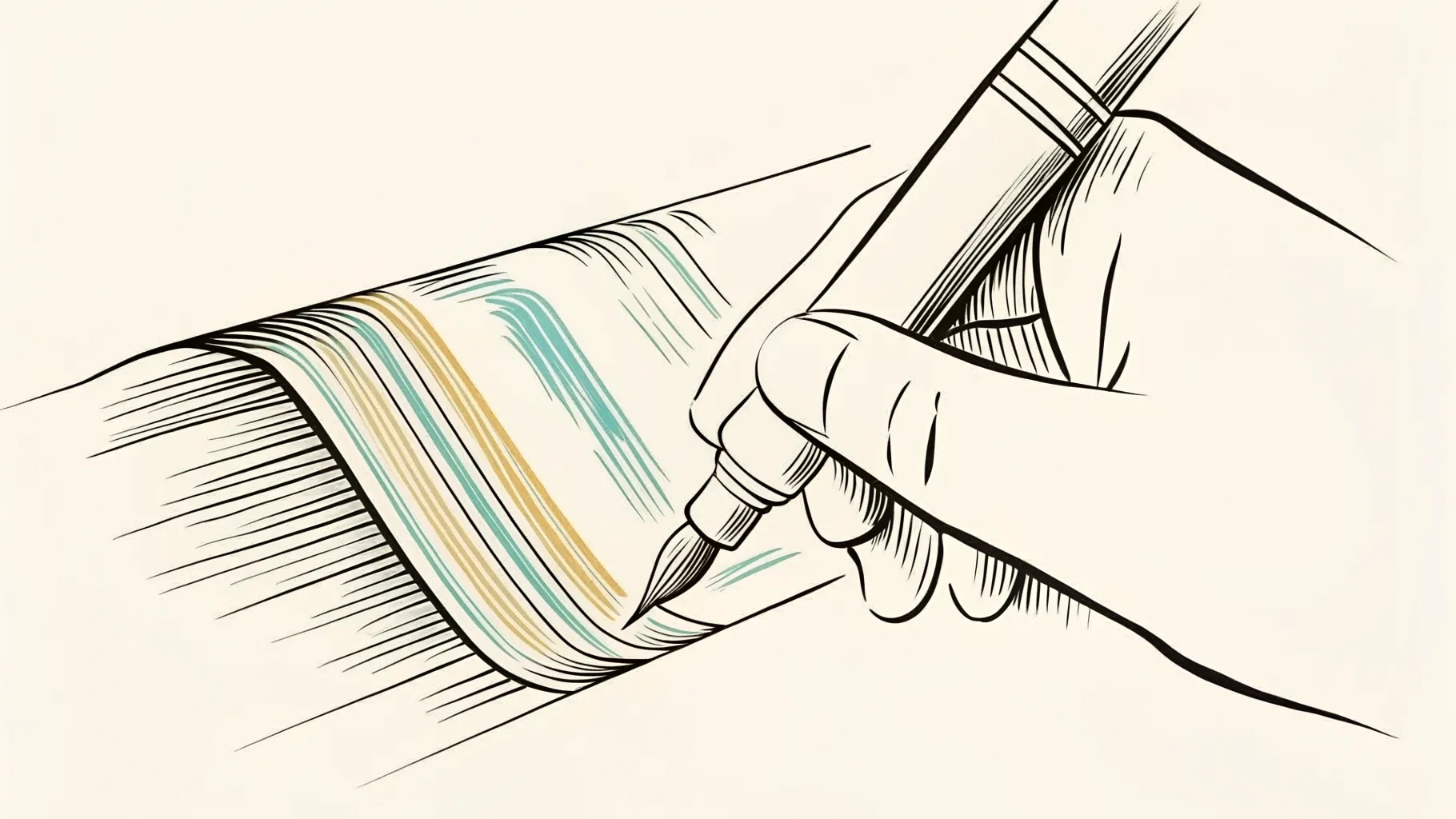
UV print lays full-colour ink directly onto the acrylic surface and cures it instantly with UV light. The result is sharp, full-colour (CMYK plus white), with a slight raised feel from the ink layer, and it reproduces brand gradients, photographs, and complex artwork. It’s the right pick for multi-colour logos, photo reproductions, and modern brand-forward pieces.
Laser engraving uses a CO2 laser to etch a frosted mark into the surface that contrasts against the clear acrylic. The result is monochrome, with a slight depth, crisp on text and line art, and permanent. It’s the right pick for citations, simple line-art logos, and a traditional, restrained aesthetic.
If you are still choosing the sheet, thickness, backing, standoff hardware, minimum readable font size, or file format before picking the decoration method, use the acrylic for engraving material spec first. It covers the production details that sit upstream of this UV-print-versus-laser choice.
How each reads at viewing distance
This is the comparison nobody publishes, because most pages just show a close-up, which is the worst test for this decision. A trophy is read across a room and on a camera, not under a loupe.
| Distance | UV Print | Laser Engraving |
|---|---|---|
| In hand | Sharp, full-colour, slight 3D feel | Crisp etched mark, monochrome contrast |
| Table viewing | Brand colours pop, photo-realistic | Refined, formal, readable |
| Across the room | Brand artwork visible, brand presence | Citation readable, less brand pop |
| Stage photography | Colour visible, strong brand presence | Frosted mark visible but minimal contrast |
UV print has stronger presence at distance; laser engraving feels more refined up close. The PR rule nobody states out loud: if the piece will be photographed for the company’s social channels, UV print earns its place on colour reproduction alone.
When UV print wins
Choose UV print when brand colour matters (a logo with specific or gradient colours that laser can’t reproduce), when the piece includes a photo, when the brand is modern (tech, esports, agencies), when the award will be photographed for company communications, or when you’re handling multi-colour sponsor branding with colour-coded tiers. Browse the acrylic trophies range for the formats.
When laser engraving wins
Choose laser engraving for conservative, institutional recognition (a 25-year Bank Negara veteran’s plaque reads wrong in hot-pink brand colours, and right as a frosted etched citation), for citation-focused pieces the recipient reads closely, when restraint is the goal and loud branding would feel ostentatious, and for religious-community pieces where a conservative aesthetic fits.
When to combine both
For premium pieces, putting both on one piece is often the best approach:
[ TOP: UV-printed company logo, full brand colour ]
[ MIDDLE: laser-engraved recipient name + citation ]
[ BOTTOM: laser-engraved date and footer ]
The branding gets full-colour presence, the citation reads with formal gravitas, and the hierarchy is clear. Since both decorations are free, the only question is the design, not the budget. The piece says “this is our brand” and “this is your achievement” at once.
Brand colour reproduction
UV print reproduces most brand colours accurately: standard CMYK colours, most reds, blues, and greens, black graphics, and photographs. It struggles with a few things. Pure metallic finishes (gold, silver) can be approximated but not matched. Fluorescent and neon colours are limited by UV ink. Very light pastels can wash out, and very subtle gradients can shift.
If your brand sheet specifies a Pantone code, send it (Pantone’s CMYK guide explains how the conversion works) and I’ll convert to the closest CMYK and flag any awkward ones in advance. Where a true metallic finish matters, the better route is a brass nameplate on wood, or a pewter plate. See the acrylic vs wood and pewter buyer’s guide for those.
Lead time
Both have similar production turnaround, and both are quick for stock acrylic. A custom CNC shape combined with UV print adds time for the cutting. Lead time depends most on proof sign-off, so WhatsApp me your date.
How to brief it
WhatsApp me at +60 12-213 6631 with the format and quantity, a decoration direction (UV print, laser engraving, or combined), your logo (vector preferred), brand colours (hex or Pantone), and the citation text. I’ll come back with a recommendation within the hour.
Still 50/50? Send the logo and I’ll mock up both versions side by side at no cost, so you see exactly how each reads before committing. The short version: UV print for brand colour and a modern feel, laser engraving for conservative gravitas, combined for premium pieces that need both. For the wider picture, see the corporate awards guide.
A piece with a UV-printed logo and a laser-engraved citation says both 'this is our brand' and 'this is your achievement.'