Wednesday, 4:18pm, three days to a KL bank’s annual dinner. The office admin finally lifts the foam and sees “Encik Razali” instead of “Encik Razzali” engraved on a crystal piece. The cartons had landed the previous Monday, then there were meetings, a public holiday, the weekend. The whole crisis was preventable by ten minutes at noon on Monday.
That’s the thing about trophy QC: the cost of skipping it is never visible until the worst possible moment. So the moment a carton lands, open it and work through six checks while you still have working days to fix anything, not the morning of the event.
Here is the checklist I give every corporate awards buyer: inspect the carton before you open it, count by line item, read every name against the signed proof, scan the finish under angled light, test the base, and photograph anything wrong the same day.
Step 1, Inspect the carton before you open it
Before you open anything, look at the outer carton. Trophy shipments in Malaysia bounce through Lalamove vans, Pos Laju sorting hubs, J&T trucks, and on East Malaysia routes, cargo flights via the Malaysia Airports network and onward couriers in KK or Kuching.
Most pieces arrive perfectly. A small percentage do not. The carton itself tells you which case you’re in before you cut a single piece of tape.
What to look for on the outside:
- Crushed corners or sides. A dented carton corner usually means impact during transit. Note which corner. When you open the box, the contents nearest that corner are the ones most likely to be damaged.
- Water marks or stains. Damp cartons mean exposure to rain or condensation in transit. Crystal and acrylic survive wet cardboard. Wood and engraved metal plates do not always.
- Rattling sounds. Pick the carton up and gently tilt it. Anything rattling inside means a piece has shifted out of its foam cradle. The foam may not have done its job in transit.
- Tape tampering. If the original sealing tape has been cut and re-taped, document that on arrival. This is rare in Malaysia but worth noting for high-value shipments.
Open the carton on a flat, soft surface. Your office desk works, the floor with a towel works, a meeting-room table works.
Don’t open it standing up over a hard floor. A crystal trophy slipping onto a marble floor is exactly the disaster you’re trying to avoid.
If the outer carton is badly damaged, photograph it before opening. The photograph is the difference between “we’ll replace it” and “you signed for it, what do you want us to do” if the courier company gets involved.
Step 2, Verify quantity against the order list
This sounds obvious. People still skip it.
Lay every piece out on a flat surface, not stacked, not still in foam, fully visible, and count.
Count by line item, not by total. If your order had:
- 3 × crystal Top Performer trophies (Bronze / Silver / Gold tier)
- 12 × acrylic Outstanding Service plaques
- 1 × pewter Founder’s Award
Then you should see exactly those, not “16 trophies, looks about right.”
A common slip in multi-tier orders is the supplier producing 11 instead of 12 of one tier and 13 instead of 12 of another. Total count matches, but the line-item breakdown doesn’t. You only notice when handing them out at the dinner.
Cross-reference to your packing list and your original purchase order. Tick each item off physically. This step takes five minutes and catches roughly one in fifty orders where something is missing or duplicated.
For larger orders (say 50+ medals or 30+ plaques), consider sampling rather than full count if time is tight. Always do at least 20 percent, and always include the most senior or most expensive items in the sample.
Step 3, Check engraving spelling and honorifics letter-by-letter
This is the single most important check, and the one most likely to be skipped. Engraving errors do not announce themselves. A missing honorific or a transposed letter looks fine until someone reads it on stage.
The discipline:
- Read every recipient name aloud against the signed proof. Not from your spreadsheet, not from memory. From the PDF or PNG proof you signed off on. The proof is the contract.
- Check honorifics carefully. Malaysian honorifics that get missed: Datuk, Datin, Datuk Seri, Tan Sri, Toh Puan, Tun, Dr, Prof, Ir, Ar, Hjh, Hj, En, Cik, Pn. The order matters too. “Dato’ Sri Dr” vs “Dr Dato’ Sri” is not the same.
- Check accented and special characters. Malay surnames with apostrophes (Mohd Ali bin Abdul Rahman, A/L, A/P), Indian names with diacritics, Mandarin characters in the correct order and direction.
- Check dates and years. A trophy dated 2026 when it should have been 2025 is unusable.
- Check award category lines. “Top Performer 2026” vs “Top Performer of the Year 2026”. Small wording difference, big difference if the recipient was promised one phrasing.
If you spot an error, stop the QC pass on that piece and document it. Don’t keep going and try to remember everything later. Note it down in real time. We’ve seen buyers find one typo, get distracted, and miss a second typo on a different piece.
For posts on related topics, our trophy engraving mistakes guide covers the common slip-ups in detail.
Step 4, Inspect material finish and edges under angled light
Different materials fail in different ways. Use angled light, desk lamp, phone torch, to scan each piece.
Soft, even ambient light hides defects that show up clearly under a directional source.
The phone-torch trick: hold the torch 30cm from the trophy at a 45° angle and rotate the piece slowly. Defects catch the beam in a way they don’t under overhead office lighting.
| Material | Highest-frequency defect | What to look for under angled light |
|---|---|---|
| Crystal | Edge chips on facet corners | Stress lines that catch the torch beam |
| Acrylic | Surface scratches on UV print | Hairline marks across the print layer |
| Wood | Raised grain along engraved lines | Fibres standing up from routing path |
| Metal plates | Engraving depth inconsistency | Faint vs deep characters in same line |
| Pewter | Surface dents and oxidation | Matte spots breaking polished finish |
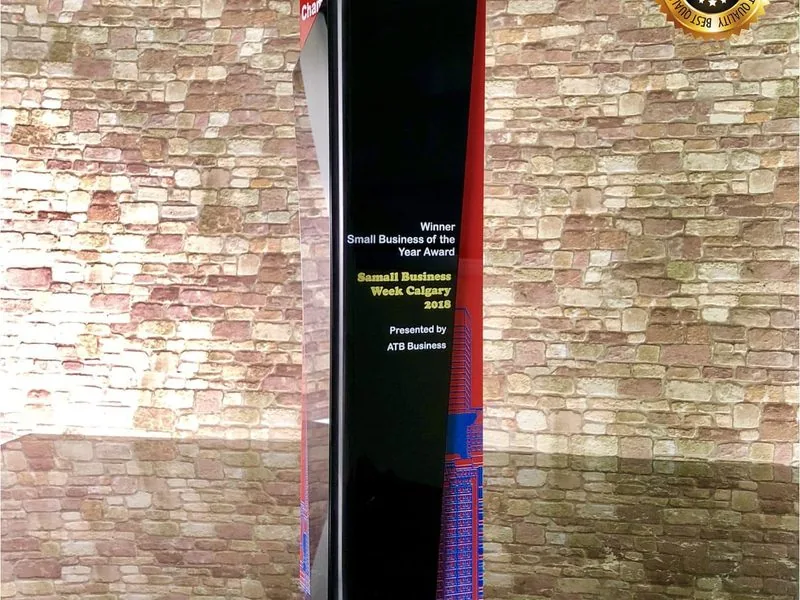
Crystal trophies. Scan corners, edges and bevels under angled light. Look for:
- Edge chips, especially on facet corners and base edges
- Surface scratches that go through the polish
- Internal cloudiness or laser-engraved areas with broken character outlines
- Glue lines if the piece is multi-part, should be invisible, not yellowed
Crystal trophies in Malaysia typically run from around RM 120 up into the mid-hundreds. At that price, edge chips and scratches are not acceptable.
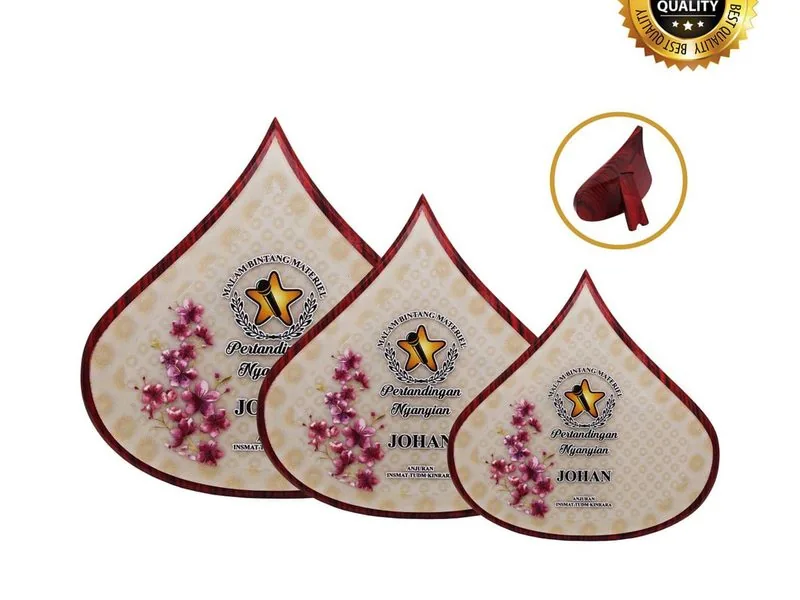
Acrylic trophies and plaques. Acrylic shows scratches more easily than crystal. Look for:
- Surface scratches on the front face, especially on UV-printed pieces
- Stress cracks at drilled holes or cut corners
- Print colour banding or registration shifts on UV print
- Yellowing on cheaper acrylic, should be optical clear
Browse our acrylic plaques range for typical formats and finishes.
Wooden plaques and trophies. Wood is forgiving but check for:
- Raised grain or routing burrs along engraved lines (can be sanded by the supplier)
- Veneer lifting at corners
- Stain or finish unevenness across the front face
- Hardware (hanging clips, stand bracket) properly seated
Wood trophies have a 10-piece minimum order and roughly a week of extra lead time, so any rework adds time you may not have.
Metal plates and trophies. Look for:
- Engraving depth consistent across the plate
- No oxidation or fingerprint smudges
- Fixings (screws, double-sided tape) intact
- Plate flatness, a warped plate looks visibly bent against a flat surface
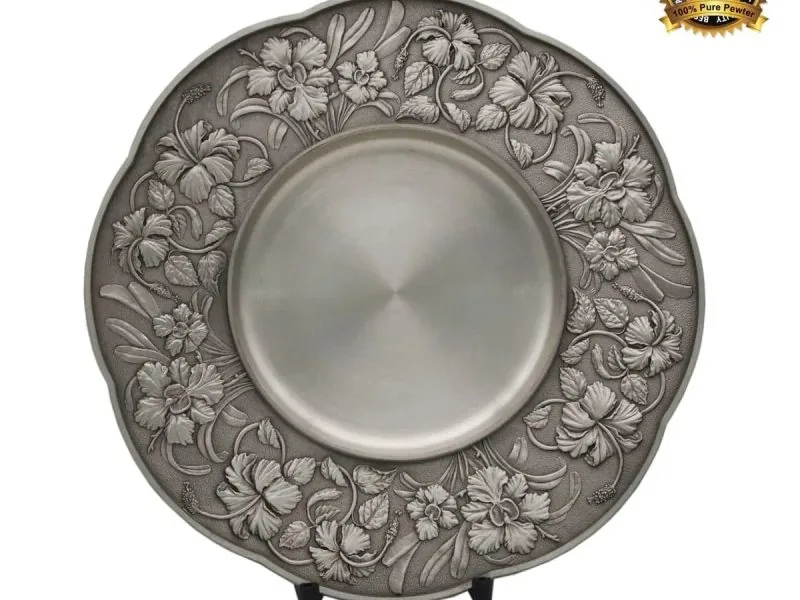
Pewter. Surface dents and oxidation are the failure modes. Pewter is softer than steel and can pick up handling marks during finishing.
A clean piece should have an even matte or polished finish across the whole face, the Malaysian pewter standard, and arrive with anti-tarnish bagging intact.
If you find a finish defect on one piece, check every piece in the batch. Material defects often come from the same production run and affect multiple items.
Step 5, Test base stability with the 5cm nudge
A trophy that won’t stand straight is unusable. Test every piece on a flat, hard surface (not a carpet, not a tablecloth, those mask wobble).
Stand it upright. Place a fingertip against the top of the trophy and apply gentle pressure, about the force of nudging a teacup. The trophy should resist without tilting more than a few degrees.
The three-point check:
- Does it sit flat with no rocking?
- Does it stand vertical, not leaning?
- Does it stay upright when nudged from front, side, and back?
Loose-base issues come from:
- Glue not fully cured between trophy body and base (rare, but happens)
- Base felt or rubber pads missing on one corner
- Crystal trophy with a slight bevel mismatch where it meets the base
- Wooden plaque with stand bracket mounted off-axis
Most base issues are fixable in 24 hours by the supplier. Re-glueing, replacing the felt pads, or re-mounting the stand.
But you have to catch them on arrival, not at the venue while guests are arriving.
Step 6, Photograph defects and contact the supplier with evidence
If you find anything wrong, typo, chip, missing piece, wobbly base, document it before doing anything else. Phone cameras are good enough. You don’t need a DSLR.
The minimum evidence pack:
- Wide context shot. The piece on a desk with the order packing slip visible. Establishes which order it came from.
- Close-up of the defect. Sharp focus, good light, the exact issue clearly visible.
- Timestamp. Most phone cameras embed time in EXIF data. Some buyers prefer to lay a phone with the lock-screen clock visible next to the piece. Either works.
Then contact the supplier the same day. WhatsApp +60 12-213 6631 for iTrophy orders. Include:
- Order reference number or PO number
- Recipient name (so we can pull the proof and check)
- Clear description of the issue
- Photos
- Your preferred resolution (replacement, refund, credit on next order)
Most suppliers, us included, handle real defects quickly. Replacements typically run 3-5 working days for crystal and acrylic, longer for wood.
Engraving errors caused by a supplier-side mistake (wrong proof, wrong file) get re-made at no charge. Engraving errors caused by a customer signing off a wrong proof are a more delicate conversation. That’s why the proof step matters so much earlier in the process.
For larger or recurring orders, set up a written QC handover process internally. One person inspects, one person counts, one person checks engraving against proof. Three pairs of eyes catch what one tired pair misses.
Bonus: the printed proof beside every piece (the trick that catches everything)
The single most effective QC habit we’ve seen at any HR team: print the signed proof for each piece on plain A4 in colour.
Number each printed page in the top corner with a marker, 1, 2, 3, matching the pieces in the carton. When you do the QC pass, lay the printed proof beside each physical piece on the desk.
Read the printed proof aloud. Then read the engraved piece aloud. Any mismatch, a missing letter, a swapped honorific, a wrong year, is impossible to miss when both versions are side-by-side at arm’s length.
Without the printed proof, you’re trusting your memory of the proof against the engraved piece. Tired memories miss things.
Cost: 5 sheets of paper. Time: 90 seconds added to QC. Effectiveness: catches every error worth catching, including the ones you signed off without reading carefully enough.
Next step. Schedule the QC pass on your calendar the moment you accept the courier ETA. Block 15 minutes, not “later that day”, a specific 15-minute slot. Print the signed proofs in advance. Have a phone-torch (every smartphone has one) ready for angled-light inspection. Lay everything out, work through the six checks, photograph anything wrong, WhatsApp +60 12-213 6631 the same day. For broader process context, see the process page, the FAQ, the trophy proof approval process, and the packaging and reception guide.
Nobody enjoys finding a typo on a crystal trophy at 4pm the day before the dinner. The fix is to open the carton the moment it lands.