In a petrochemical safety brief, the statistic is the trophy. “In recognition of five million man-hours of LTI-free operation”, the number is the whole point, and it’s almost always still moving when you need to start production. The cut-off date shifts, corporate HSE realigns to a fiscal quarter, a final audit excludes a contractor cohort that shouldn’t have counted. Engrave an approximate figure and the piece stops being recognition; it becomes something the HSE coordinator answers for at the next review.
So this is the anatomy of a safety-milestone order, the kind we run for process-industry operators around Pasir Gudang, Pengerang, and Kerteh, and how to structure it so a number that moves twice in the final 48 hours doesn’t burn the ceremony. I’m keeping it composite on purpose; process-industry buyers, like bank HR teams, value suppliers who don’t seek publicity.
Short answer: Treat the audited statistic as the load-bearing element. Stage production by data-dependency, so anything that doesn’t reference the number (crystal cutting, polishing, mounting, die hardware) runs in parallel, while anything that does (engraving, die-stamping) waits for written, audited sign-off. Demand a firm figure 72 hours before lock, build the senior crystal as a matched batch for visual consistency, and use brushed (not polished) steel for plant-floor lapel pins. Keep the statistic line in English, the language it’s audited in.
What a five-million-man-hour milestone means
A continuous-process plant runs 24/7 with a few hundred rotating-shift staff, plus a contractor population that fluctuates with turnaround schedules. Five million LTI-free man-hours at that headcount is roughly four years of continuous operation without a single recordable lost-time incident. That’s a number the corporate audit team signs off, not a marketing figure.
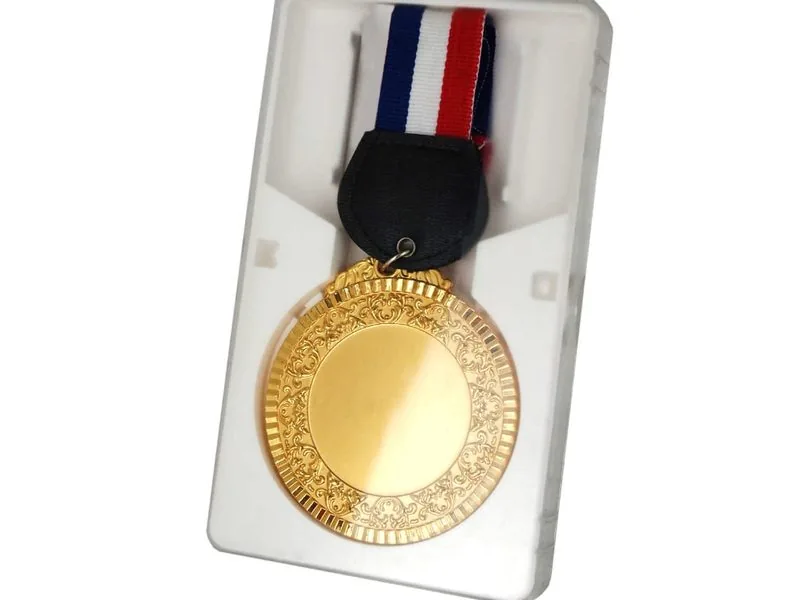
A typical order splits in two: a small cohort of heavy crystal blocks for senior management (optical-grade, sand-etched logo, a deep front-face engrave), and a larger run of brushed-steel lapel pins for the operations crew, with the man-hour figure stamped on the reverse. These are rough planning bands rather than a fixed quote, so the senior crystal sits in the premium range and the pins are a modest per-piece; WhatsApp us the cohort sizes for a real number.
The aesthetic register is specifically industrial, and remarkably uniform across operators: heavy crystal with a deep engrave, a sand-etched rather than laser-engraved logo, no coloured crystal, no decorative facets, and brushed-steel pins rather than polished. The reasoning on the pins is operational. A polished pin shows fingerprints inside a week, catches dust streaks on a plant walk-around, and ends up in the bottom of a locker. A brushed pin gets worn.
The three production calls that matter
One: strike the lapel pins on a single die run. Pin-to-pin consistency on a brushed-steel finish is much higher within one strike than across two, and the pins age uniformly on company shirts that get washed regularly. It costs slightly more in setup, but the cohort reads as a set.
Two: build the management crystal as a matched batch, not individual pieces. A senior-management cohort is small enough that any visual variation between pieces gets noticed when they sit side by side. Run all the blocks from a single batch flight with hand-finished bevel matching, and they read as a deliberate set at the ceremony.
Three: build a “statistic lock” gate into the proof timeline. This is the load-bearing one. The exact figure is usually still “approximate” at the brief stage, measured against actual man-hours logged, with the cut-off date being finalised by the corporate HSE team. So set a firm rule: a confirmed number in writing 72 hours before production lock. Build a draft proof on a placeholder figure, but don’t run any engraving until the audited number arrives in writing.
When the number moves three times
In a process industry, the only figure that matters is the audited one. An unaudited number on a plaque becomes an exhibit in the next DOSH inspection, not a recognition piece. So the statistic moving late isn’t a failure; it’s the normal shape of the brief. A typical final 48 hours looks like this:
| Time before lock | What happens | Effect on the figure |
|---|---|---|
| T-72h | HSE coordinator sends a “firm” number; draft proof out and approved | Baseline |
| T-48h | Corporate HSE realigns the cut-off to fiscal-quarter close | Figure rises |
| T-36h | Final audit excludes a contractor cohort that shouldn’t have counted | Figure falls |
| T-1h | Final proof approved against the audited figure | Locked |
This is exactly why nothing irreversible should happen before audit close. Crystal engraving runs on the morning of lock. Die-strikes wait for written sign-off. If a die has already been struck on an earlier figure, it gets re-cut and re-struck rather than shipped wrong, because the statistic on the trophy is the trophy.
What lands at the plant gate
The pieces arrive at the plant administration block on the morning of the ceremony, where HSE admin unbox and lay out the display. Senior management receive their pieces during the formal ceremony, after the safety stand-down briefing. Lapel pins go out through the shift superintendents at the shift handovers, so every operator on roll for the qualifying period gets their pin in person, on shift, from their own super, not posted to a locker.
The process changes worth standardising
| Change | What it costs | What it prevents |
|---|---|---|
| Production staged by data-dependency: blank cutting parallel; engraving and die-strikes wait for lock | Slightly more scheduling overhead | A full-batch re-strike when the statistic moves late |
| Written statistic confirmation as a hard gate, attached to the work order | One signed line per brief | Verbal sign-offs that get re-traded under pressure |
| Industrial-register reference photos at quote stage, not the general crystal catalogue | Ten minutes building a tailored deck | Buyer drift toward decorative pieces that won’t read in a control room |
For Kerteh, Bintulu, and Kemaman process sites we ship via cargo flight on a 5–7 day window; the East Malaysia trophy delivery guide has the routing detail. Browse crystal trophies for the senior tier and metal medals for the lapel-pin and cohort side, and for the wider picture, the corporate awards Malaysia and long service awards Malaysia guides cover industrial-register procurement.
If you’re an HSE coordinator or operations manager planning a safety-milestone, LTI-free, or TRIR-record ceremony, WhatsApp us at +60 12-213 6631 with your milestone figure, cohort size, and target ceremony date. You’ll get a tier-by-tier proposal within a working day, and if the figure isn’t audited yet, send the draft and we’ll structure the proof timeline around the audit gate.
The statistic is the whole point of the trophy. Get the number wrong and it stops being a recognition piece and becomes an embarrassment.