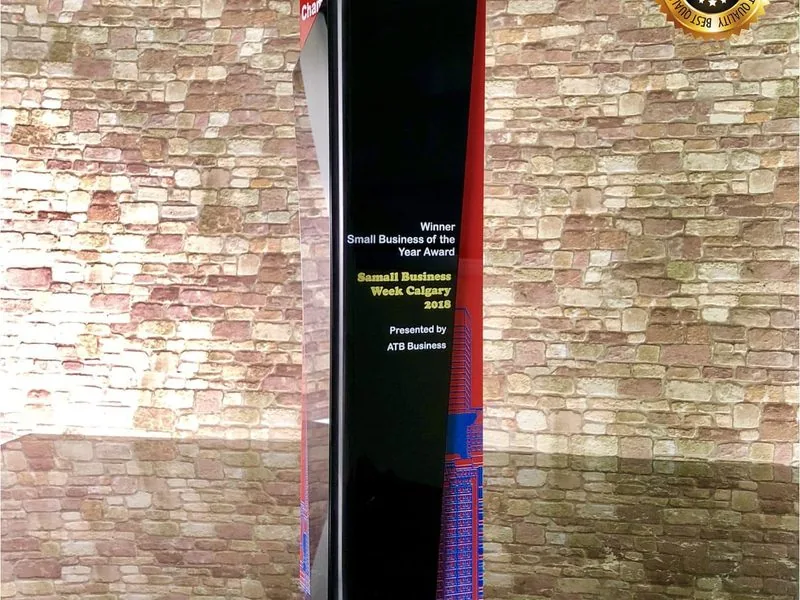
After two decades of running engraving plates, I still re-cut the same three fonts every year. Edwardian Script. Brush Script. And whatever Pinterest is pushing this quarter.
Designers send them in good faith. They look stunning at 4K. Then the laser hits them, and you get broken hairlines, filled-in counters, and ghosts where the flourishes should be.
It isn’t a font problem. It’s a physics problem. A laser doesn’t flatter, it exposes. A strong font looks great; a fragile one looks worse than it did on screen, every time.
Short answer: The best engraving fonts are heavy, clean sans-serifs (Helvetica Bold) and classic serifs (Trajan Pro) that hold their shape under a laser. Go heavier than you think, set the name in all-caps bold and long citations in mixed case, and avoid thin scripts, hairline serifs, and outline fonts. Below is the material-by-material cheat sheet.
Why fonts behave differently when a laser hits them
Laser engraving is subtractive. Material gets vapourised or frosted along the path of every letterform.
That means stroke weight, counter shapes, and letter spacing all matter more than they do on screen.
A few mechanical realities:
- Thin strokes break up. A hairline serif that looks crisp on a Retina display becomes a dotted ghost on frosted crystal.
- Tight counters fill in. The hole in a lowercase “e” or “a” can close up at small sizes, especially on metal plates.
- Fine details get lost. Decorative flourishes, elaborate ligatures, and double-thin scripts simply don’t survive.
The laser doesn’t flatter, it exposes. A font that’s already strong looks great. A font that’s already fragile looks worse.
This is true across every material we coordinate, crystal trophies (decorated by inner laser or UV print), metal plaques (printed nameplates in gold, silver or bronze) and wooden plaques with their printed metal nameplates.
Font weight matters more than font choice, go heavier than you think
If you remember one thing from this guide: go heavier than you think you need to.
A “Regular” weight that looks balanced on a website often engraves thin and washed out.
The same family in Bold or Black will hold its line beautifully.
Rough rule:
- Body text on a citation, minimum Medium, ideally SemiBold.
- Recipient name as the hero element, Bold or Black.
- Logos with thin lettering, talk to us about thickening the strokes slightly. We do this routinely.
This is why a free font can engrave better than an expensive premium one. Weight beats pedigree.
Serif vs sans-serif on trophies, the register decision
Both work. The trade-off is character and context.
When sans-serif wins
Modern corporate awards, annual dinners, esports trophies, sports MVPs. Sans-serifs read clean from across the room and photograph well under stage lights. Our most-used:
- Helvetica Neue Bold: XKEEPXthe safe default. Clean, neutral, never wrong.
- Open Sans Bold: XKEEPXslightly friendlier, great for citations.
- Montserrat SemiBold / Bold: XKEEPXcontemporary, popular with tech and startup clients.
- Avenir Heavy: XKEEPXgeometric, premium feel, holds up at small sizes.
When serif wins
Long-service awards, retirement plaques, traditional GLC recognition, anything aiming for gravitas. Serifs whisper “this took a lifetime to earn.” Reliable picks:
- Trajan Pro: XKEEPXthe Hollywood movie-poster classic. Genuinely beautiful all-caps.
- Garamond Bold: XKEEPXwarm, literary, ideal for citations on wooden plaques.
- Times New Roman Bold: XKEEPXyes, really. Underrated workhorse.
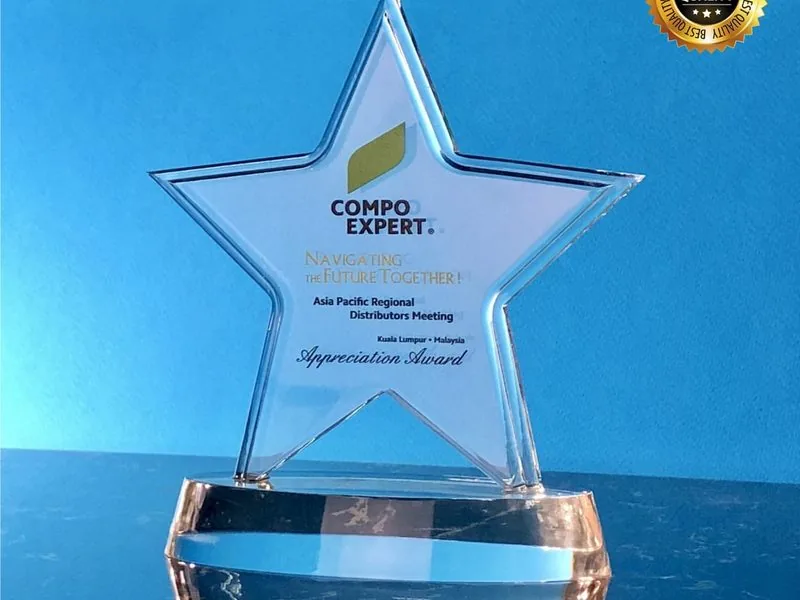
A piece from our crystal plaques range in Trajan Pro looks like a museum acquisition.
The same piece in a thin script font looks like a craft-fair afterthought.
All-caps vs mixed case
This trips up a lot of first-time buyers. Honest guide:
- Recipient name: XKEEPXusually all-caps Bold. It reads as the hero and survives at small sizes.
- Long citations or quotes: XKEEPXmixed case for readability. ALL-CAPS PARAGRAPHS ARE EXHAUSTING TO READ AT ANY SIZE.
- Date and event name: XKEEPXeither, but stay consistent within the piece.
- Sub-line below the name (“Top Performer 2026”), mixed case, smaller, lighter weight.
Common mistake: setting everything in the same all-caps Bold.
Visually flat. No hierarchy. The eye has nowhere to land first.
Line-height and stacked names
When a single trophy carries multiple names, a team award, a four-person co-winner, line-height (leading) becomes critical:
- Set leading to at least 130% of font size. Anything tighter and the descenders of one line kiss the ascenders of the next.
- Use bullet points or simple separators for team rosters rather than commas.
- Keep the longest name’s character count in mind: XKEEPXdesign to the worst case, not the average.
- If you’re engraving 8+ names on a small plaque, switch to two columns rather than shrinking the font further.
Better to add a second column than shrink a font into illegibility. Tiny names look like a typo, not a tribute.
Bahasa Malaysia and Chinese script considerations
Multilingual engraving is everyday work for us. A few practical notes:
- Bahasa Malaysia uses the same Latin alphabet, so font choice carries directly across. Watch out for words with diacritics if you’re using fonts with poor extended-Latin coverage.
- Chinese characters need a font designed for them, don’t try to fake it with a Latin font. Our defaults are Noto Sans CJK, Source Han Sans, or a heavier weight of PingFang. Stroke weight needs to be even heavier than for Latin text because of stroke density.
- Mixed Latin + Chinese on the same line: XKEEPXpick fonts that share visual weight; otherwise the Chinese characters look bolder than the English by accident.
For bilingual long-service plaques (very common for Klang Valley GLCs), we routinely set:
- English name in Helvetica Bold
- Chinese name in Noto Sans CJK SC Bold
Visually balanced.
How we mock up fonts and which to avoid
Every custom order at iTrophy includes a digital mock-up before anything is produced. You see the exact font, exact size, exact layout on a render of the actual piece. We will:
- Suggest a font if you haven’t specified one.
- Flag if your chosen font won’t survive at the size you want.
- Offer 1-2 alternatives that will.
- Send the mock-up via WhatsApp for sign-off.
- Send to production only after you say yes.
That mock-up step is also where we steer clients away from fonts we know will disappoint. If you bring us artwork in any of these, expect a gentle “are you sure?” reply:
- Ultra-thin display fonts: XKEEPXanything labelled Hairline, Ultra Light, or Thin will disappear under the laser.
- Heavily decorative scripts: XKEEPXLucida Handwriting, Edwardian Script, brush-script novelty fonts. They engrave as smudges, not text.
- Outline-only fonts: XKEEPXby definition stroke-thin; they engrave as fragile ghosts that read poorly across the room.
- Pixel or 8-bit fonts: XKEEPXdesigned for low-resolution screens, look broken when laser-marked onto crystal or acrylic.
- Comic Sans: XKEEPXwe won’t stop you, but the recipient might.
The cost of catching a font mistake at mock-up stage is zero. Five minutes of revision over WhatsApp.
The cost of catching it after production is a remade trophy at the client’s expense, and a tighter deadline.
We err heavily on the side of asking before producing.
Where to start
Not sure where to start? Narrow the material and style first. Font choice gets easier once those are locked.
Or just WhatsApp +60 12-213 6631 with:
- Your draft text
- Recipient profile
- Event date
We’ll mock it up in two or three font options. Digital proof in your inbox by end of next working day. Customisation always free.
For corporate clients with brand guidelines already in place, send those over. We’ll work within them or flag the conflicts honestly.
Brand designers on the receiving end may want to reference the International Typographic Style guidelines for font-pairing rationale.
Material-specific font recommendations: the cheat sheet
Different trophy materials interact differently with lasers and engraving methods. The same font that engraves beautifully on crystal can look muddy on metal. Quick reference:
| Material | Decoration method | Recommended fonts | Avoid |
|---|---|---|---|
| Crystal (inner laser) | Sub-surface micro-fracture, frosty white | Trajan Pro, Helvetica Neue Bold, Optima Bold | Thin scripts, hairline serifs |
| Acrylic (surface laser) | Frosted etch on surface | Helvetica Bold, Avenir Heavy, Source Sans Pro Bold | Hairline weights, ultra-thin scripts |
| Acrylic (UV print) | Full-colour ink, surface | Any font, including custom brand fonts | None, UV print reproduces faithfully |
| Wooden + brass nameplate | Rotary engraving on brass | Trajan Pro, Garamond Bold, Optima Bold, Helvetica Bold | Decorative scripts at small sizes |
| Pewter | Surface engraving or etched | Trajan Pro, Garamond Bold, bold serifs | Hairline weights, light scripts |
| Metal medals (rotary) | Rotary on small surface | Helvetica Bold, Avenir Heavy, block lettering | Scripts, decorative fonts at small scale |
Crystal trophies (inner laser, sub-surface)
Inner laser etches micro-fractures inside the crystal body, reads as frosty white 3D-etched marks against the clear crystal. Best fonts for this method:
- Trajan Pro: XKEEPXformal, ceremonial, works beautifully for citation text
- Helvetica Neue Bold: XKEEPXclean, modern, photographs well at stage
- Optima Bold: XKEEPXcalligraphic-feel without being script
Avoid for crystal inner laser: thin scripts, decorative typefaces with fine strokes (the inner-laser dots can’t reproduce hairline detail).
Acrylic plaques (surface laser engraving or UV print)
Acrylic surface engraving creates frosted marks on clear or coloured acrylic. UV print lays full-colour ink directly on surface. Font choices:
- For surface laser: Helvetica Bold, Avenir Heavy, Source Sans Pro Bold, clean sans-serifs that hold against the frosted background
- For UV print: any font feasible, UV print reproduces brand fonts with full fidelity, including custom or licensed corporate fonts
Wooden plaques with engraved brass nameplate
The brass nameplate is what carries the engraving, wood is the backing. Brass engraving is a subtractive process (similar to laser but with rotary cutter on harder material). Font choices:
- Trajan Pro: XKEEPXclassic, conservative-traditional
- Garamond Bold: XKEEPXwarm, literary
- Optima Bold: XKEEPXpremium feel
- Helvetica Bold: XKEEPXmodern alternative
Brass nameplate engraving favours slightly heavier weights than acrylic, single-tone metal contrast reads better with bold strokes.
Pewter pieces (surface engraving or etched)
Pewter is a softer alloy than brass; takes deeper engraving with crisp results. Font choices:
- Trajan Pro: XKEEPXceremonial heritage feel that matches pewter’s character
- Garamond Bold: XKEEPXformal, traditional
- Bold serif fonts in general: XKEEPXpewter’s matte sheen pairs well with serif weight
Metal medals (rotary engraving)
Metal die-cast medals carry rotary-engraved nameplates. Font choices:
- Helvetica Bold: XKEEPXmost reliable across all medal sizes
- Avenir Heavy: XKEEPXgeometric, modern
- Block lettering at very small sizes (under 6pt equivalent)
Avoid scripts and decorative fonts on small metal medals, fine detail breaks at this scale.
Font stacks for multi-tier recognition programs
For corporate annual dinner programs running multiple tiers, font consistency across tiers matters as much as material consistency.
Recommended font stacks
Conservative-traditional stack (banks, GLCs, family business):
- Tier A (top tier, crystal): Trajan Pro headline + Optima body
- Tier B (mid-tier, wooden + brass): Trajan Pro headline + Garamond body
- Tier C (broader tier, acrylic): Helvetica Bold headline + Helvetica Regular body
This stack ensures:
- Top tier reads ceremonial
- Mid tier reads traditional
- Broader tier reads professional
Visual hierarchy preserved without font chaos.
Modern corporate stack (tech, fintech, startups):
- Tier A: Montserrat Bold headline + Inter body
- Tier B: Inter Bold headline + Inter Regular body
- Tier C: Inter Bold headline + Inter Light body
All-Inter stack works for brand-led modern recognition that reads consistent across tiers.
Bilingual stack (BM + English, common Malaysian context):
- Headline (BM): Helvetica Bold or Trajan Pro
- Citation (English): Helvetica Regular or Optima
- Mandarin/Tamil supplement: Noto Sans CJK or Noto Sans Tamil at matching weight
For bilingual engraving guidance, see Engraving Dwi-Bahasa Bahasa Malaysia.
Testing font feasibility, how we screen fonts before production
Before approving a font for production, we run a feasibility check:
1. Stroke-weight check Smallest stroke in the font should be ≥ 0.3mm at engraving size. Below that threshold, laser etching breaks up the line.
2. Counter-shape check Lowercase “e”, “a”, “o” counter-spaces (the holes inside characters) should be ≥ 0.5mm at engraving size. Below threshold, the holes fill in and characters look like blobs.
3. Diacritic reproduction check (for BM, French-derived names) Diacritics like é, à, ñ, ê should be sized ≥ 0.4mm and not too close to the parent character. Some fonts compress diacritics tight, fine on screen, too crowded for engraving.
4. Sample run on scrap material
For premium tier orders or unfamiliar fonts, we run a small test piece on scrap material before producing the actual piece. Catches font issues before they become production issues.
Most digital proofs catch font problems in step 1-3. Step 4 reserved for genuinely uncertain font choices.
What we send back when a font won’t work
If you brief us with a font that won’t engrave well, we don’t just say “no”. Standard response:
- Reason: XKEEPX”this font has hairline strokes that won’t survive laser etching at the requested size”
- Alternative: XKEEPX”the closest sturdier alternative is [Font X], which preserves the character of your original”
- Side-by-side mock-up: XKEEPXvisual comparison so you see the difference before deciding
- Honest recommendation: XKEEPXwhat we’d choose if it were our piece
About 1 in 8 client briefs include a font that needs substitution. Always handled before production starts.
Common engraving mistakes to avoid
Beyond font choice itself, common mistakes that compound the font issue:
1. Specifying font without specifying weight. “Use Helvetica” leaves us guessing. Helvetica Light vs Helvetica Bold are dramatically different.
Always specify weight.
2. Mixing brand font with body font from different family. Visual consistency suffers.
Use one font family with multiple weights when possible.
3. Ignoring kerning. Some fonts have tight default kerning. Others loose.
For trophy engraving, slightly loose kerning (102-105% normal) reads more refined than default tight settings.
4. Same font for everything. Top-tier recipient name in identical font + size as broader-tier piece.
Loses hierarchy.
Quick reference summary
For 95% of corporate trophy orders, defaulting to one of these works:
- Heavy sans-serif (Helvetica Bold): XKEEPXmodern, reliable, ages well
- Classic serif (Trajan Pro): XKEEPXceremonial, premium, conservative
- Combination (Trajan Pro headline + Helvetica body): XKEEPXformal hierarchy
Avoid:
- Anything thinner than Bold weight
- Decorative scripts on small surfaces
- Outline-only fonts
- Pixel/8-bit fonts
- Comic Sans
The font that wins isn’t the one that looks fanciest in your brand guidelines deck.
It’s the one that survives the laser, photographs cleanly under stage lights at the gala, and reads as “this is serious recognition” from across the ballroom.
When in doubt, go boring and go bold.
Not sure which way to go? WhatsApp me at +60 12-213 6631 with your draft text, recipient, and event date, and I’ll mock it up in two or three font options within the hour, with a proof by the next working day. For the wider picture, see the corporate awards guide and the plaque wording examples to pair the wording with the fonts.
A laser doesn't flatter a font, it exposes whatever weakness is already there.